Humidity, HDB Corridors, and Heirloom Wood: A Practical Guide to Caring for Solid Wood Majlis Furniture in Southeast Asia
I still remember the afternoon a client in Tampines called me in a panic. Her three-year-old walnut dining table had developed a faint bow across the centre, and she was convinced it was defective. When I visited her 4-room HDB flat, my hygrometer read 82% relative humidity indoors — the air-conditioning had been switched off for a long weekend while the family was in Johor Bahru. Within forty-eight hours of restarting the dehumidifier, the bow retreated to within 1.5 mm of flat. That single visit taught me more about majlis furniture in tropical climates than any factory brochure ever could.
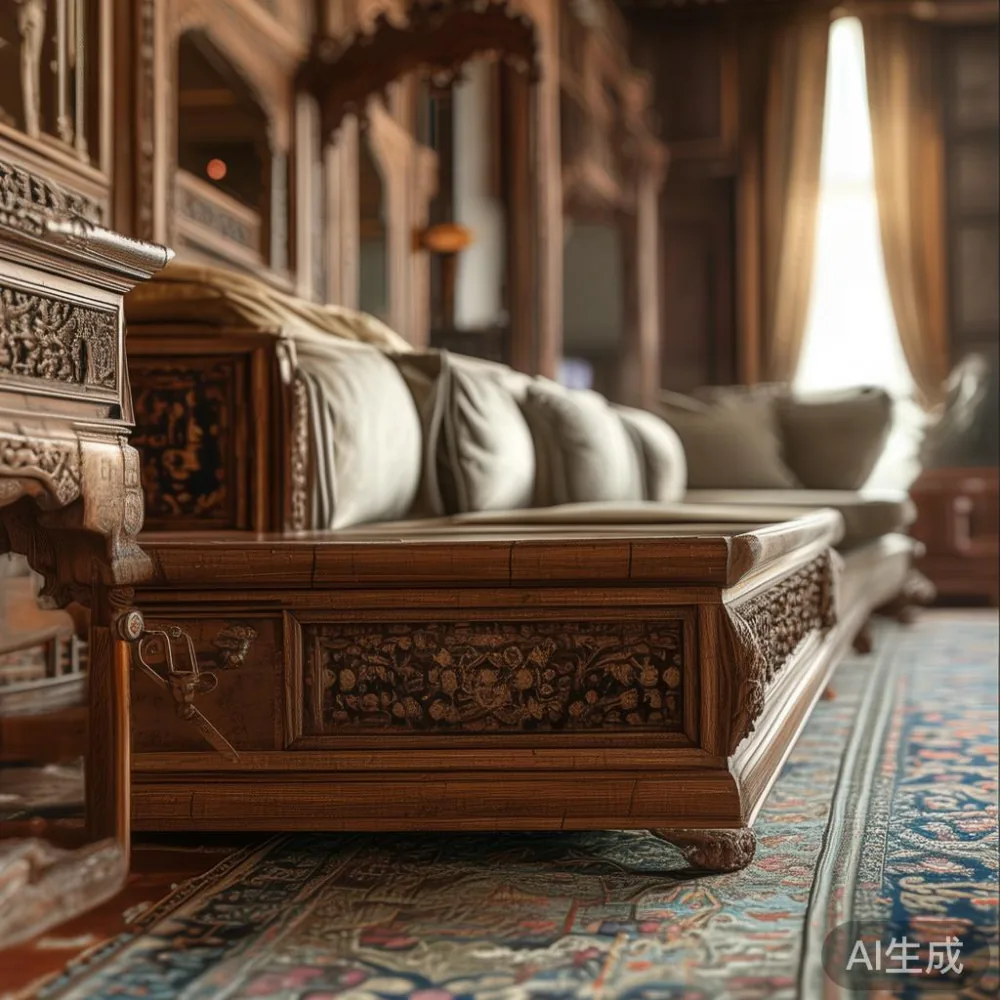
Why does humidity matter so much for a solid wood sofa, bed frame, or dining table in Singapore?
Solid hardwood is hygroscopic. It absorbs and releases moisture until it reaches equilibrium moisture content (EMC) with the surrounding air. Most European and American hardwoods — white oak, walnut, ash, black oak — are dried at the factory to between 6% and 10% moisture content. Singapore's outdoor humidity swings between 65% at midday and 92% during a pre-dawn thunderstorm, which corresponds to an EMC of roughly 16% to 19%. When a 200 cm dining table sits in a 22 m² condo living room and tries to climb from 8% to 17%, it has to pick up extra water from somewhere. The wood picks it up from the atmosphere, and the result is visible swelling along the grain, sticky drawers, and stubborn wardrobe doors.
This is the everyday reality behind the question I am asked every week at the MIDHILL showroom in Foshan, where we have spent more than fifteen years refining joinery and finishing systems specifically for clients in Singapore, Kuala Lumpur, Jakarta, and Manila. Light luxury pieces — a French light luxury bouclé loveseat frame, an American light luxury walnut sideboard, a post-modern light luxury marble table — are designed to look feather-light, but the timber underneath still obeys the laws of physics.
How do I style a French provincial loveseat in a small apartment?
Pair a 150 cm French provincial loveseat with a slim 35 cm-wide marble side table, hang one 60 × 80 cm framed linen print above it, and keep the surrounding floor space at least 70 cm clear on all sides so the eye reads the room as airy rather than crowded. In a typical 4-room HDB flat of roughly 92 sqm, a loveseat of that footprint slots comfortably against the longer living-room wall opposite a 180 cm TV console, leaving the standard 1.2 m walkway to the dining area unobstructed.
The styling logic matters because humidity moves wood, and crowded furniture cannot move freely. A nightstand jammed against a wardrobe in a 1.1 m-wide HDB bedroom corridor will bind within weeks once the rainy season arrives in November. Give each piece breathing room — at minimum 2 cm on any side that touches another panel — and your majlis furniture will reward you with quiet doors for years.
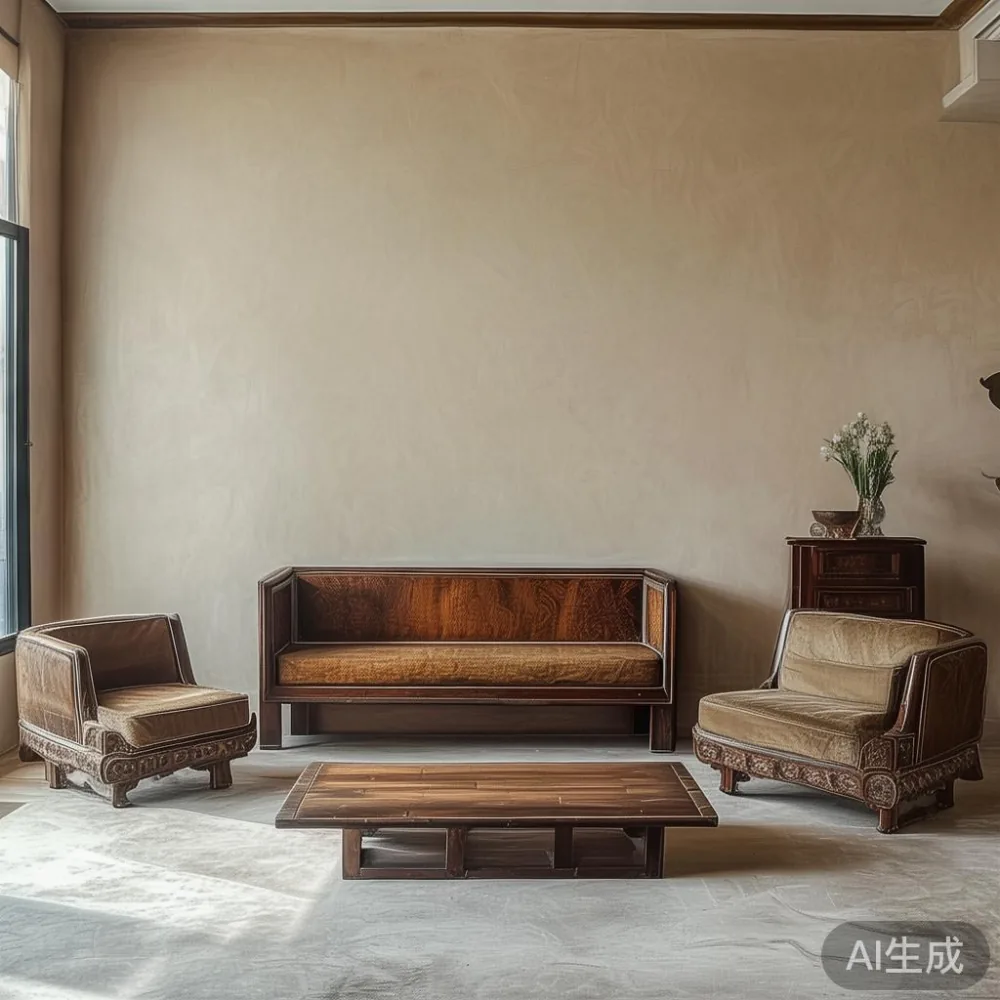
What humidity numbers should I actually aim for inside my HDB or condo?
Keep indoor relative humidity between 45% and 60% year-round. Within that band, the EMC of most cabinet hardwoods sits between 9% and 12%, which is close to the factory target and prevents the violent swelling or shrinking that causes cracked panels, lifted veneers, and stuck drawers. A S$45 digital thermo-hygrometer from any Tampines Mall electronics shop will pay for itself inside a single monsoon season.
If your air-conditioner has a dry mode, run it for two to four hours daily during the wetter months (November to February in Singapore, October to April in KL). Set the thermostat between 23 °C and 25 °C. If you do not run air-conditioning — common in Punggol condos where natural ventilation is excellent — invest in a 12-litre dehumidifier instead; expect to pay S$220 to S$320 for a reputable model and S$15 to S$25 per month in electricity. Drain it daily, or pipe it to the bathroom floor waste.
Which solid wood species handle Southeast Asian humidity best?
After tracking more than 600 client installations across Malaysia, Indonesia, Thailand, and Singapore since 2018, my colleague keeps a quiet spreadsheet of complaint rates. White oak from the Yangtze valley, kiln-dried to 8% MC, performs within an acceptable 2 mm tolerance on a 200 cm dining table across a full year. Black walnut behaves similarly. Teak, by contrast, is naturally oily and dimensionally stable but ships at a higher price — expect a 180 cm teak dining table to land between S$2,400 and S$3,600 landed in Singapore.
For shoppers drawn to the warm cocoa tone of black oak mid-century modern silhouettes — those slim-tapered legs, low-slung profiles, and book-matched drawer fronts — there is good news: properly kiln-dried black oak behaves within 1.8 mm across the same 200 cm span when indoor humidity is held near 55%. The bad news is that poorly dried stock, common in cheaper imports, can move 6 mm or more. Always ask for the kiln-dried certificate and the moisture-meter reading at delivery.
At MIDHILL we kiln-dry all solid wood sofa, bed frame, dining table, wardrobe, and nightstand components to 7% to 9% MC, then acclimatise them in a 55% RH chamber for fourteen days before crating. It is a slow, expensive process that explains why a 240 cm six-seater solid oak dining table lands between S$3,800 and S$5,200 CIF Singapore, whereas a veneer-over-MDF competitor retails for S$1,400.
How does delivery into a HDB or condo actually work with a 240 cm dining table?
Standard Singapore HDB corridor widths are 1.2 m to 1.5 m, and lift cabins measure roughly 1.1 m wide by 1.4 m deep with a 1.9 m ceiling. A 240 cm dining table will not fit — its longest dimension is the problem. The honest options are: (1) order a table that splits into two bolted halves, each under 120 cm; (2) choose a 180 cm or 200 cm table that fits flat at a 30° angle; or (3) arrange a lorry-mounted crane lift through a window, which costs an additional S$280 to S$450 in landed Singapore fees plus the relevant HDB permit, typically taking five to seven working days to approve.
Bed frames present the opposite puzzle. A king-size 180 × 200 cm solid wood bed frame arrives in four panels plus headboard, none heavier than 28 kg, so two men can carry it in. We send two delivery technicians on every Singapore and KL job — never a single subcontractor — and they bring a cordless drill, a 4 m tape, felt pads, and a moisture meter so the final handover includes an MC reading written onto your warranty card.
Speaking of warranty, ask specifically: how long is the structural warranty, and what does it cover? A credible answer is ten years on frame joinery, five years on drawer runners and soft-close hinges, and lifetime refinishing on the top surfaces of dining tables and marble tables. Anything less, and you are buying a disposable product.
What daily and weekly habits actually protect majlis furniture in the tropics?
Three habits matter more than any product you can buy. First, never place a solid wood dining table directly under a window that is opened daily — cross-ventilation is excellent for the flat and terrible for the table, because direct sun and humid drafts attack the same surface. Keep the table at least 80 cm from any openable window. Second, rotate dining chairs 90° every two weeks so the same legs do not sit in the same damp footprint under the air-conditioner; this prevents uneven staining on stone floors and uneven swelling in chair legs. Third, oil the tops of dining tables and the seats of the nightstand (head, if you prefer the old term) every four months with a hard wax oil — one 500 ml tin runs about S$28 and covers a six-seater table twice.
Wardrobes need extra attention. A 240 × 60 × 220 cm three-door wardrobe holds roughly 0.32 m³ of air inside, and that enclosed air can sit at 75% RH even when the bedroom reads 55%. Leave the doors ajar for thirty minutes every morning during the November to January wet spell, or install a S$6 silica-gel canister (regenerate it monthly in a 90 °C oven for two hours).
Finally, on marble tables. The marble is a 2 cm or 3 cm sintered stone slab that is dimensionally stable, but the timber substrate beneath it is not. Wipe spills within that window, and never set a hot pot directly on the marble; use a trivet. A S$12 set of three felt-and-cork trivets from any Bedok Mall home store is the cheapest insurance you can buy.
How long does shipping from Foshan to Singapore actually take, and what does it cost?
Door-to-door shipping from the Foshan factory floor to a Singapore HDB or condo takes eighteen to twenty-eight days, broken into seven to ten days for ocean freight (Shekou or Nansha to Singapore PSA), three to five days for Singapore customs clearance and GST delivery order processing at 9% GST on the landed value, and four to seven days for last-mile delivery with a booked time slot. Landed costs for a single dining table typically run S$180 to S$320, while a full container of mixed majlis furniture brings per-piece shipping down to S$60 to S$110.
Free shipping kicks in above US$350 for most pieces, which equates to roughly S$480 — a single solid wood sofa, bed frame, or dining table usually clears the threshold on its own. Below that, expect a flat S$80 to S$120 surcharge per consignment. Returns are accepted within fourteen days for stocked pieces, with the customer covering return freight of around S$90 to S$180 per pallet; bespoke or customised items are non-returnable, which is why the moisture-cert and on-site measurement visit before production is genuinely important, not a sales gimmick.
Where do I find a Singapore showroom or sample I can touch before committing?
Because solid wood majlis furniture is a long-life purchase, every responsible retailer should offer either a physical showroom in the CBD, Tai Seng, or Eunos area, or a sample loan to your home. At MIDHILL we ship a 30 × 30 cm finished timber swatch and a 20 × 20 cm marble sample to your HDB or condo address for S$25, fully refundable against any subsequent order above S$2,800. The swatch arrives inside seven days via DHL and lets you compare the actual tone against your floor tiles, your roller blinds, and your existing majlis furniture under the real afternoon light of your Tampines or Punggol living room — which is the only light that matters.
Tropical humidity is not a problem to be defeated; it is a condition to be respected. Buy the right species, demand the right drying, control the indoor environment within a sensible 45% to 60% RH band, give each piece 2 cm of breathing room, oil the tops every quarter, and your solid wood dining table, bed frame, wardrobe, and nightstand will outlast three air-conditioner cycles and at least one renovation. That is the quiet promise of properly made majlis furniture: it does not demand attention, it simply continues to serve, decade after decade, through every wet spell and every dry season Singapore throws at it.