Singapore's Warm Minimal Furniture Matching Guide: Cozy and Stylish
Warm minimalism is a slightly contradictory phrase, which is probably why Singapore homeowners keep asking me about it. Pure minimalism feels cold in a 90 sqm BTO in Punggol with north-facing windows. Pure warm interiors feel heavy in a compact Bedok resale. The middle ground is a clean, low-clutter room where every piece of furniture still does emotional work — a soft curve on a solid wood sofa, the grain on a dining table, the muted honey tone of an oak wardrobe. That is what warm minimalism actually is, and matching furniture to it is mostly a question of weight, tone, and proportion rather than buying more or fewer things.
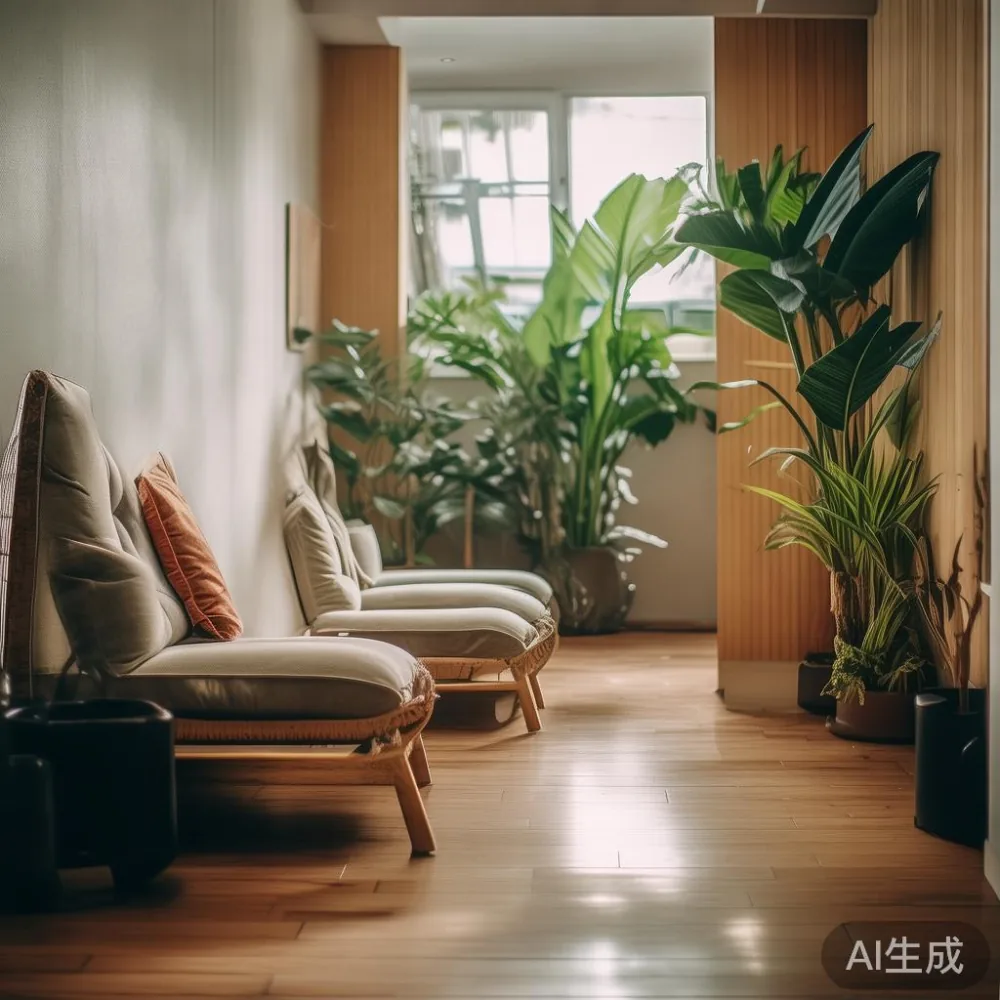
I want to address this from the angle that Singaporeans actually shop: HDB lift dimensions, corridor widths, 9% GST on landed imports, and the strange realisation that a 2.4 m wardrobe will not turn the corner into a Tampines corridor no matter what the catalogue says. Most of the rules below come from walkthroughs I have done with clients in Pinnacle@Duxton, The Interlace, and a handful of freehold condos around Bukit Timah. Last month I visited a couple in a 4-room HDB in Tampines North who had moved from a Japanese-style Muji flat to a warm minimal brief — they had four pieces left to buy, and we narrowed the list in a single afternoon.
What does warm minimal actually mean, in furniture terms?
Warm minimalism is a post-modern light luxury approach that swaps stark white-and-grey for creamy whites, sand, putty, taupe, warm oak, walnut, and brushed brass. The lines are still simple — no carved cabriole legs, no heavy ornament — but the materials carry the warmth. A stone-topped marble table in a cream or veined-cream finish reads warm, while a black-and-grey marble reads cool and minimalist. Travertine, on the other hand, swings fully warm.
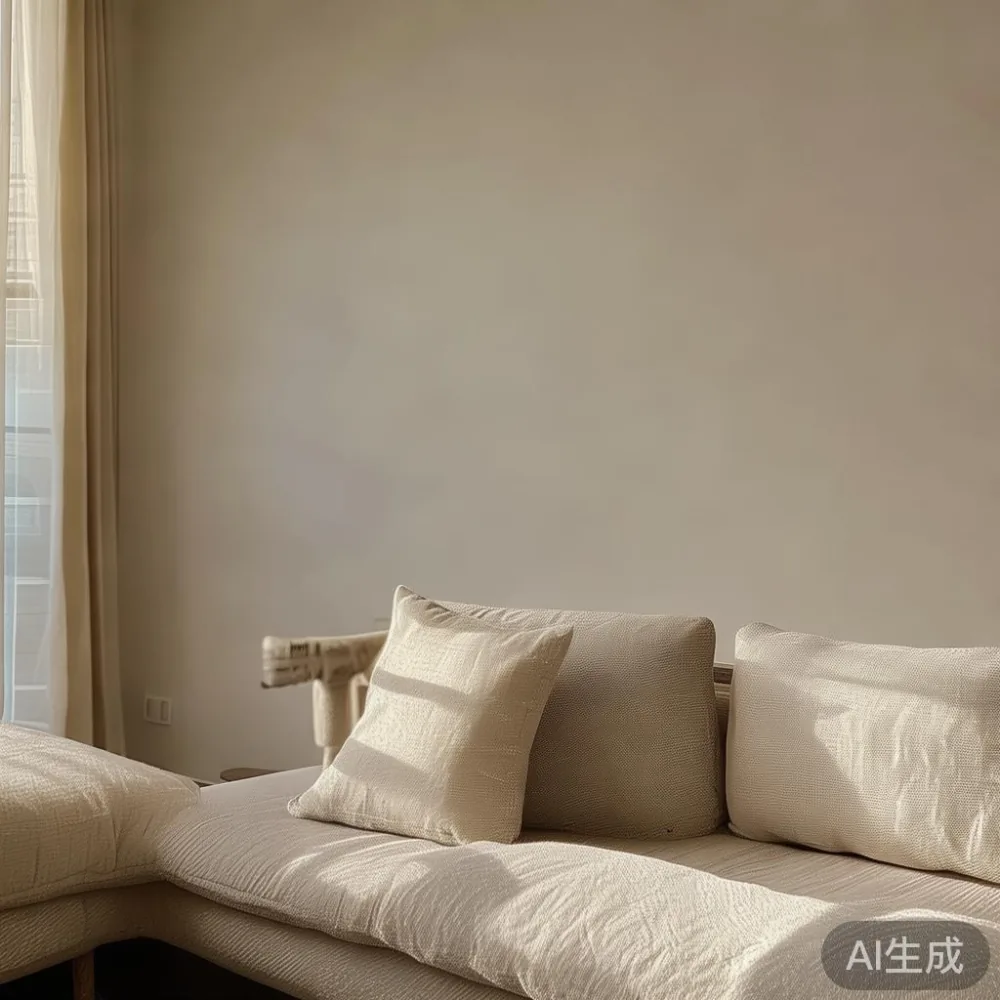
Three rules hold up across every project:
1. Wood tone decides the room. Pick one warm timber and stick to it across the bed frame, the nightstand, the dining table, and the wardrobe doors. The most forgiving choices in Singapore light are white oak, light walnut, and natural ash. Dark walnut works only if the flat has high ceilings (2.9 m and above).
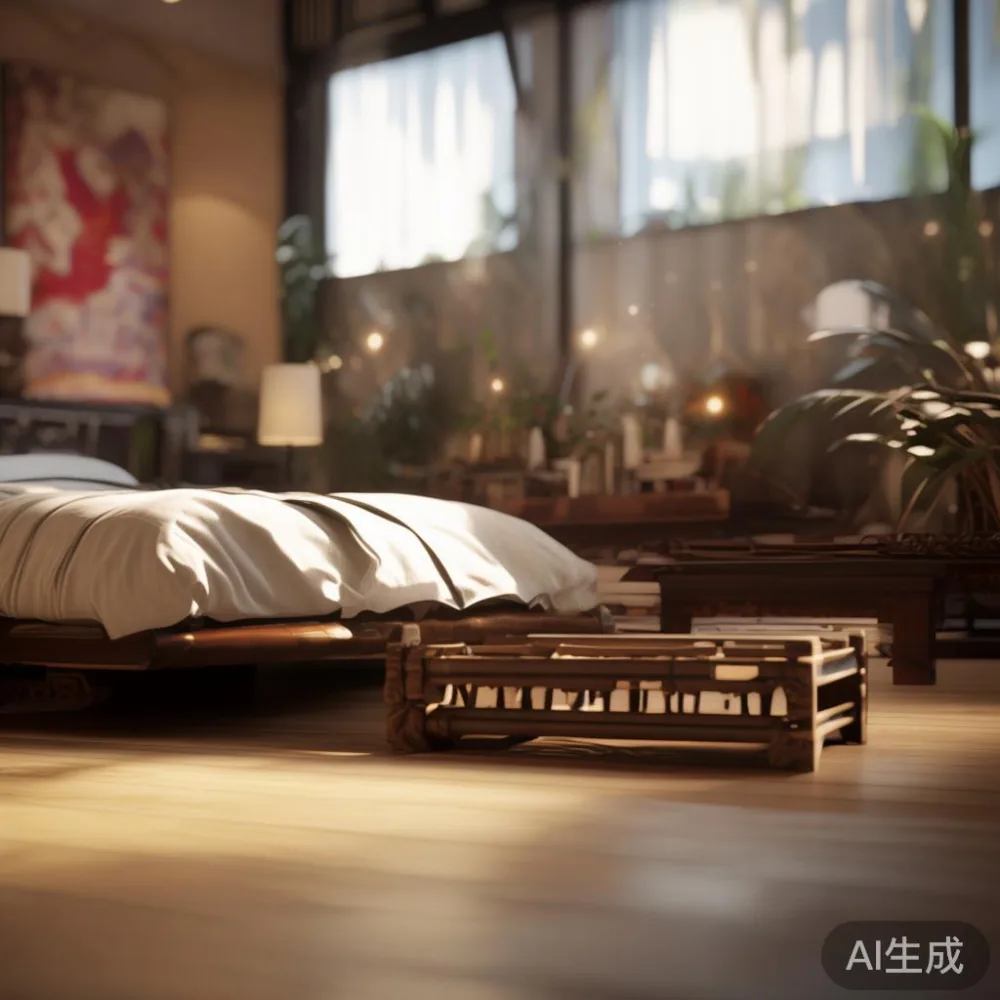
2. Upholstery stays in the same value range. If your sofa is in a warm beige boucle, the headboard on the bed frame should be within two shades of that beige. Contrast within a warm interior is created by texture, not by going charcoal grey.
3. Metals are warm. Brushed brass, antique bronze, and champagne finishes. Polished chrome reads cool and belongs to a Scandinavian minimal brief, not this one. This is one of the fastest ways to keep majlis furniture and warm-minimal furniture looking like they came from the same family rather than two different showrooms.
Is warm minimalism just French light luxury by another name?
Not exactly, but the two overlap more than people think. French light luxury leans on curved silhouettes, cane inserts, and cream upholstery — a Louis-style chair updated in a low-saturation palette. American light luxury is more architectural: clean profiles, brass details, square shoulders, generous seat depths, often in performance fabric. Post-modern light luxury borrows from both, adds a soft curve or a fluted panel, and stops short of being maximalist. Warm minimalism pulls a thread from each: the cream palette from French, the brass and proportion from American, the soft reeded panel from post-modern.
When a customer asked me last week whether the European light luxury sofa vs Italian light luxury sofa question matters for a compact HDB, the honest answer was: yes, for two reasons. European sofas (including Scandinavian and Spanish brands) tend to be made for slightly firmer seating and modular sizing — Italian light luxury leans plush, deeper seats, taller back cushions. In a 1,000 sqft HDB, the European proportion usually beats the Italian proportion because the room cannot absorb a 110 cm deep seat without crowding the walkway between the sofa and the dining table. For households that host majlis-style seating on weekends, the modular European approach also re-configures when cousins come over.
How do I pick a solid wood sofa that fits a warm minimal flat?
Start with the frame, not the cushion. A solid wood sofa with kiln-dried oak or ash will outlast a particle-board frame by 10-15 years, which is the typical rental-flip horizon in Singapore. Weight matters too: a 3-seater European solid wood sofa in boucle weighs 78-95 kg, which is heavier than a generic fabric sofa at 45-55 kg. That weight is actually a gift in a warm-minimal brief — heavier pieces feel more grounded in an airy room.
Dimensions for a typical 4-room HDB living room (about 4.2 m x 3.6 m after kitchen walls):
— Sofa length: 200-220 cm. Anything over 230 cm starts to crowd the 80-90 cm walkway to the TV console.
— Seat depth: 95-100 cm if you want to curl up, 85-90 cm if you want a sharper Scandinavian line.
— Back height: 75-82 cm keeps the room reading horizontal. Anything over 90 cm eats ceiling.
Upholstery picks that work across the brief: cream boucle (the warmest, shows lint — be honest with yourself), warm beige chenille (forgiving for kids and cats), and tan performance leather (most forgiving of all, but cooler than boucle). Avoid cool grey, navy, and bright white. If you need something family-proof, a slipcovered solid wood sofa in a washable cover runs SGD 2,400-SGD 4,800 for a 3-seater from a Foshan workshop; non-slipcover European boucle runs SGD 3,200-SGD 6,500. Pricing jumps once you add down-blend cushions and a Queen-size pull-out bed, which most Singapore households need at least twice a year.
How to style French provincial wardrobe in apartment settings without going twee?
French provincial wardrobes have a reputation for being floral, panel-heavy, and impossible in a modern flat. That reputation belongs to the 2005 version. The current light-luxury French provincial wardrobe is a single tall cabinet — usually 180-220 cm high, 90-120 cm wide, 60-65 cm deep — with reeded doors, soft arched cornices, and legs that lift the case off the floor by 6-10 cm. That floor gap is what saves the piece in an apartment. It lets light under the wardrobe, makes a compact room read taller, and stops the wardrobe from feeling like a built-in.
Three styling rules for how to style French provincial wardrobe in apartment layouts:
1. Keep one panel detail, not five. A single fluted or reeded door face, paired with plain walls, photographs beautifully. Two competing details turn into a scene.
2. Match the wardrobe door finish to the bed frame. If your bed frame is light oak, the wardrobe should be light oak. If the bed frame is walnut, the wardrobe is walnut. A mismatch is the fastest way to break the warm-minimal spell.
3. Sit one object on top. A ceramic vase, a stacked pair of art books, a small rattan tray. Nothing else. The roof of a French provincial wardrobe is the most under-used surface in a Singapore bedroom, mostly because the wardrobe is 200 cm tall and people forget they can reach the top with a small ladder.
For HDB bedrooms (typically 3.1 m x 3.4 m), a 100 cm wide, 60 cm deep wardrobe in oak can hold two adults' wardrobes if you add a top-shelf box. Bulkheads in newer BTOs sit at 2.4 m, which means a 200 cm wardrobe leaves a 40 cm gap for hidden storage or a styled top surface.
How do I match the dining table, bed frame, and nightstand so the room reads as one?
Wood continuity is the single biggest decision. I tell clients to pick the dining table first, because it is the largest single timber surface in the home and the hardest to move later. A 1.4 m rectangular dining table seats four comfortably and fits a 4-room HDB; a 1.6 m table seats six but needs at least a 2.8 m wide dining corner. Round dining tables are kinder in tight rooms — a 1.2 m round table seats four and has no corners to dodge.
Once the dining table timber is set, pull the same timber through the bed frame and the nightstand. An under 2000 European furniture bundle — usually a 1.6 m bed frame, two nightstands, and a 6-drawer dresser in the same oak or ash — is realistic from direct-from-Foshan showrooms if you avoid the trade-show gloss. Trade margin in Singapore typically adds 35-55% to the landed cost; cutting that margin is what makes a warm-minimal home under 2000 European furniture a real number for the dining-and-sleeping zone.
For the master bedroom, a 1.8 m queen bed frame in solid ash with a fabric headboard runs SGD 1,600-SGD 2,800 before GST. Add two nightstands at SGD 380-SGD 650 each and a 6-drawer dresser at SGD 1,400-SGD 2,200. A coordinated wardrobe in the same timber pushes the room total to the 6,000-9,000 SGD range, which is roughly 18-25% below what the same bundle costs at a Singapore Orchard showroom.
Heights matter too. A warm-minimal dining table sits at 75 cm. The bed frame should sit at 45-50 cm to the top of the mattress (a 28-32 cm mattress on a 18-22 cm frame). The nightstand should sit 2-4 cm above the top of the mattress. When these three heights line up, the bedroom reading is calm; when they do not, the eye catches the miss.
What about majlis furniture placement in a Singapore HDB without crowding the room?
This is the question that comes up in every Tampines and Punggol walkthrough. The majlis tradition — low seating, generous cushions, communal arrangement around a central surface — does not always translate cleanly to a BTO living room with a TV wall and a 2.4 m ceiling. But the majlis furniture vocabulary translates very well: a lower-than-standard seating piece, a warm-toned solid wood frame, a centre table that doubles as a footrest, and upholstery in sand, beige, or warm white.
For a 4-room HDB that hosts majlis seating on weekends, the practical setup is a 200 cm European-style sofa paired with two 75 cm x 75 cm ottoman stools that tuck under a 110 cm x 60 cm marble table. During the week, the stools live under the console; on weekends, the family pulls them out and arranges seating in a U-shape around the marble table. The marble table itself should be a veined cream or warm travertine — cool black-and-white marble swings the room back to Scandinavian minimal and away from warm.
On lift and corridor access: a 200 cm sofa in a single box will not fit an HDB lift (internal 1.4 m wide x 2.1 m deep, door 0.9 m wide). It has to come in two pieces or as a knock-down assembly. Foshan workshops know this and pre-cut sub-180 cm crates for Singapore delivery. Corridor widths in most HDB blocks run 1.2-1.5 m, which is fine for the same. For landed property in Bukit Timah or Sentosa, single-piece delivery is usually possible through double-width front doors. MIDHILL ships to Singapore with this kind of packaging built in, which is why delivery days land in the 18-28 range instead of the 45+ that some European brands quote.
How to style Japandi sofa in bedroom, and does it actually work?
Yes, but only if the bedroom is doing warm minimal. Japandi — the half-Japanese, half-Scandinavian hybrid — is the cleanest possible sister brief to warm minimal: low profile, low clutter, soft natural lines. A Japandi sofa in a bedroom is usually a low-slung bench at the foot of the bed or a daybed under the window, in oak or ash, with a 12-15 cm seat height and a thin cushion in cream or greige linen.
The styling rule for how to style Japandi sofa in bedroom layouts is restraint. One cushion stack at one end, one throw folded over the arm (or back, if it is a backless bench), no more. The bench itself should be the second-lightest piece in the room — the lightest is the nightstand, the heaviest is the bed frame, and the bench sits between them in visual weight. In a 3.1 m x 3.4 m HDB bedroom, a 150 cm bench at the foot of a 1.8 m bed leaves 110 cm of walking space around three sides, which is the minimum for changing the sheets without bumping the walls.
How to style French wardrobe in room when the room is not very French?
Same playbook as the provincial version, but with a sleeker cornice and no arched top. A modern French wardrobe for a warm-minimal room is a 200-220 cm floor-to-ceiling unit in light oak, with two or three reeded doors, no moulding profile, and a brass or champagne pull. Pair it with a warm beige bouclé headboard on the bed frame, and the room reads French-warm-minimal rather than French-provincial.
For how to style French wardrobe in room settings where the wardrobe faces the bed, leave a 70-80 cm walkway. If the room is shorter than 3 m, skip the floor-to-ceiling version and pick a 180 cm tall unit with a 40 cm top shelf styled with one object and one folded throw. The same lifting-off-the-floor 6-10 cm leg gap does more for a small room than the door profile does.
Which pieces should I buy first, and how do I keep the budget under control in SGD?
Order of purchase for a warm-minimal home from empty to lived-in:
1. Dining table (SGD 1,200-SGD 2,800 for a 1.4 m solid oak). Sets the wood tone.
2. Wardrobe (SGD 2,000-SGD 3,800 for a 200 cm oak unit). The largest single purchase; longest lead time.
3. Bed frame and two nightstands (SGD 2,300-SGD 3,800 combined). Pure warm-minimal anchor.
4. Solid wood sofa (SGD 3,200-SGD 6,500). The piece you spend the most time on.
5. Marble or travertine centre table (SGD 900-SGD 2,200). The warm-cool contrast.
6. Sideboard or console (SGD 1,000-SGD 1,800). Closes the storage loop.
A full six-piece warm-minimal package for a 4-room HDB lands in the SGD 11,000-SGD 21,000 range including GST, depending on whether you go boucle or performance fabric, and whether the centre table is veined marble or warm travertine. Showroom equivalents sit 30-45% higher. MIDHILL sits in the middle of that band — direct from the Foshan workshop with a 10-year structural warranty, lifetime refinishing on solid wood pieces, free shipping on orders over US$350 (about SGD 470), and 14-day returns if the timber tone or the dimensions miss the brief. Last year the team arranged a Singapore-bound consignment for a Jurong East condo where the lift was 1.2 m wide, and the dining table was re-cut into a 1.38 m top with a detachable base to clear the corridor turn — a small example of the kind of adaptation a Foshan-direct workshop can offer that a fixed-catalogue brand often cannot.
A few numbers worth keeping on a sticky note
— Standard HDB lift internal dimensions: 1.4 m wide x 2.1 m deep. Largest single crate that fits: 1.35 m x 1.2 m on its longest edge.
— Corridor widths in HDB blocks: 1.2-1.5 m. A 2.1 m tall wardrobe will pass if tilted, but a 2.3 m unit will not.
— Bulkhead height in newer BTOs: 2.4 m. A 200 cm wardrobe leaves a 40 cm usable top gap.
— Standard sofa seat height for elderly parents: 48-52 cm. Lower than that and standing up becomes harder.
— Bed frame clearance under the mattress: 18-22 cm. Enough for under-bed storage bins.
— Marble table weight: 1.2 m x 0.6 m top in cream travertine runs 45-55 kg; a veined-cream marble at the same size runs 60-75 kg. Plan the floor loading for second-storey HDBs (standard load 150 kg per sqm for bedroom areas, 250 kg per sqm for living areas).
Matching furniture to a warm-minimal interior is not a six-week project and not a six-month one either. It is one big decision (timber), three medium ones (sofa profile, wardrobe scale, dining table size), and a handful of small ones (brass vs chrome, cream marble vs warm travertine, boucle vs performance linen). Get those right and the room will look composed for the next 12-15 years, which is roughly how long a solid wood sofa and a solid oak wardrobe are expected to last in a Singapore home before the first refinishing. midhill.co carries the kinds of warm-light-luxury pieces this brief asks for, including the MIDHILL European light luxury bed that anchors a warm-minimal master bedroom in a 1.8 m light-oak frame with a curved headboard in cream bouclé — useful as a starting point when you are trying to picture the room you want.