Price Dynamics of Solid Wood Furniture: Perfect for Singapore Homes
Last month I visited a new launch in Punggol with a colleague who had just collected keys to a 4-room HDB flat. She pulled out her phone, showed me a 6-seater dining table she had bookmarked at S$899, and asked me to explain why a similar-looking table at a Tampines showroom was tagged S$3,480. Same number of chairs, similar warm oak tone, both advertised as "solid wood." The price gap was more than S$2,500, and she wanted a real answer before she paid a deposit. That conversation is the reason I am writing this guide, because the price tag on solid wood furniture rarely tells you what you are actually paying for.
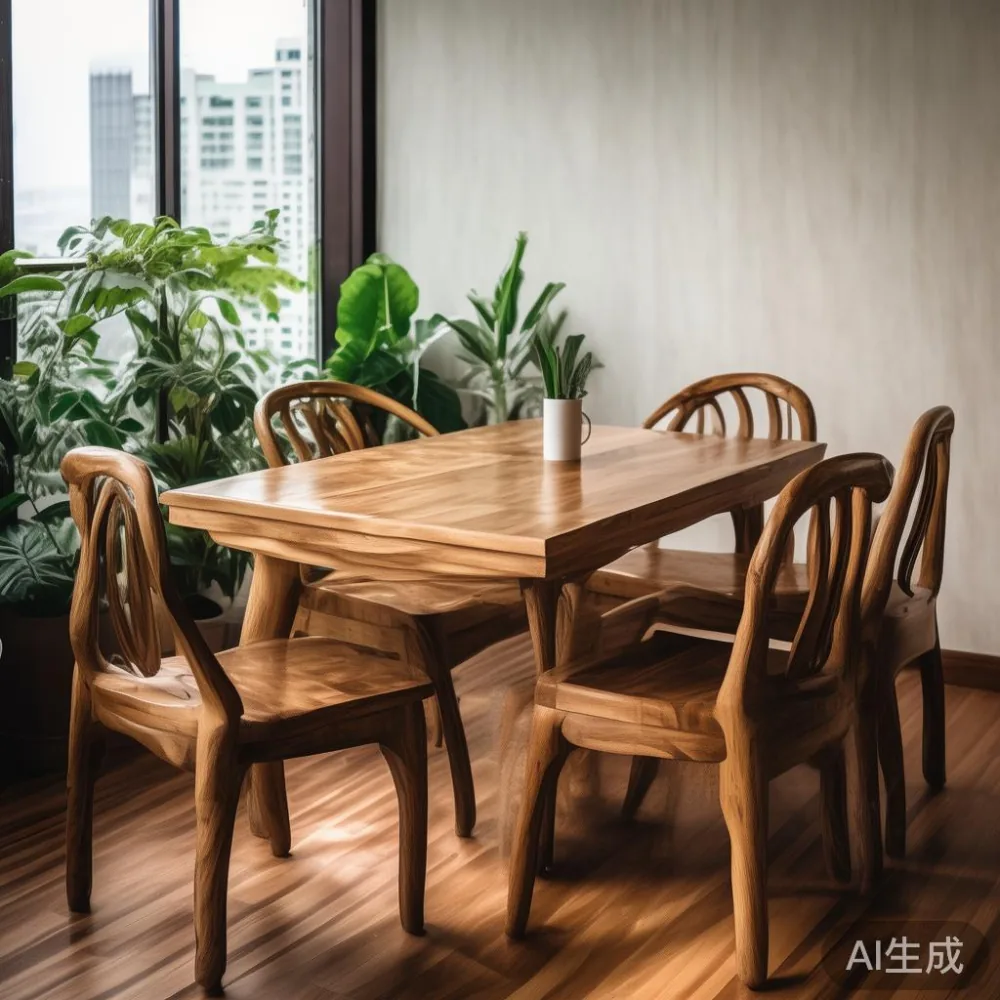
Why does solid wood cost more than veneer or engineered wood in Singapore?
The short answer: you are paying for the tree, not just the shape. Solid wood furniture is cut, kiln-dried, and joined from a single piece of timber, while veneered MDF or particleboard uses a 0.5 mm to 2 mm decorative layer glued over a composite core. A genuine solid wood dining table for six uses roughly 0.08 to 0.12 cubic metres of actual hardwood, whereas a veneered version uses around 0.01 cubic metre of real wood and 0.04 cubic metre of compressed fibre. Multiply that raw-material difference by the current Singapore import duty structure and by the cost of slow, careful kiln-drying (typically 4 to 8 weeks for furniture-grade ash, walnut, or rubberwood), and you can see why a S$3,500 table is not an unreasonable number, and why a S$899 "solid wood" listing deserves a second look.
At MIDHILL, the timber for our majlis furniture collections is air-dried for 30 to 60 days before kiln-drying, which is a slower process than most factories use but it reduces internal stress in the boards and limits the cracking you often see six to twelve months after delivery.
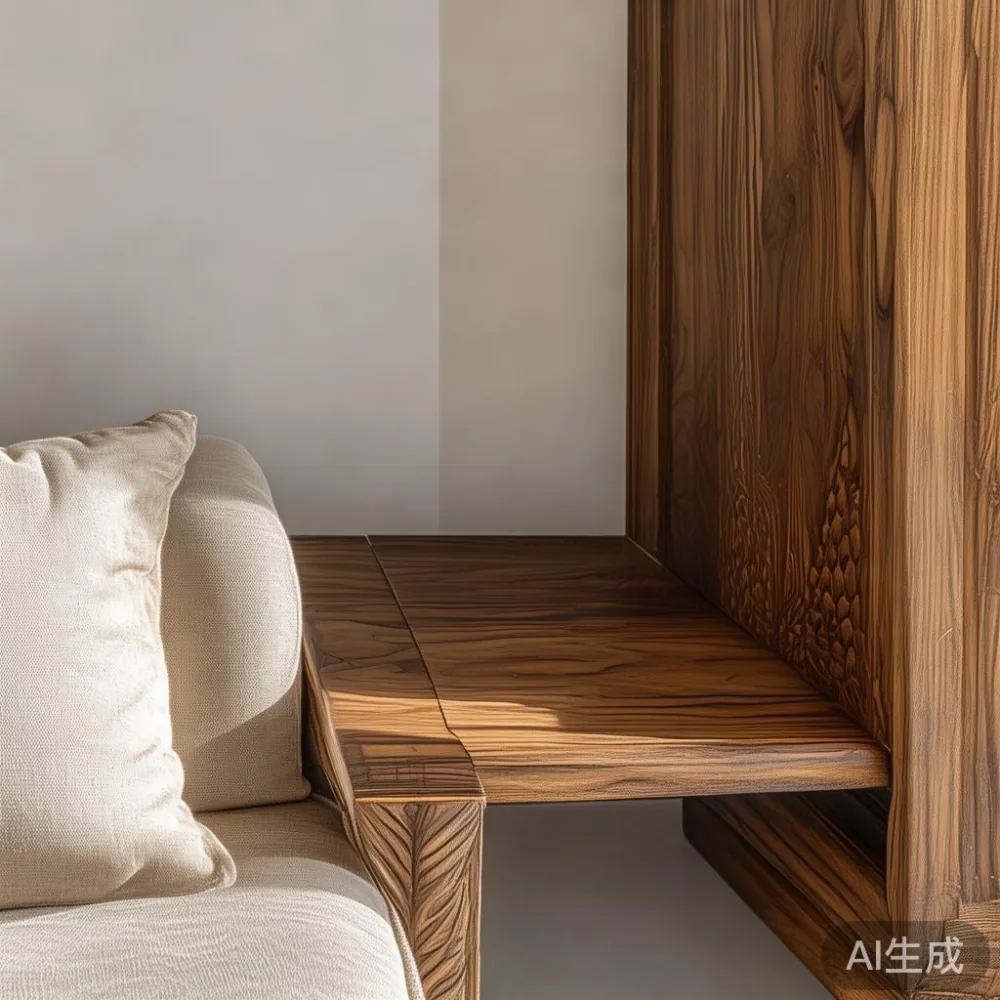
Is the species of wood really a 2x to 5x price difference?
Yes, often more. Here is how the common furniture-grade species compare on the Singapore retail market in 2024 to early 2025, based on what I have seen at local showrooms and what suppliers quoted me:
- Rubberwood (Hevea brasiliensis): S$1,800 to S$2,600 for a 1.8 m dining table. Dense, plantation-grown, and the workhorse of mid-range solid wood in Southeast Asia.
- Ash (Fraxinus): S$3,200 to S$4,500 for a 1.8 m dining table. Open grain, light colour, very stable, popular for Scandinavian and post-modern light luxury interiors.
- Beech: S$3,000 to S$4,200. Fine grain, slightly pinkish, hard-wearing, common in European-style pieces.
- Walnut (Juglans nigra): S$5,500 to S$9,000 for the same size table. Dark chocolate tone, naturally oily, and the species most associated with American light luxury design.
- White oak (Quercus alba): S$6,500 to S$11,000. Quarter-sawn boards with medullary rays are even pricier because yield drops to about 25 to 30 percent of the log.
The same logic applies to a solid wood bed frame in king size (180 cm x 190 cm, the HDB-friendly default). Rubberwood frames start around S$1,200, ash frames around S$2,400, and walnut frames climb above S$4,500. The frame uses 0.10 to 0.18 cubic metres of timber depending on whether the headboard is a slat panel, a panelled design, or an upholstered-with-wing style.
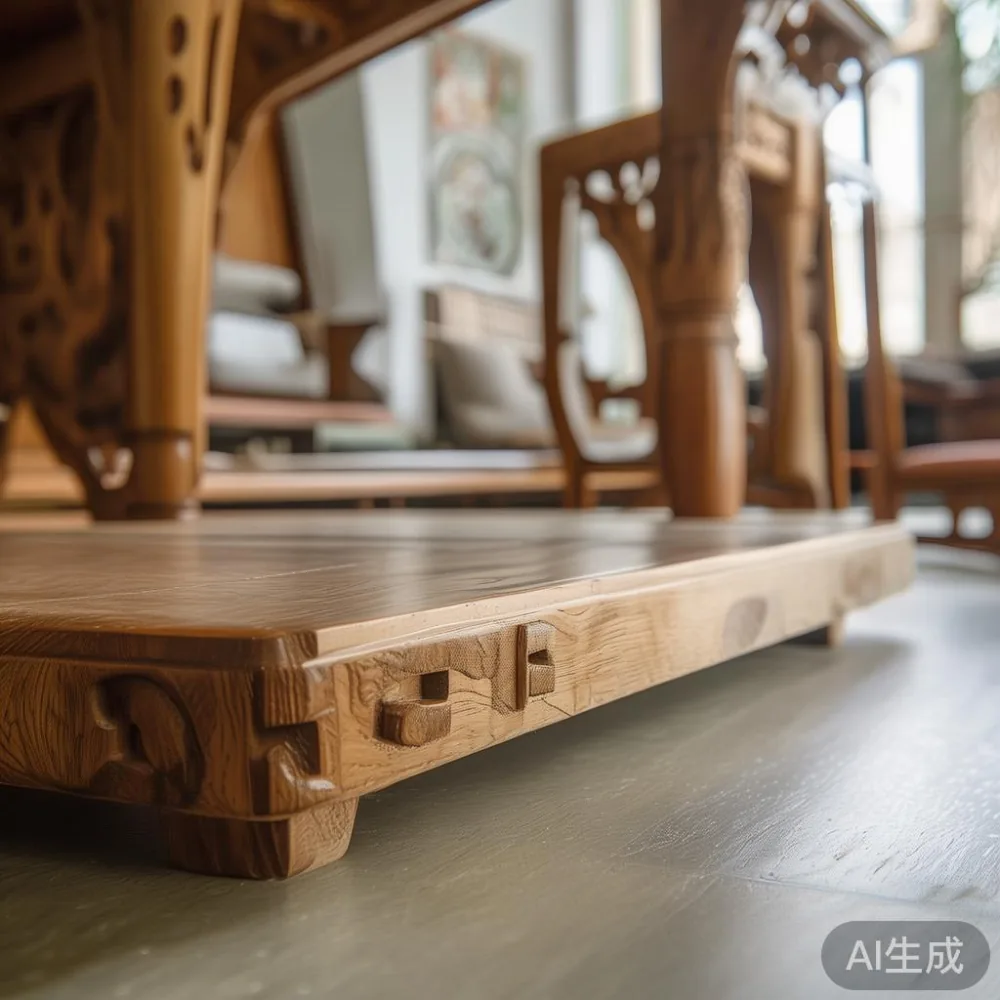
Is French neoclassical dressing table furniture worth it?
Yes, French neoclassical dressing table furniture is worth the premium if you want a single, focal piece that anchors the room and you intend to keep it for 10 to 20 years, but it is not worth it as a generic bedroom upgrade because the cost is concentrated in craftsmanship that most guests will never inspect closely. A genuine neoclassical dressing table, with tapered fluted legs, a hand-carved apron, and bevelled mirror detailing, typically costs between S$2,800 and S$6,500 in Singapore, and the labour alone accounts for 35 to 55 percent of that price. If you cannot sit at it, store your skincare in it, and see the joinery up close every day, you are paying for a style statement you could replicate with a S$1,200 solid wood nightstand plus a wall-mounted mirror.
For most HDB bedrooms in Bedok or Tampines, where the typical master bedroom runs 3.2 m x 3.6 m, I would suggest a solid wood nightstand with French-inspired tapered legs and brass cup pulls as a more practical entry point. You get the silhouette, you keep 1.5 to 2 square metres of floor space clear, and you spend closer to S$480 to S$780.
How much of the price is joinery, hardware, and finish?
More than people expect. On a typical S$3,500 solid wood sofa or S$3,800 dining table, the breakdown I see from supplier conversations looks something like this:
- Raw timber: 25 to 35 percent (S$875 to S$1,225).
- Joinery and labour: 25 to 40 percent (S$875 to S$1,400). Mortise-and-tenon, dovetail, and finger joints cost more in time but last 15 to 25 years without loosening. Staple-and-glue construction costs less upfront and typically starts to wobble at year 4 to 6.
- Hardware: 5 to 10 percent (S$175 to S$350). Soft-close drawer slides, for instance, add S$40 to S$90 per drawer compared to basic rollers.
- Finish (lacquer, oil, or wax): 8 to 12 percent (S$280 to S$420). A 7-coat Italian polyurethane finish adds roughly S$180 to S$260 over a single-coat wax.
- Upholstery (for sofas and bed headboards): 10 to 20 percent (S$350 to S$700). A solid wood sofa with a 100 percent top-grain leather seat cover will sit around S$3,800 to S$5,200; the same frame in fabric starts near S$2,400.
- Packaging, crating, and shipping: 5 to 10 percent (S$175 to S$350).
- Margin, warranty, and after-sales: 5 to 10 percent (S$175 to S$350).
This is why a 10-year structural warranty is not free, and why brands that offer lifetime refinishing (which in practice means 2 to 3 complimentary refinishing sessions over the piece's life) have to price their pieces S$300 to S$600 higher than identical-looking competitors who offer a 1-year warranty.
How do Singapore HDB logistics quietly add S$200 to S$600 to the bill?
Here is the part nobody quotes on the website. A standard HDB corridor at a Block 645A Punggol build is 1.2 m to 1.5 m wide, and the lift door on most new BTOs is 0.9 m wide with an internal cabin of 1.4 m deep by 1.1 m wide. A 2.0 m solid wood wardrobe in its assembled form will not fit. A 1.8 m dining table will fit only if you angle it at 45 degrees, which is why most Singapore retailers, MIDHILL included, ship flat-pack with knock-down fittings even for solid wood. Flat-pack adds S$80 to S$160 per piece in packaging but saves S$200 to S$450 in failed delivery attempts, stair-climber labour, and the S$120 to S$200 storage fee when a delivery fails and has to be returned to the warehouse.
Add the 9 percent GST that took effect on 1 January 2024, and the S$150 to S$250 delivery surcharge for non-lift-accessible units (typically older walk-ups in Geylang or Balestier), and you can see why a S$2,400 dining table on the catalogue page can land on your invoice at S$2,780 to S$3,050 before you have even sat down to dinner.
What is a fair price for solid wood majlis furniture in Singapore today?
Majlis furniture, the low-seating, back-and-arm-rest-silhouette pieces rooted in Middle Eastern hospitality design, has become one of the most-searched solid wood categories in Singapore over the last 18 months, and the pricing has settled into fairly predictable bands. For a starter living room setup that includes a 3-seater majlis sofa, a single armchair, and a coffee table, here is what I would call a fair mid-2025 range:
- Solid wood majlis sofa, 3-seater, 210 cm: S$2,400 to S$3,800 in rubberwood or ash, S$4,200 to S$5,800 in walnut.
- Solid wood majlis armchair: S$1,100 to S$1,900.
- Coffee table (often paired with a marble table top): S$780 to S$1,600 in solid wood legs and frame; a full marble table in Carrara or Guangxi white starts at S$1,400 and climbs to S$3,200 for a 1.2 m round top.
- Side or end table: S$320 to S$620.
A complete majlis set for a 4-room HDB living room of about 18 to 22 square metres therefore lands between S$4,600 and S$11,000 depending on species, upholstery, and whether you choose a marble table or a wood-topped coffee table. Anything below S$3,500 for the full set is almost certainly using plywood for the back panels, MDF for the drawer bottoms, or fabric that is less than 60 percent natural fibre, regardless of what the product page claims.
How can I check whether a piece is genuinely solid wood before I pay?
Five quick checks, each takes under two minutes in the showroom:
- Look at the end grain. Real solid wood shows continuous grain pattern on every face and edge. Veneer repeats every 60 to 90 cm because the printed or sliced sheet comes from a finite log section.
- Feel the weight. A 1.8 m solid ash dining table weighs 55 to 75 kg. The veneered equivalent weighs 28 to 38 kg. Lift one end if the showroom allows it.
- Check the underside. Drawers should have solid wood sides, not paper-lined MDF. Wardrobe backs in genuine solid wood majlis furniture will be 12 to 18 mm thick, not 3 mm hardboard.
- Ask about the joinery. Dovetails on drawers, mortise-and-tenon on chair legs, and corner blocks on sofas are the signs of construction meant to last 15+ years. Staples and cam locks mean 3 to 5 years.
- Ask for the warranty in writing. A 10-year structural warranty on frames and a 2-year warranty on moving parts (drawers, soft-close hinges) is the current benchmark in Singapore. Anything less, and you are absorbing the risk.
So what should I actually pay for a piece I plan to keep for 15 years?
If you intend to keep the furniture for 15 years or longer, my rule of thumb is to budget between S$1.20 and S$1.80 per day over the expected life of the piece. A S$4,200 walnut dining table kept for 15 years costs you S$0.77 per day. A S$900 "solid wood" dining table kept for 4 years before the top bows or the legs loosen costs you S$0.62 per day and a second replacement. The honest math favours paying for verified construction, kiln-dried timber, and a brand that offers lifetime refinishing and a 10-year structural warranty, even if the receipt feels heavier on day one.
For HDB buyers specifically, my last bit of advice is practical: measure your lift, measure your corridor, and add 5 cm of clearance on every side before you order. Confirm the delivery window is 14 to 28 days (anything faster usually means the piece was sitting in a Singapore warehouse for months, which is fine for some timbers and risky for others). And ask whether the price includes GST, the S$80 to S$200 stair-climber surcharge if applicable, and whether returns within 14 days are accepted if the piece arrives with visible defects. Those three numbers, more than the headline price, will tell you what your solid wood furniture will actually cost you.