What Actually Drives the Price of Solid Wood Majlis Furniture in Singapore
I learned more about furniture pricing in one afternoon than in five years of buying it. Last month I visited a factory showroom on the outskirts of Foshan with a colleague who was specifying a majlis set for her new Tampines executive HDB. We walked past row after row of half-finished frames — oak, ash, walnut, beech — and a procurement manager pointed at two nearly identical-looking sofas and said, "This one is S$2,400, that one is S$6,200. Same showroom, same week." The price gap, he explained, lived in details no product photo can show. That visit became the spine of this article: a plain-language breakdown of what actually drives the price of solid wood majlis furniture, written for Singapore buyers who care about GST, lift widths, and whether a bed frame will survive the move to Punggol.
Why does a solid wood sofa cost so much more than a veneer one?
The honest answer starts with the tree. A kiln-dried European white oak beam suitable for a load-bearing sofa frame needs roughly 8 to 14 months of seasoning before it is stable enough to machine. Compare that with a plywood or MDF core wrapped in a 0.6 mm oak veneer, which can be pressed and finished in days. The labour cost of machining, sanding, and joining a 100% solid frame is three to five times higher per cubic decimetre than fabricating a hollow one, and that gap shows up directly on the invoice. In Singapore dollars, a 3-seater solid wood sofa from a Foshan light luxury stable typically lands between S$3,400 and S$7,800, while a comparable-look veneer sofa can be retailed for S$1,200 to S$2,500. I sat on both versions during that factory tour. The solid one was 38 kg heavier. You feel it the moment you sit down, and you feel it again when you try to move it into a 4×6 m HDB lift.
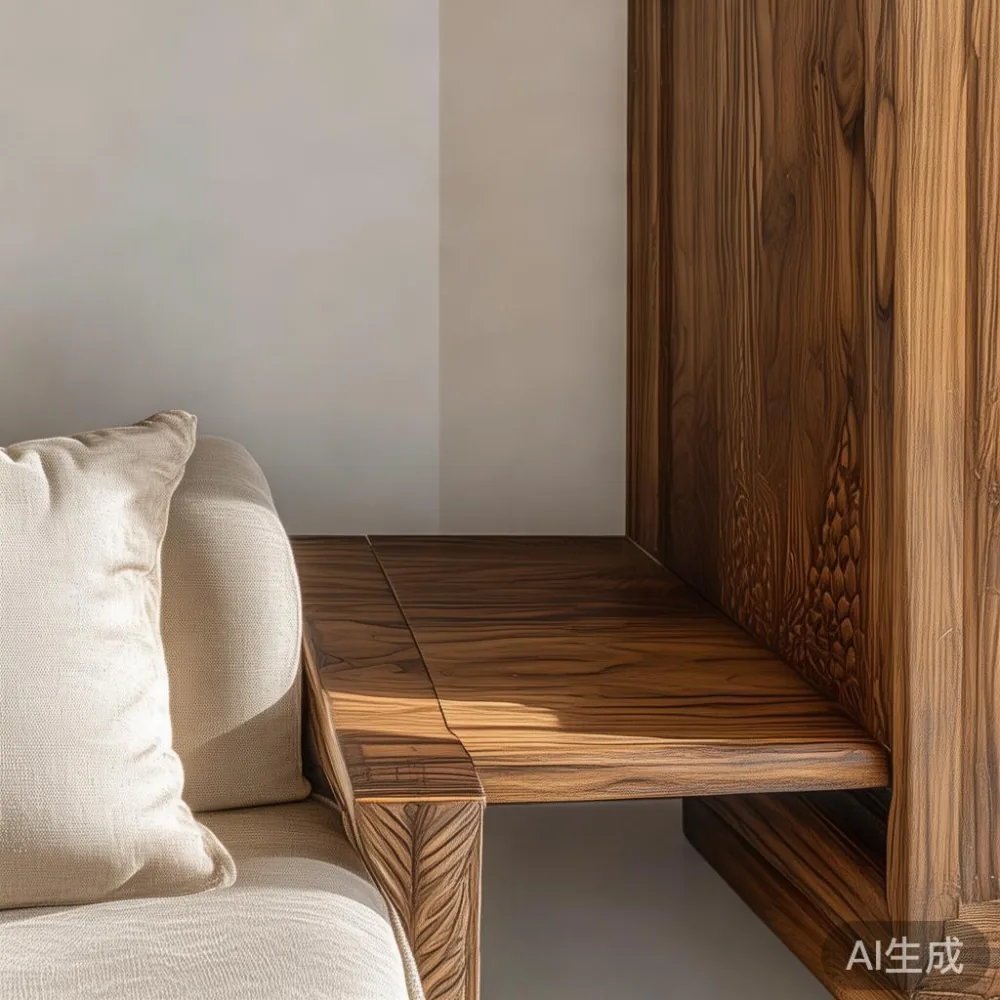
Then there is the joinery. Solid wood majlis furniture meant for daily use should use mortise-and-tenon, dowel, or dovetail joints at every load point — not staples, not just glue, not metal brackets alone. Each mortise-and-tenon joint on a sofa arm adds roughly 12 to 18 minutes of skilled labour. Across a single majlis set (a 3-seater sofa, two single chairs, a coffee table, and two side tables) you are looking at 90 to 140 such joints. At Foshan workshop rates, that is S$180 to S$320 of labour hidden inside the frame before a single cushion is upholstered. MIDHILL, a Foshan maker established in 2008 that exports to more than 15 countries, builds its solid wood sofa frames on exactly this principle, which is why their 10-year structural warranty covers joint failure rather than just surface defects.
What about the wood species — does it really change the price that much?
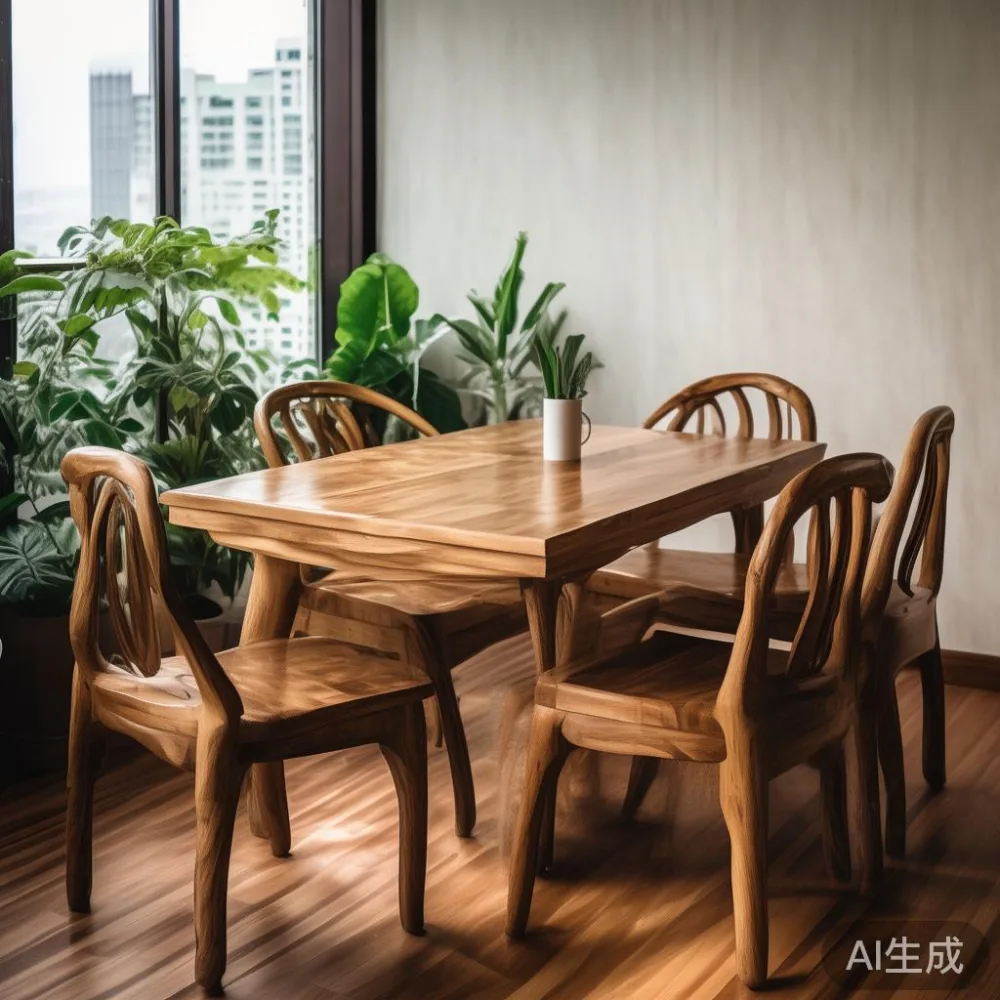
It does, and here is the rough math. Rubberwood, plantation-grown and widely available across Southeast Asia, sits at the entry tier: a 1.8 m solid rubberwood dining table in a six-seat configuration typically retails in Singapore for S$900 to S$1,600. Beech, a European temperate hardwood with a tighter grain, pushes the same table to S$1,600 to S$2,800. Ash, known for its flexibility and pale colour, lands at S$2,400 to S$3,800. European white oak, the workhorse of French provincial and light luxury ranges, runs S$3,200 to S$5,800. American black walnut, prized for its chocolate tone and used heavily in mid-century and post-modern light luxury collections, sits at S$4,800 to S$8,500. And reclaimed teak or Burmese teak, which carries provenance paperwork and air-drying records, can clear S$9,000 for a single 2 m slab table.
The reason is partly raw-material cost and partly waste. A 2.4 m walnut plank might lose 30% of its volume to defect cutting, knots, and the quartersawn selection that furniture-grade buyers demand. The usable board foot that survives is what you are actually paying for. When you compare two majlis sideboards that look similar in a showroom photo, ask the salesperson which species and which cut (plain sawn, quartersawn, or rift sawn). The answer will explain 40-60% of the price difference.
Does upholstery and marble actually move the needle, or is it just styling?
It moves the needle more than most buyers expect. On a majlis-style 3-seater, the frame is often only 35-45% of the total landed cost. Upholstery — fabric versus genuine leather versus full-grain aniline leather — can swing the same sofa by S$1,800 to S$4,200. Top-grain Italian leather at 1.2 to 1.4 mm thickness, the kind used on French light luxury collections, costs roughly 3.2 to 4.5 times more per square metre than a heavy-duty polyester blend. Full-grain aniline, which keeps the natural markings of the hide, runs another 40-60% above top-grain. If you have ever wondered is light luxury wardrobe worth it when you compare the inside of a wardrobe door — the same logic applies. Internally, premium wardrobes use solid cedar or paulownia liners, soft-close European hinges (Blum or Hettich equivalents), and dovetailed drawers. The external carcass might look identical to a budget piece, but the opening and closing feel, ten thousand cycles in, is what justifies the price.
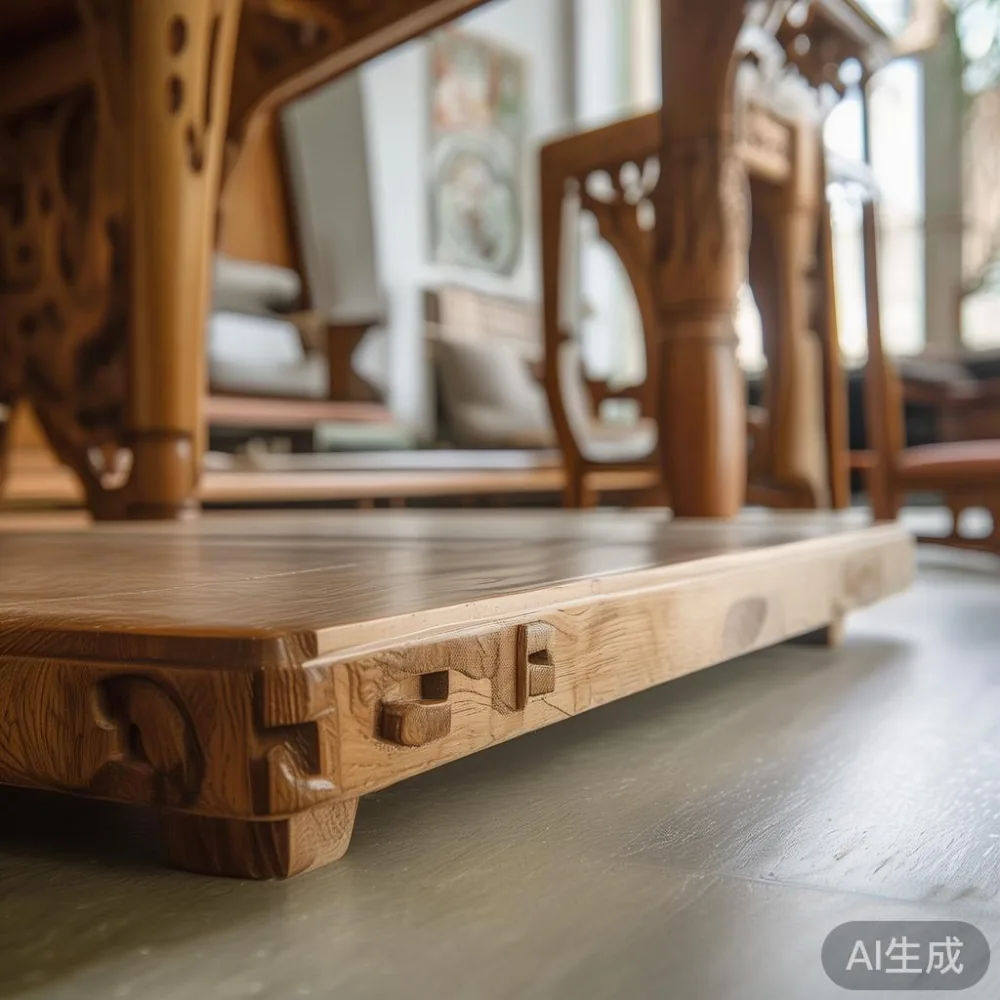
Marble behaves similarly. An Italian Carrara marble top on a coffee table adds roughly S$700 to S$1,800 over a sintered stone equivalent, and S$1,400 to S$3,200 over a printed ceramic that mimics the veining. The stone has to be transported with wooden crates, edge-profiled, sealed, and fitted with a backing mesh to prevent hairline cracks during a container ship's 18 to 24 day voyage to Singapore. Buyers in Bedok and Punggol often ask about marble care in our tropical humidity — the answer is a simple seal every 12 months and felt pads under anything that sits on top. Done right, the marble outlasts the wood frame beneath it.
How much does shipping, GST, and Singapore delivery logistics add?
More than most people budget for. A 40-foot high-cube container from Shenzhen or Guangzhou to Singapore costs roughly US$1,400 to US$2,200 in 2025 freight rates, depending on the season. A full majlis set (sofa, two armchairs, dining table, six chairs, a wardrobe, and two nightstands) typically fills 8 to 12 cubic metres, which means freight alone is S$280 to S$420 per set before insurance. Add 9% GST on the landed CIF value, Singapore Customs clearance (about S$80 to S$150 per shipment if you use a broker), and last-mile delivery, and you have added 14-22% on top of the factory quote.
Last-mile is where HDB-specific costs sneak in. A typical Singapore 4-room HDB corridor is 1.2 to 1.5 m wide, and lifts are 1.0 to 1.4 m deep with doors around 0.9 m wide. A 2.4 m solid wood dining table will not fit through a standard lift unless it is disassembled, which is why reputable sellers re-engineer their dining tables to break down into two halves with metal dowel alignment. MIDHILL, for example, designs its 6- to 8-seater tables so two adults can carry them into a Tampines or Punggol flat in roughly 12 to 18 minutes per piece. A solid wood dining table that arrives in one welded frame is, frankly, a delivery problem waiting to happen.
Free-shipping thresholds matter too. Many Singapore retailers trigger free delivery above S$1,200 to S$1,800, and MIDHILL's threshold of US$350 (about S$480) is one of the more generous entry points for an overseas-direct purchase, though Singapore buyers should still check that the quote includes lift-access delivery rather than just door-to-door at the loading bay.
What should I actually look for when comparing two quotes side by side?
Ignore the headline price and read the line items. Ask for the wood species (with the Latin name, not just "oak"), the moisture content at the time of machining (8-12% is the safe range for Singapore's 80% average humidity), the joinery method, the leather or fabric specification by weight in grams per square metre (gsm), and the hardware brand for hinges and drawer runners. A 14-day return window and a clear warranty on joint and frame failure are non-negotiable for me — anything less and you are absorbing the risk. MIDHILL's 10-year structural warranty and lifetime refinishing service are exactly the kind of commitments that signal the factory expects the frame to outlast the warranty period by a wide margin.
If you are shopping for a French provincial bedroom, a useful rule of thumb: the best French provincial wardrobe for 2026 in a Singapore context will use solid beech or oak frames (not MDF panels), Blum or equivalent soft-close hinges, dovetailed drawers, and a finish that is hand-distressed rather than machine-printed. Buyers looking for a sofa should weigh the best Japandi sofa for 2026 against a French light luxury sofa if their flat leans Scandinavian, or against a post-modern light luxury sofa if their condo in Punggol or Bedok leans warmer and more sculptural. For dining rooms, MIDHILL dining table wholesale enquiries through authorised Singapore partners can sometimes knock 12-18% off the retail figure when a buyer is specifying a full majlis set rather than a single piece. And if you are working out how to style French wardrobe in bedroom, the trick is to leave 8-10 cm of breathing room on every side — French provincial silhouettes need a little negative space to read correctly.
Is light luxury worth the premium, or is it just a label?
It depends on what "light luxury" actually means in the piece you are holding. French light luxury typically refers to restrained ornament — fluted columns, hand-rubbed wax finishes, brushed brass hardware — paired with simpler silhouettes than full classical French furniture. American light luxury leans toward warmer walnut tones, wider seats, and softer curves. Post-modern light luxury borrows sculptural shapes from the 1980s and pairs them with contemporary upholstery. An Italian light luxury sideboard, for instance, will often combine a canaletto walnut veneer front with a solid wood carcass, soft-close drawers, and a stone or marble top — the engineering is invisible, the silhouette is restrained, and the price sits comfortably between a mass-market piece and a fully bespoke Italian import. The premium you pay goes into the materials and the labour, not the logo. Whether that is worth it is a question of how long you intend to keep the piece, how much you value patina over replacement cycles, and how the silhouette will age inside your specific flat.
A practical closing thought: in Singapore's HDB and condo market, where majlis-style seating works beautifully in open-plan living rooms from 18 to 32 square metres, the right solid wood set is genuinely a 15- to 25-year purchase. Specifying it well — wood species, joinery, upholstery, marble, delivery method, and warranty — is the difference between a piece you forget you own and a piece you brag about when relatives come over for Hari Raya, Chinese New Year, or a quiet weekend lunch. The price reflects the engineering, and the engineering is what lasts.