Majlis Sofa Cost-Benefit: Veneer vs. Solid Wood in Singapore
Choosing furniture for a Singapore home is rarely a decision about appearance alone. A dining table must still fit through a 90 cm HDB flat entrance or the narrower common corridor. A wardrobe must remain practical in a Tampines bedroom, while a sofa has to suit a compact Bedok living room without overwhelming the space. Price matters too, but the lower sticker price can be misleading once cleaning, repair, refinishing and early replacement are counted over five years.
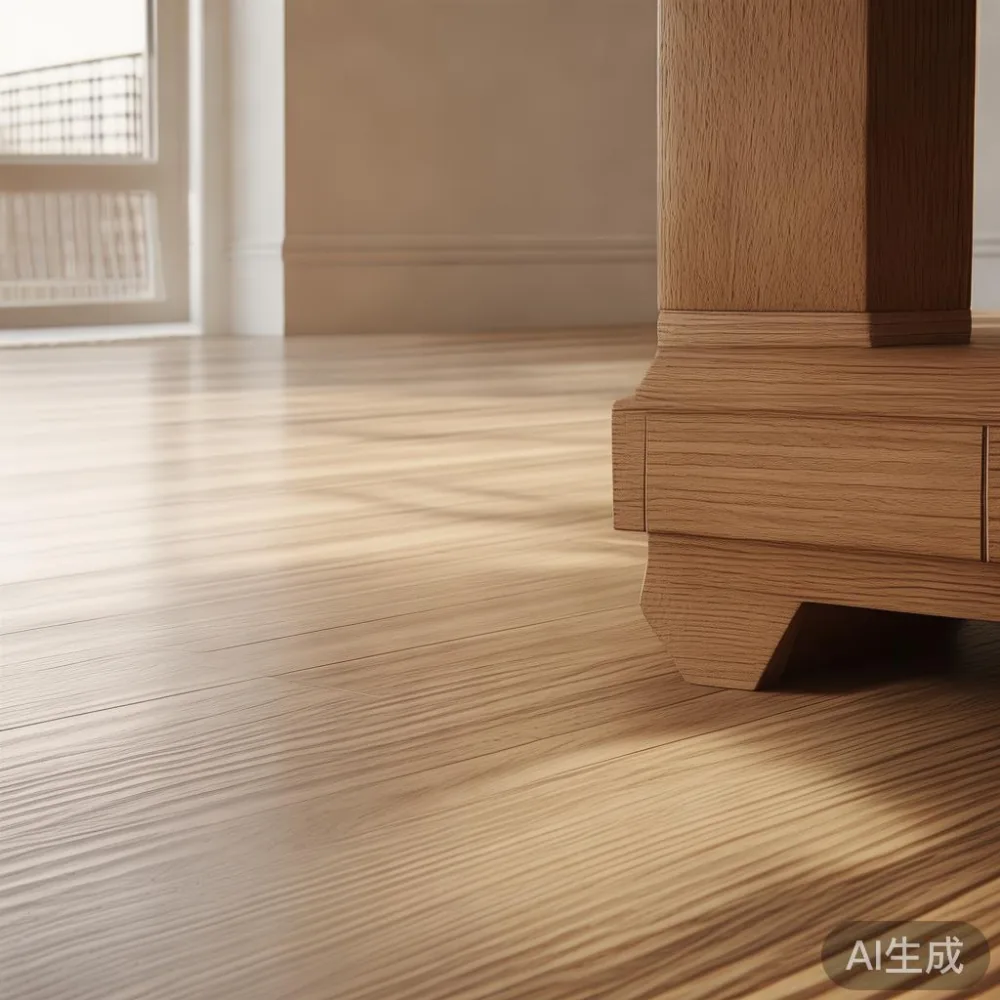
This comparison looks at veneer and solid wood furniture using realistic Singapore figures in SGD. It covers a solid wood sofa, bed frame, dining table, wardrobe, nightstand and marble table, with delivery, GST, maintenance and replacement included. The result is not that one material suits every household; it is that solid wood often becomes more economical when a family keeps furniture for many years, while carefully selected veneer can still be sensible for less demanding rooms.
How much does furniture really cost over five years in Singapore?
The simple calculation starts with purchase price. Add delivery, assembly, GST and expected repairs, then subtract any resale value at the end of year five. A better comparison for a Singapore buyer is total cost of ownership rather than the showroom price alone.
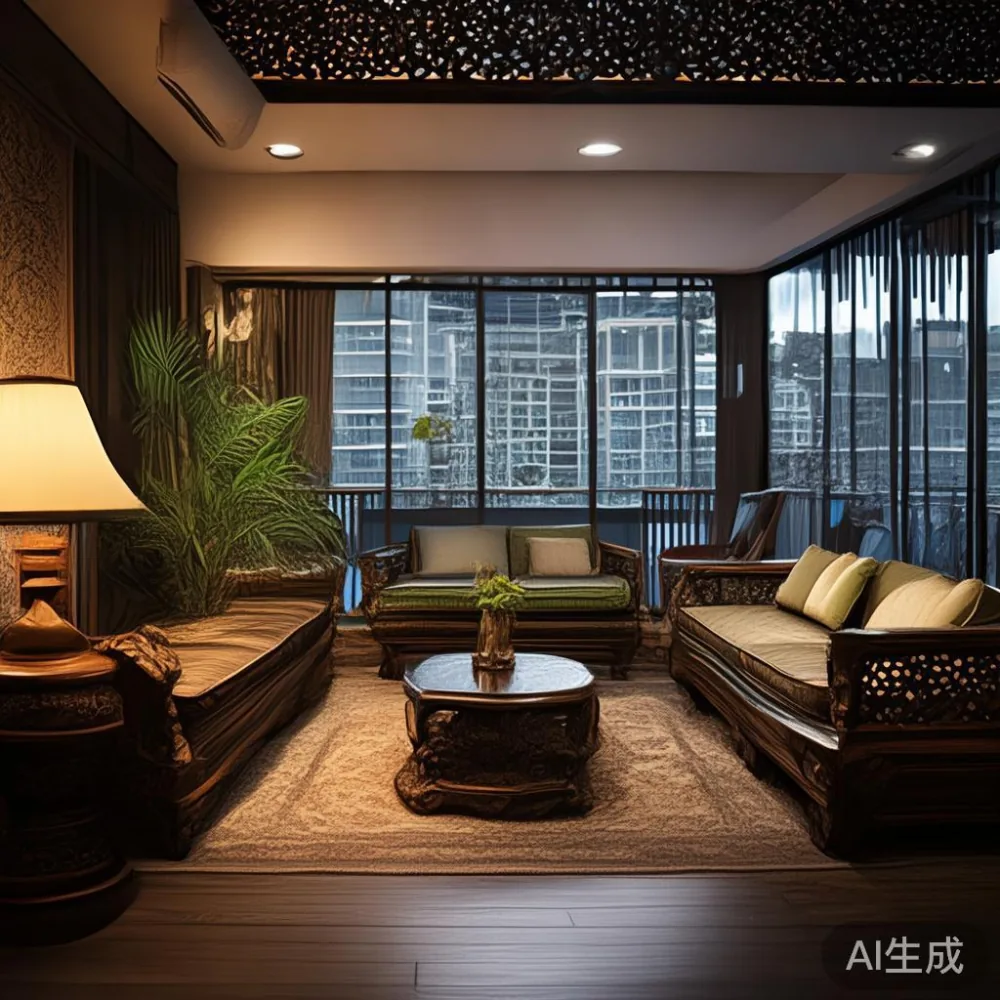
Consider a five-piece dining setting with one 180 × 90 cm table and four chairs. A veneered set might cost S$1,280, including a modest Singapore delivery charge of S$40. A comparable solid wood set might cost S$1,780 with the same delivery charge. Both prices include 9% GST. Over five years, assume the veneer set needs one edge repair at S$140 and a replacement veneer strip at S$90, while the solid wood set needs one tightening and waxing service at S$85. The five-year totals would then be S$1,550 for veneer and S$1,905 for solid wood.
Those figures do not automatically make solid wood the better purchase. If the veneer set is moved twice, used as a temporary dining station and eventually sold for S$400, its effective cost is S$1,150. If the solid wood set remains in the family home and can be refinished for another decade, its effective cost is close to S$1,905 but with a longer useful life. This is why replacement timing and care quality matter as much as the initial price.
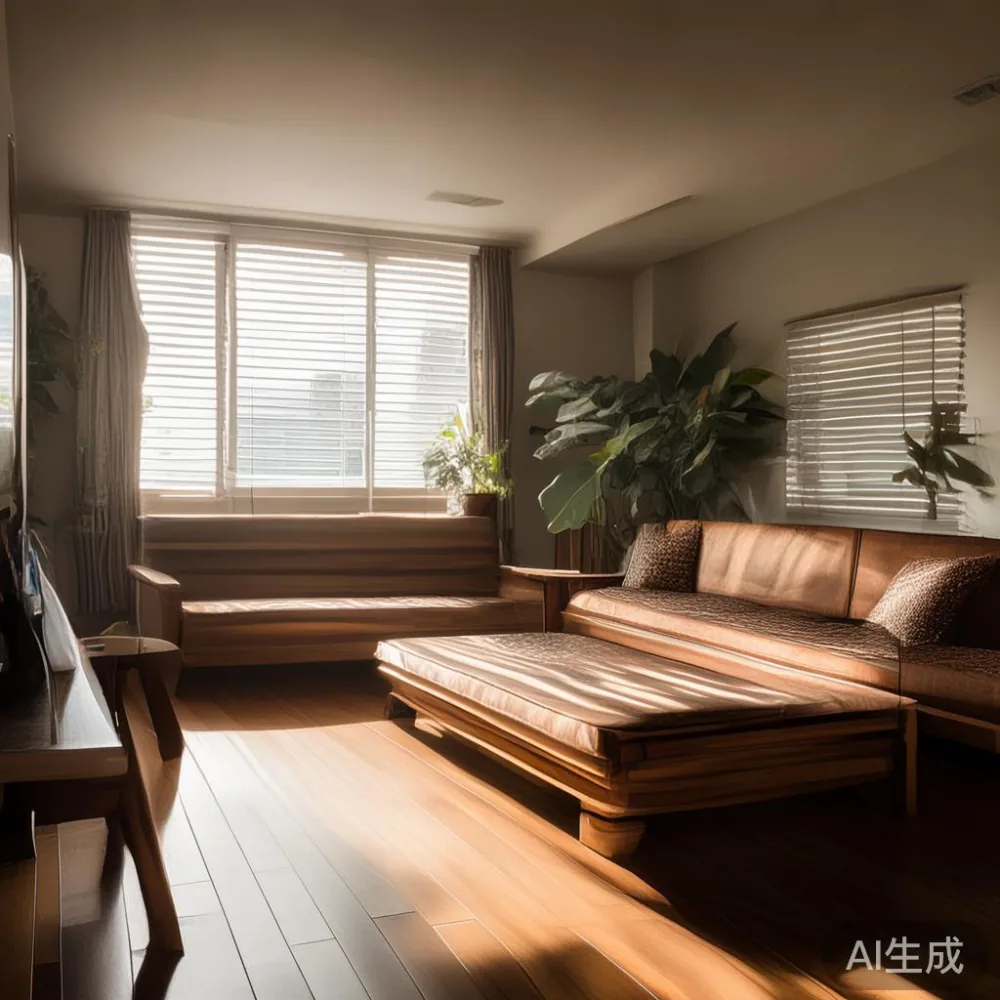
For larger pieces, delivery becomes a meaningful line. In many HDB blocks, a lift door measures about 90 cm wide and 210 cm high, although older blocks can be tighter. The actual usable opening may be closer to 80–85 cm after accounting for the lift control panel and door clearance. A sofa box of 210 × 85 × 55 cm may fit, but a rigid 220 × 92 cm package may not. Check the building's service lift booking rules and reserve a 30-minute delivery window.
MIDHILL normally quotes delivery in days rather than promising a universal lead time. A typical in-stock Singapore order can be dispatched in 3–5 working days, while a made-to-size wardrobe or dining table may require 4–7 weeks. For furniture sent beyond Singapore, the delivery window can be 25–45 days after production. Those practical details should be confirmed in writing before ordering.
What do veneer and solid wood cost for a sofa and bed frame?
A three-seat sofa is one of the clearest tests because it combines a large visible surface with daily contact. The following example uses a 210 cm-wide model with a 92 cm depth and an estimated 72 kg shipping weight. A quality veneer sofa may cost S$1,580 delivered, while a solid wood sofa with upholstered seating costs S$2,380 delivered. Both examples include 9% GST.
Over five years, assume a family sits on the sofa for roughly 1.5 hours each evening, or about 273 hours per year. The veneer version might require S$80 for a minor frame adjustment in year two and S$120 for a fabric repair in year four. The solid wood version may need S$75 for hinge tightening and S$60 for an oiling service. The totals are S$1,780 for veneer and S$2,515 for solid wood.
The visible distinction is less important than the frame construction. Look for a kiln-dried hardwood frame, dowelled or mortise-and-tenon joints, and screws positioned where they can be tightened. “Solid wood” on the outer frame does not guarantee that every hidden component is solid wood. Ask for the frame species, plywood or solid board specifications, and the exact warranty period. A 10-year structural warranty can offer useful protection, but it should not be confused with coverage for dents, water marks or deliberate misuse.
A queen bed frame is another useful comparison. A 160 × 200 cm veneered bed might cost S$980, while a comparable solid wood bed costs S$1,450. A queen mattress is excluded from both figures. Delivery in a typical HDB block may add S$50–S$90 if the lift is suitable; an upstairs Punggol condo without a direct lift access could add S$120–S$180 for carrying the frame to the level.
Allow roughly S$60 over five years for veneer hinge and surface maintenance, compared with S$90 for solid wood cleaning, tightening and waxing. This produces five-year costs of S$1,040 for veneer and S$1,540 for solid wood. The solid wood frame has the higher cost, but its ability to be refinished can extend its service life well beyond the five-year calculation period.
How much does a dining table cost when GST, delivery and maintenance are included?
A dining table experiences heat, spills and daily movement, so maintenance assumptions should be realistic. The example below uses a 200 × 100 cm table with a 76 cm height and a 42 kg weight. Veneer version: S$1,180 purchase price, S$50 delivery, S$65 for one repair and S$40 for two cleaning treatments, for a five-year total of S$1,335. Solid wood version: S$1,680 purchase price, S$50 delivery and S$110 for oiling and minor joint service, for a total of S$1,840.
Singapore humidity makes care instructions relevant. Relative humidity commonly changes through the day and can move between roughly 55% and 80% in many air-conditioned homes. Keep the table away from persistent dampness and do not place a hot vessel directly on the surface. Use a coaster with a diameter of at least 8 cm and a felt base of 2–3 mm. Wipe spills within 10 minutes rather than waiting overnight.
Table size can affect both cost and usability. A 120 × 75 cm table fits a compact dining corner but seats four people comfortably, while a 160 × 90 cm model usually gives each diner about 60 cm of width. A 200 × 100 cm table is more practical for six. If a corridor narrows below 90 cm, measure the route before a table is manufactured; reducing the top from 200 cm to 180 cm may solve the access problem without losing the required seat count.
This is also where the term MIDHILL dining table can be used more precisely. A buyer comparing a MIDHILL dining table should request the timber name, finish thickness, underside construction and delivery packaging. Marketing photographs may make two tables look similar even when their five-year costs are not. A photograph cannot reveal whether a veneer is 0.6 mm or 1.5 mm thick, or whether a solid wood table has a stable solid top rather than a thin veneer over a panel.
For a room that combines dining and work, a solid top may be more forgiving because small scratches can be sanded and oiled. Veneer can still make sense when the budget is fixed and the table will stay in one dry, stable location. The decision should follow use, not a general rule that solid wood always wins.
How much do a wardrobe and nightstand cost in a Singapore bedroom?
Wardrobes offer the largest opportunity for a veneer budget to stretch, but they also create access problems that delivery quotes do not always capture. A fitted 240 cm-wide wardrobe with 240 cm-high doors and a 60 cm depth may cost S$2,180 in veneer, including fabrication and delivery, while a comparable solid wood system may cost S$3,680. The figures include 9% GST and standard Singapore delivery, but not extensive alterations to an HDB bedroom.
Measure the room diagonally as well as the doorway. A 240 × 240 cm wardrobe might appear to fit, yet a 65 cm-deep carcass can clash with skirting, pipes or a window ledge. Door panels must open through an arc of roughly 90 degrees. In older walk-ups, installers may need to remove and refit a door, adding S$180–S$350 over a standard delivery fee.
Over five years, allow S$140 for veneer edge and hardware maintenance and S$210 for solid wood adjustment, surface care and one protective coat. Totals become S$2,320 and S$3,890 respectively. A sliding-door veneer wardrobe may be the more practical choice for a narrow Punggol or Tampines bedroom because it needs less floor space to operate. Solid wood remains attractive for a hinged design with visible grain and a longer refinishing cycle.
For a 45 × 40 × 50 cm nightstand, a veneered unit may cost S$280 delivered and a solid oak unit S$460. Add S$35 for veneer maintenance and S$55 for solid wood waxing over five years. The resulting totals are S$315 and S$515. The small price gap is easy to understand: the larger wardrobe and dining table carry more weight, more fabrication time and more exposed surface, so their cost differences are more substantial.
European light luxury dressing table is a useful design direction for a compact bedroom. A dressing table normally needs a clear width of 80–100 cm and a depth of 40–45 cm, allowing a chair to be pulled back by about 60 cm. In an HDB flat, that arrangement often works better in a bedroom than in a living room already shared by a dining table and sofa.
Is a marble table more expensive to maintain than timber?
A marble table changes the comparison because its surface is not timber, although the base and cabinet may still be veneer or solid wood. For a 100 cm round side table weighing 34 kg, a marble-topped model with a timber base might cost S$760 delivered. Over five years, allow S$180 for sealing and one stain treatment. The total is S$940.
A solid wood side table of similar size might cost S$420, with S$55 for five years of maintenance, producing a five-year total of S$475. Marble costs more here, but it brings a hard, cool surface and a different visual character. Marble is also heavy and brittle around edges. If a lift can accept only 500 kg including the trolley and crew, a 34 kg table is manageable; a 70 kg marble dining top needs closer planning.
Never confuse a natural marble top with marble-look porcelain or printed MDF. A 12 mm porcelain slab may weigh about 20 kg on a 100 cm round table, while a 20 mm natural marble top can weigh around 34 kg. The dimensions, substrate, edge profile and load rating should appear on the product specification. For a low console, verify that the cabinet can carry at least 40 kg evenly across the top.
Cleaning also differs. Use a neutral pH-cleaner and a soft cloth, not acidic household liquids. Keep the five-year cost model separate from timber care. If a marble table is paired with a solid wood sofa, the comparison covers a mixed-material room rather than a pure veneer-versus-solid-wood test.
Which is cheaper after five years: veneer or solid wood?
The example below compares six commonly considered pieces. Each total includes purchase price, standard Singapore delivery, 9% GST and estimated five-year maintenance. It excludes mattress, mattress frame, decorative objects and major building alterations.
For the 210 cm sofa, veneer costs S$1,780 and solid wood S$2,515. For the queen bed frame, the totals are S$1,040 and S$1,540. For the 200 × 100 cm dining table, they are S$1,335 and S$1,840. For the 240 cm fitted wardrobe, they are S$2,320 and S$3,890. For the 45 cm nightstand, they are S$315 and S$515. For the marble side table with a timber base, they are S$940 for the marble-topped option and S$475 for an all-solid-wood side table, although these are not identical products.
Across the five directly comparable timber products, veneer totals S$6,790 and solid wood S$10,300. The difference is S$3,510, or about S$702 per product over five years. Put another way, the veneer set averages S$1,358 per item, while the solid wood set averages S$2,060. Solid wood is roughly 52% higher in this scenario.
That is a substantial premium, so solid wood should earn its place through durability, finish quality and the intention to keep each piece. A family replacing every item after five years may never recover the premium. A household that expects to retain a dining table for 12 years, a bed for 15 years and a wardrobe for at least 10 years has a better chance of spreading the cost across more years of use.
Resale is another factor, although it should not be exaggerated. A well-maintained solid wood dining table might sell for 40–60% of its original price after five years. A good veneer table might recover 20–40%. Applying those ranges to the examples gives potential proceeds of about S$672–S$1,008 for the solid wood dining table and S$267–S$534 for the veneer version. Actual proceeds depend more on condition, design and buyer demand than on material alone.
For visual direction, French light luxury tends to suit a restrained bedroom with curved profiles, upholstered seating and warm timber tones. American light luxury often means generous proportions, clean lines and neutral fabrics. If those terms sound appealing but the budget is limited, searching for cheap Modern light luxury furniture can reveal veneer pieces with disciplined shapes and replaceable components. The relevant comparison is whether the lower price buys the right dimensions, hardware and finish for the actual room.
How should you style European furniture in a compact HDB or condo?
Material choice becomes easier when the layout is fixed around real clearances. For an HDB living room measuring 3.2 × 4.5 m, a 210 cm sofa may dominate the seating wall. A 180 cm three-seat sofa can preserve a 55–65 cm walking route, and a 35–40 cm coffee table leaves about 40 cm between the sofa and table. These measurements help prevent a premium material from being wasted in a poorly planned room.
Anyone learning how to style European sofa in apartment spaces should begin with the lift and corridor, then work inward. A sofa with loose legs is easier to carry than one with a fixed timber base, while a bed that separates into two 80 cm sections can reduce access issues. Check that door handles, switches and emergency routes remain clear.
For a guest room, Minimalist for guest room planning is particularly useful. A 120 cm-wide daybed, one 35 cm bedside table and a slim 80 cm dressing table can create a functional space without a full-size suite. A European light luxury dressing table with one drawer and a 70–80 cm mirror fits this brief better than a 110 cm model that blocks circulation.
Storage can support the same design language. Mid-century modern with storage is a natural fit for compact Singapore interiors because it combines closed compartments with slim profiles. A 120 cm sideboard measuring 40 cm deep can hold dining accessories while keeping the floor visually open. Use it to absorb the visible joins and materials that will differ between veneer and solid wood pieces.
For wardrobes, a visual brief can help buyers compare options without chasing vague labels. A search for the best French provincial wardrobe for 2026 may emphasize carved details and curved edges, but a HDB bedroom may require flatter doors and shallower depth. If the intended model has projecting handles or crown moulding, measure the door-swing area before ordering.
What should a Singapore buyer ask before paying for furniture?
Ask for six specific facts: the timber species, the panel construction, the surface finish, the assembled dimensions, the packaged dimensions and the delivery date. “Solid wood” should identify which components are solid wood and which are engineered panels. Veneer should disclose its thickness and the core material. A product specification is more useful than a lifestyle photograph.
For the warranty, confirm whether the 10-year structural period applies to the frame, joinery or the complete product, and retain the order invoice. A lifetime refinishing service may cover eligible solid wood pieces, but ask whether labour, collection, return freight and new materials are included. If only the first refinishing service is included, that changes the five-year cost calculation.
Check delivery against local access. In Singapore, the S$50–S$120 delivery range above assumes a standard service-lift booking and a route wider than 85 cm. A non-lift HDB unit may add S$150–S$300. A Punggol or Tampines condo may impose a loading-bay booking or an elevator reservation fee. These amounts should be quoted separately rather than hidden in the product price.
Returns and warranty service also affect financial risk. A 14-day return window allows time to inspect scale, finish and door operation, provided the item remains unused and in its original packaging. Photograph the furniture on arrival, record any transit marks and report them within 24 hours. For made-to-order pieces, confirm the return terms before production because a personalised wardrobe or dining table may have different restrictions.
My own recent check made the difference clearer. Last month I visited a family in Bedok and compared their 6-year-old veneer dining table with a solid wood table in a nearby condo. The veneer table had a 70 cm top that was too tight for six diners and had one lifted edge near the serving hatch. The solid wood table measured 200 × 100 cm, and although it had light marks from a hot bowl, one sanding and oiling treatment removed them. The owner had spent about S$1,260 on the solid table and roughly S$310 on restoration over six years. That experience reinforced the need to count restoration and usable dimensions, not merely compare showroom prices.
After one of our showroom consultations, a colleague also measured a client's dining route at 78 cm and found that the originally selected 92 cm sofa package would not clear the corridor turns. A smaller 82 cm packaged sofa saved the project without reducing the 205 cm finished width. The practical lesson is simple: access should be settled before material or finish.
Which choice makes more financial sense for your home?
For the example household, veneer costs S$6,790 across five timber pieces over five years, while solid wood costs S$10,300 before resale. Choose veneer when the furniture has a fixed five-year horizon, the space is dry and stable, and replacement is likely. This can work well for a rental unit, a first flat or a frequently redecorated bedroom.
Choose solid wood when the household expects to keep the sofa, bed frame, dining table, wardrobe and nightstand for 10 years or more. The higher initial cost buys a larger repair and refinishing margin, while a 10-year structural warranty and lifetime refinishing option can reduce long-term uncertainty. For high-touch pieces such as a dining table, solid wood may also be easier to restore after several years of family meals.
A balanced approach is often the most rational. Use solid wood for the dining table and bed frame, where joints, movement and daily contact are important. Select a well-built veneer sofa or wardrobe where the budget must protect the total layout. A marble table can add a durable focal surface if its weight, sealer and delivery route suit the home.
Whichever route you take, measure the finished room and the full delivery path, request material specifications in writing, and calculate a realistic five-year maintenance figure. That turns veneer versus solid wood from a showroom preference into a decision based on Singapore dollars, centimetres, kilograms, delivery days and years of actual use.