Caring for a Lacquered Majlis Furniture Surface in a Tropical Climate
Last March, I rode the elevator up to a 12th-floor condo in Punggol with my colleague, carrying a small lacquered side table we had just finished in the Foshan workshop. The owner had asked us why the previous console, bought from a Jurong East retailer two years earlier, had turned cloudy at the edges. Standing in her living room, with floor-to-ceiling windows facing the afternoon sun and a relative humidity reading of 78 percent on her digital meter, the answer was obvious. A high-gloss lacquered surface in a tropical climate behaves nothing like the same finish does in a temperate showroom. Once you understand the mechanics, the care routine becomes almost meditative.
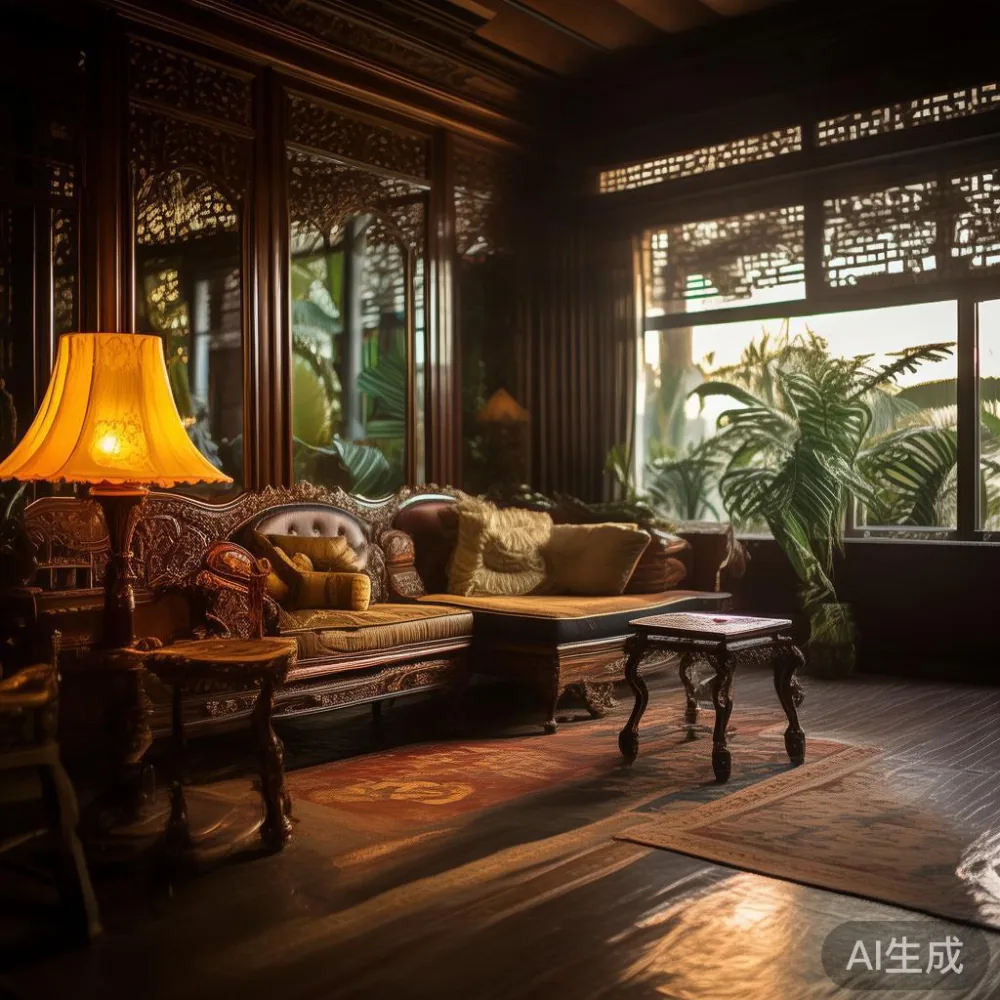
MIDHILL has been building solid wood pieces — dining tables, bed frames, wardrobes, nightstands, and marble tables — since 2008, and every panel that carries a piano-gloss lacquer finish receives the same attention we give to a five-meter majlis furniture wall unit bound for a villa in Abu Dhabi. The post-modern light luxury line in particular uses a multi-coat catalyzed lacquer that looks wet to the touch but is, in reality, a very thin skin sitting on top of seasoned ash or rubberwood. Treat that skin well and the piece will outlive two or three lease renewals. Treat it poorly and the cloudiness you saw on that Punggol side table arrives in six to nine months.
Why Singapore’s Climate Punishes Lacquered Furniture
Singapore averages between 78 and 86 percent relative humidity across the year, with afternoon readings in Bedok, Tampines, and Punggol HDB flats regularly crossing 80 percent even with the air-con running. Lacquered majlis furniture, whether a single console or a three-meter dining table, is in effect a hardwood substrate sealed under three to seven coats of catalyzed finish. That seal is breathable at the microscopic level. When indoor relative humidity swings from 55 percent under steady air-con to 82 percent after you open the balcony door for ten minutes, the wood underneath the lacquer absorbs and releases moisture at a different rate than the film on top. The mismatch shows up as the cloudiness the Punggol owner had noticed, often starting at corners where air circulates.
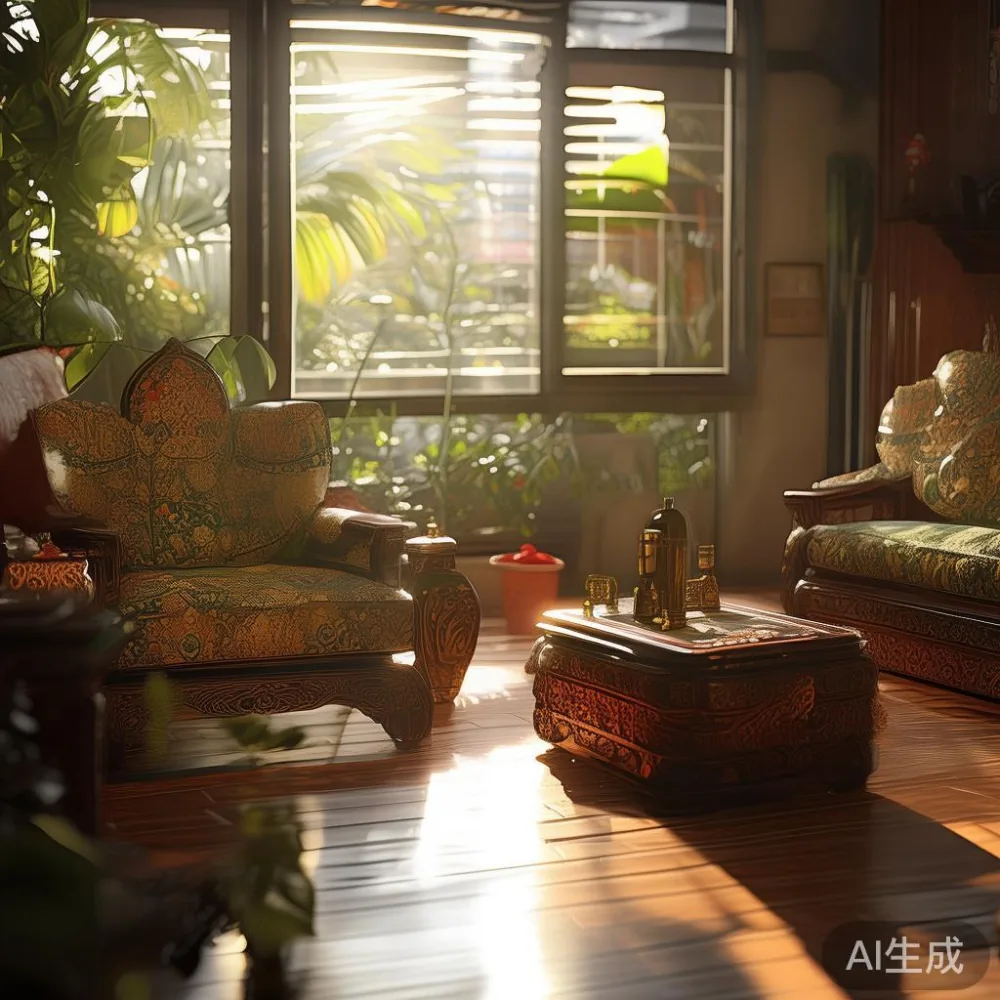
Heat is the second culprit. Blackout glass behind west-facing curtains in a Punggol Waterway residence can push surface temperatures on a dark marble table to roughly 48 °C by 4 pm. Lacquer softens noticeably above 40 °C, and a warm film is far more susceptible to micro-scratches from a stray TV remote. UV does the slower damage: lacquer amber-fades and yellow-shifts under direct sunlight even through Low-E glass, a 2 percent to 4 percent color shift per year if the piece sits within 1.5 m of an unshaded window.
What Is a Lacquered Finish, Really?
On a MIDHILL solid wood bed frame or dining table, the lacquer we spray is a two-component acid-catalyzed conversion varnish at around 18 percent solids by weight, built up in five to seven coats. Each coat is sanded with 600-grit paper and tack-clothed before the next, then cured at 35 °C for 48 hours. That process produces a 60 to 90 micron film with a 95+ gloss reading at 60 degrees. Compare that to a French light luxury wardrobe finished only with hand-applied shellac, which sits around 15 microns and reads closer to 40 gloss. The thicker film is more resistant to humidity swings, but it is also less forgiving of thermal shock. Set a sweating cup of kopi on it and the ring appears within thirty seconds.
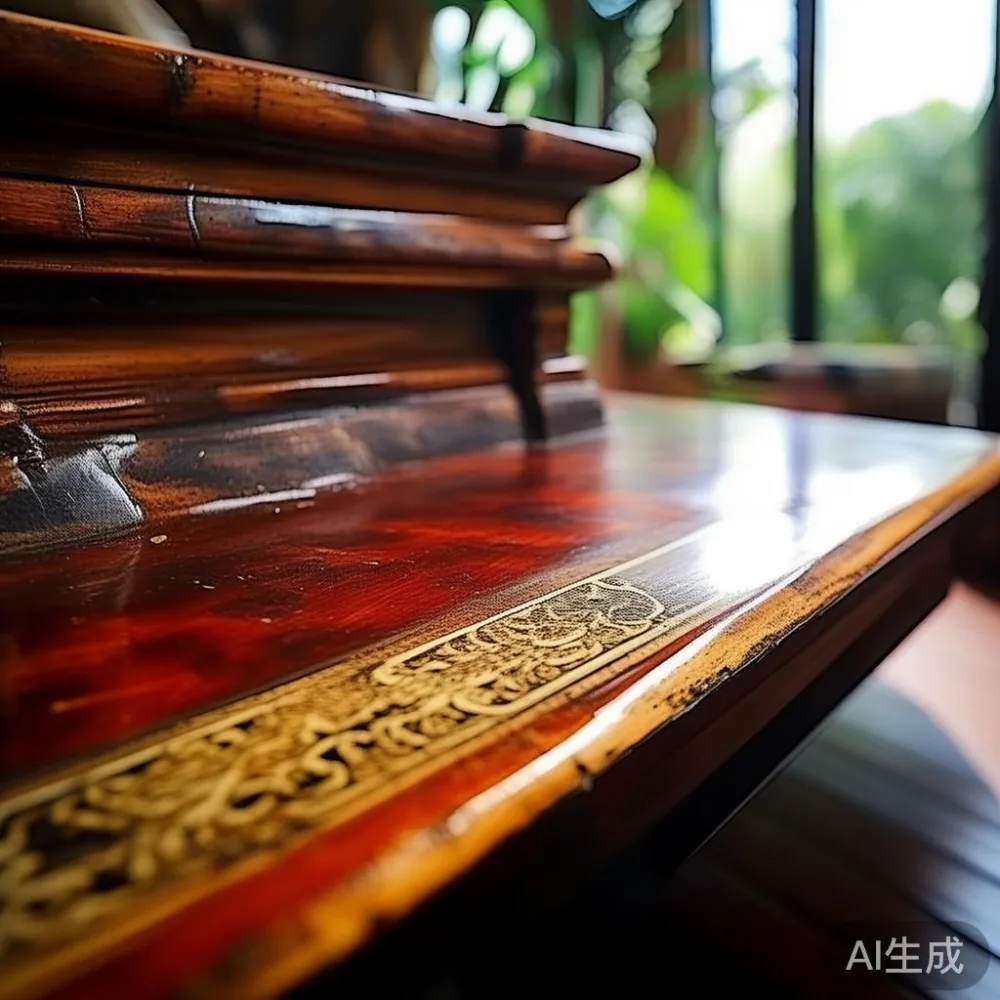
If you are weighing a light luxury bed vs French provincial bed for your Tampines five-room flat, the lacquer profile is one of the practical differences. Provincial pieces are typically hand-finished with wax over stain, which means they buff out small marks easily but absorb humidity faster. Light luxury lacquer is the opposite trade-off: tougher surface, more sensitive to heat rings.
How Should I Clean My Lacquered Console?
This is the question I get most often from Singapore customers, and the answer is short. Use two microfiber cloths, one slightly damp with room-temperature water, one dry. Wipe with the grain. Dry immediately. That is the whole weekly routine.
Twice a month, swap the water for a solution of one capful of pH-neutral wood soap in 250 ml of water. Avoid ammonia, silicone polishes, and any "wood revive" product sold at neighbourhood shops near Tampines Mall — these contain solvents that soft-build under the film and create the very haze you are trying to prevent. For sticky residue (think candy mishaps from a kid’s birthday), a cloth barely damp with isopropyl alcohol works, but only as a spot treatment, never as a general cleaner.
If your majlis furniture piece has been scratched, do not reach for the colour-correct marker you saw on Shopee. MIDHILL keeps the original lacquer batch number on every order file and offers lifetime refinishing on all lacquered items purchased through www.midhill.co. A touch-up from the Foshan workshop, including round-trip shipping, runs roughly SGD 280 to SGD 460 depending on square metre coverage, and the panel comes back sealed, sanded, and recoated to factory spec.
Placement, Air-Con, and the 1.5 Metre Rule
Where your lacquered wardrobe or bed frame lives in the flat matters as much as how you clean it. Keep lacquered panels at least 1.5 m away from west-facing windows, or 2 m from any window with no blind or film. If your corridor width inside the HDB is the standard 1.2 m, a three-door wardrobe will need to be brought in flat-packed and assembled in the bedroom — which is how MIDHILL ships all wardrobes above 1.8 m wide anyway, no extra charge inside Singapore.
Set the dehumidifier to maintain 55 percent to 60 percent RH when the air-con is off. Running a 12-litre Meaco or similar unit costs roughly SGD 18 to SGD 25 a month in electricity at current SP Group tariffs, a price well below the cost of refinishing a dining table ten years from now. Lift landings in Punggol North and Bedok Reservoir are usually 1.8 m wide, so working through a flat-packed wardrobe up to a 14th-floor unit is rarely an issue; older blocks in Queenstown can have 1.4 m lifts, in which case the wardrobe has to come in two halves.
For majlis furniture across a large living area — say a 4.5 m sectional sofa with a low lacquered coffee table in the middle — leave 15 cm of clearance all around the table base. Air needs to move under and around the piece or the lacquer cure over the first 12 months can blush white at the corners.
Heat, Spills, and the 30-Second Rule
Anything above 38 °C is too hot to sit directly on the finish. Warm plates under 40 °C are usually fine with a trivet. The 30-second rule applies to spills: anything wet, wipe in under 30 seconds. Singapore kopi spills cool fast, but the sugar content etches the film if it dries in place, even after wiping later with a damp cloth. Red wine, sambal, and soy sauce all qualify as wipe-now situations.
If you are buying an american sofa set design for the family room and pair it with a low lacquered coffee table, plan your daily layout so the table sits behind the line of a TV remote in active use. Most of the scratches we refinish are 3 to 6 cm arcs caused by someone setting a phone down wrong. A felt or leather pad (SGD 12 for a four-pack at any local home store) at each end of the table stops this pattern entirely.
Long-Term Care Schedule for a Tropical Home
A practical care rhythm for any lacquered major piece looks roughly like this:
- Daily: felt pads under anything left on the surface longer than ten minutes. This includes laptops, which run hot enough under load to mark lacquer.
- Weekly: microfiber dry dust, then a barely damp wipe following the grain, then immediate dry buff. Budget five minutes for a 1.2 m console, ten minutes for a 2 m dining table.
- Quarterly: vacuum the underside gaps and the back panel of any wardrobe, then check that air-con airflow is not aimed directly at the piece. The angled blade of an air-con blowing on a wardrobe for eight hours a day will dry one face faster than the other and can warp the door over 18 to 24 months.
- Every five to seven years: a full inspection and, if needed, a re-coat. The MIDHILL workshop handles this for any piece in our records for roughly SGD 380 to SGD 720 for a dining table, smaller items such as nightstands from SGD 160 each. The customer pays only the inbound and outbound freight inside Singapore.
If you are sizing up the best Modern light luxury wardrobe for 2026, or comparing it against the best French sofa for 2026, ask the supplier two questions: what is the lacquer film thickness, and is refinishing offered after the warranty window. A ten-year structural warranty on solid wood frames with no clear path to refinishing is a five-year piece of furniture in Punggol terms.
How to Style European Light Luxury Wardrobe in Apartment Layouts Without Damaging the Finish
The wardrobe is the hardest piece to place in a typical HDB bedroom, where the average room is 3.4 m by 3.1 m and the door swing already chews 0.8 m of usable wall. The answer for anyone asking how to style European light luxury wardrobe in apartment layouts is mostly about leaving air around it. Keep 8 cm of clearance to the back wall if possible, more on the side that faces the bedroom window. The lacquered face panel of a 2.4 m tall wardrobe experiences the largest humidity swing in any given day, and a tight back-to-wall gap will trap moisture and blanch the lower 10 cm of the finish within a year.
If you have ever wondered, "is Mid-century modern bed worth it" in a tropical setting, the question usually comes down to the headboard finish. A low-platform bed with a lacquered headboard reads cleanly in a Tampines BTO and survives air-con cycling well; a tall upholstered headboard fights the humidity and the dust. Same goes for a majlis furniture dining table with a high-gloss top — the look is striking, but only worth it if you commit to coasters, trivets, and the cleaning rhythm above.
When to Refinish, When to Replace
A lacquered surface tells you when it is ready for a refinish. Look for three signals: a permanent haze that does not respond to a damp wipe, a colour shift of more than 8 percent under daylight, or visible checking — the fine cracks that look like cracked ice on the top surface of an old dining table. Any one of these means the film has degraded past what a wipe can rescue. Replace is rarely the right move before year ten; a refinish on a solid wood piece like a MIDHILL bed frame or wardrobe extends its service life by another eight to twelve years at a fraction of the replacement cost.
For Singapore households comparing the price of a brand-new dining table against a refinish, the math is straightforward. A 1.8 m solid wood dining table in our post-modern light luxury line, inclusive of GST, runs around SGD 1,650 to SGD 2,340 delivered to a Punggol or Bedok address. A full strip, sand, and re-coat on the same piece would be roughly SGD 420 to SGD 560. For pieces under eight years old with mild damage, refinish is the cheaper and lower-carbon option, and the timeline is usually 28 to 35 working days including shipping from our Foshan workshop.
One last note for anyone furnishing a new BTO or resale flat. The cost of caring for lacquered majlis furniture is small — cloth, soap, felts, dehumidifier electricity — and the visible return on a well-kept surface is enormous in a market where most second-hand pieces trade down in price precisely because their lacquer failed. Spend ten minutes a week, place the piece well, send it back to the workshop when the haze appears, and a MIDHILL lacquered wardrobe, dining table, or nightstand will outlast the lease on your Tampines flat by a comfortable margin. The pieces we shipped from Foshan to Singapore in 2011 are still in active service in eight households we keep records on — and every one of those owners treats the surface as the living, breathing skin it actually is.