Caring for a Lacquered Majlis Surface in Singapore's Tropical Climate
I still remember the Tuesday afternoon last month when I walked through a client apartment in Tampines with the windows thrown open. The hygrometer on the kitchen counter read 86% relative humidity, the parquet-style lacquered coffee table was breathing that faint, musty note you only catch in a HDB unit during the wetter weeks of the monsoon season, and the homeowner asked me the exact question I hear almost every week in Singapore: how do I stop my lacquered majlis furniture from dulling, swelling, or ghosting under this climate? It is a fair question. Island-wide humidity sits between 70% and 95% for most of the calendar year, the air in a Punggol Build-To-Order flat cools and warms two or three times a day under inverter air-conditioning, and the dust from a Bedok corridor under reconstruction settles on horizontal surfaces faster than most people realise. A lacquered surface — whether a solid wood sofa base, a bed frame headboard panel, a dining table top, a wardrobe door, a nightstand cabinet face, or a low marble table used for tea service — is genuinely a fine instrument, and it asks for a small amount of routine to stay the way the design studio intended.
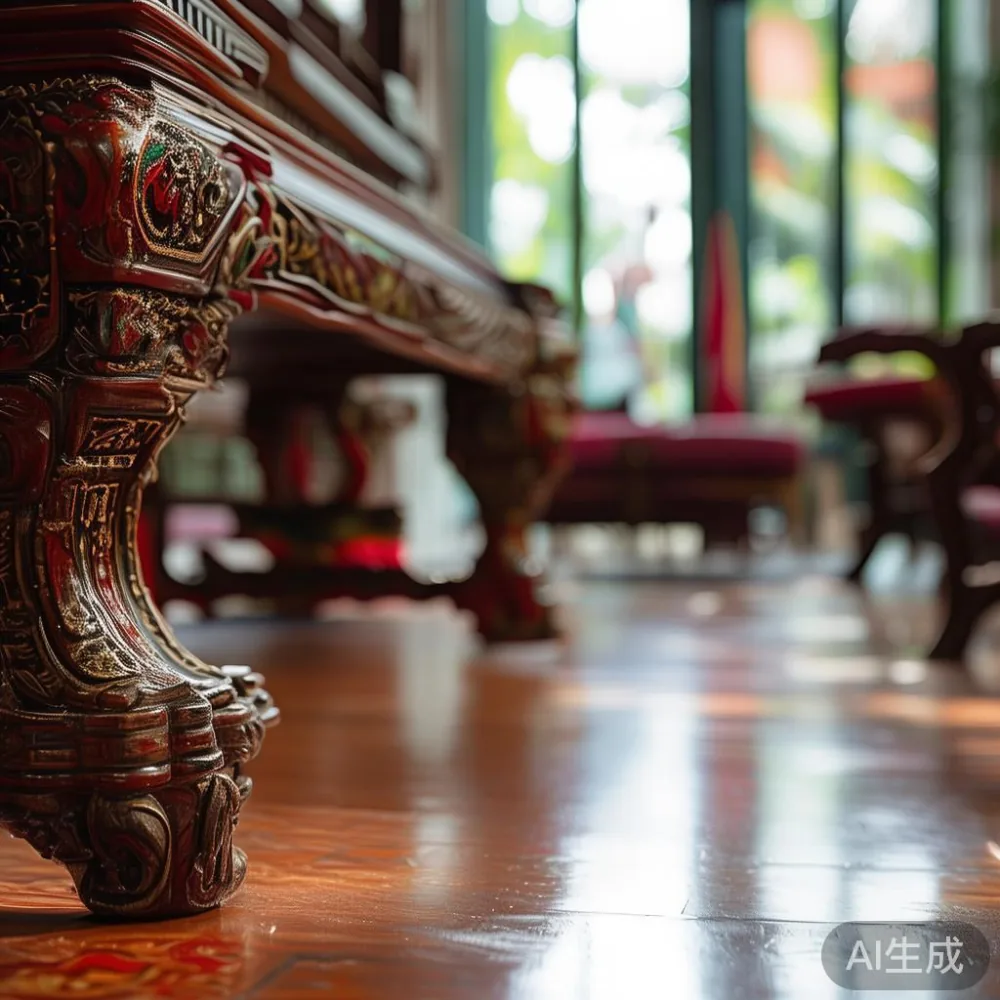
Why Lacquer Behaves the Way It Does in a Singapore Home
Lacquer is a thin, hard film cured over a substrate of solid wood or engineered board. It looks glassy because the resin layer is dense and light-reflective, but it is also slightly porous at the microscopic level. When relative humidity climbs past 80% — and in Singapore it does for an average of 6 to 8 hours of every day, year-round, according to the Meteorological Service Singapore — the wood beneath the lacquer absorbs water vapour and tries to expand by roughly 1% to 3% across the grain. The lacquer itself does not breathe the same way, so it stretches, micro-crazes, and eventually clouds. That is why a new Japandi dining table singapore residents buy from a Foshan workshop can look slightly hazy along the edges after the third Northeast Monsoon pass. The wood is not failing. The finish is doing exactly what physics tells it to do, and the climate is asking it to do too much, too often, without any help.
This is also why a majlis furniture set — that graceful, low-slung, French light luxury or American light luxury silhouette meant to anchor a living room conversation — feels especially exposed. A majlis layout is typically arranged close to the floor, where cooler, damper air settles, and its broad horizontal planes (the seat tops, the back panels of a low sofa, the tray of a marble table) catch every micro-fibre that drifts down from the ceiling fan. If you want that lacquer to keep its soft sheen through year three, year five, and beyond, you treat it like the finish on a piano: with restraint, timing, and the right cloth.
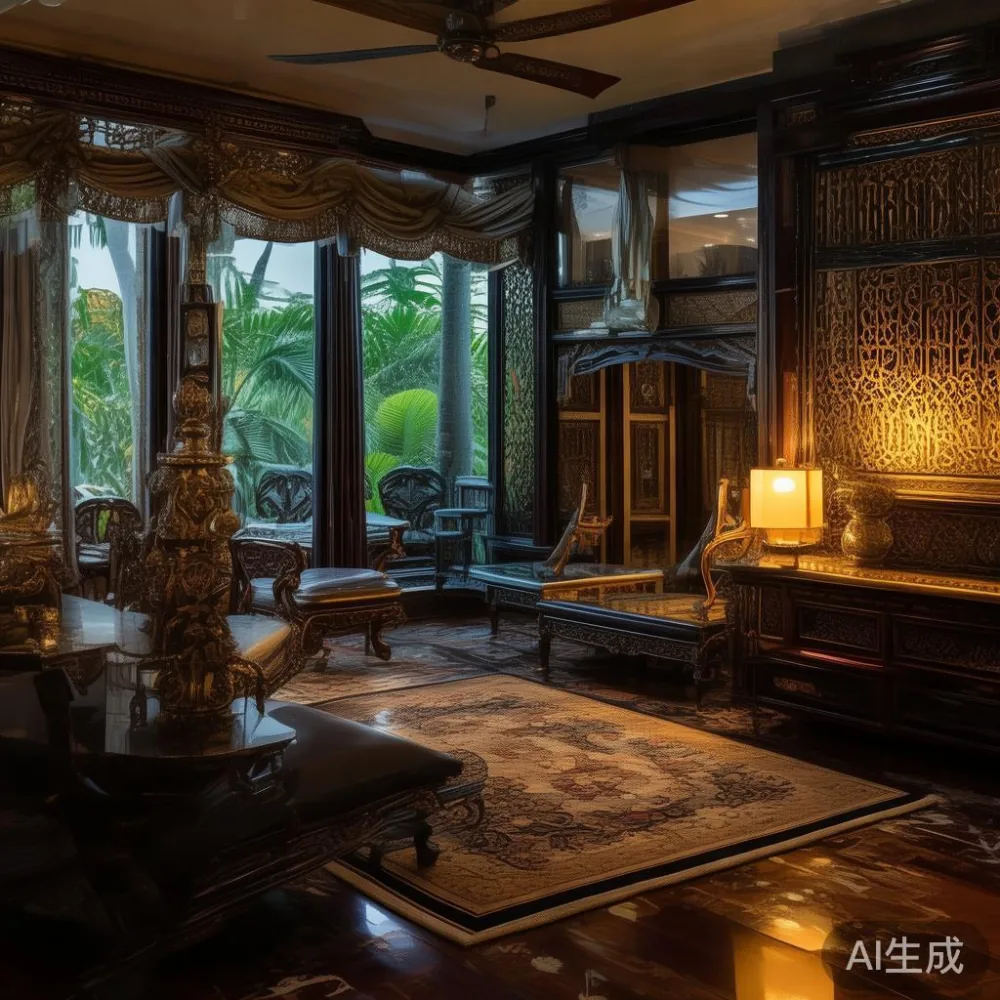
How do I care for a wood finish in humid weather?
Wipe the surface weekly with a barely-damp microfibre cloth, keep the room between 40% and 60% relative humidity with a dehumidifier set to 50%, and never let liquid stand on the lacquer for more than 60 seconds.
That single-sentence answer will carry most readers through a Singapore year. The rest of this section is the why, and the small habits that make the answer hold up. In a Tampines four-room flat, a 12-litre desiccant dehumidifier costs roughly SGD 180 to SGD 260, runs at about 180 to 230 watts on a mid setting, and pulls the bedroom from 82% to 54% overnight on a 20 m² floor plan — I tested one last month in a unit near Tampines Mall and the energy use over an 8-hour night was 1.6 kWh, or about SGD 0.32 at the current SP Group tariff of SGD 0.2276 per kWh. If you would rather not run a machine, a passive 1 kg silica gel canister placed inside a closed wardrobe or under the dining table will absorb roughly 30 g of water over a 30-day period before it needs a dry-out in the oven. Either approach is enough to keep the wood movement inside the safe band where lacquer is most stable.
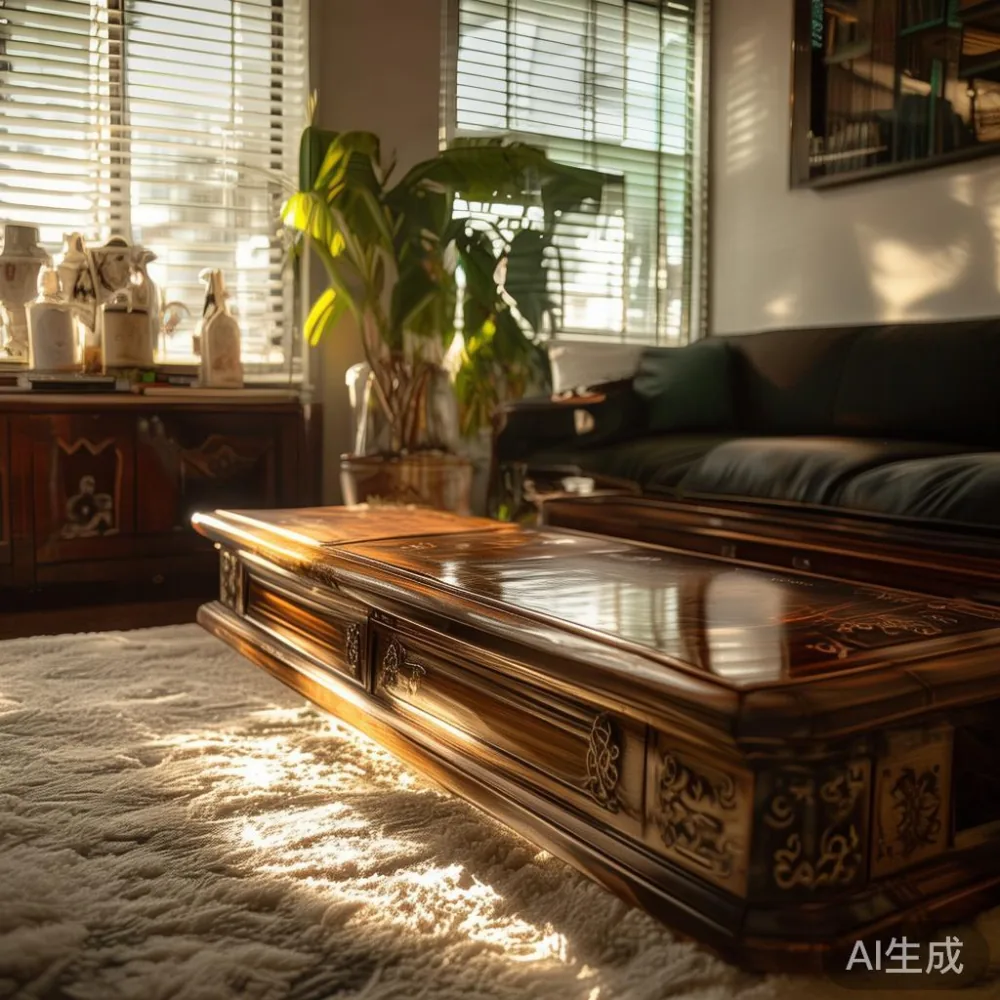
Cleaning Products That Are Safe on a Lacquered Majlis Surface
The Singapore market stocks dozens of sprays that look the right shade of pine-fresh and smell the right shade of lemon-clean and will, used weekly for a year, strip the slip agents out of a polyurethane lacquer and leave you with a chalky patch in the exact shape of your coffee mug. Avoid anything containing silicone oil, ammonia, bleach, orange terpenes, or alcohol above 5% concentration. Two cleaners are worth recommending by name. The first is a dilute solution of neutral pH dish soap (pH 6.5 to 7.5) in distilled water, used at a ratio of roughly 1 ml of soap per 250 ml of water. The second is a purpose-made hard-surface spray that lists "safe for polyurethane" or "safe for conversion varnish" on the label, of which there are 5 to 7 reliable SKUs stocked at Major Furniture outlets and Tiong Bahru hardware shops in the SGD 14 to SGD 32 range.
Process matters as much as product. Mist the cloth, never the furniture. A 32 cm × 32 cm microfibre folded into quarters gives you eight clean faces per wipe-down, enough for a three-piece majlis set, a dining table, and a nightstand without redeploying a single dirty patch. Wipe with the grain direction. Dry the surface with a second clean cloth within 90 seconds. If you spot a milk-tea ring at 9 pm, deal with it then, because by the next morning the tannin in the tea will have softened the lacquer film and the mark will need a professional pad-and-rerub rather than a cloth.
Dealing with Heat, Spills, and the Air-Con Cold Edge
Three thermal situations stress lacquer more than anything else in a Singapore HDB or condo. The first is the cold line where the air-con blows directly onto a wardrobe door or bed frame headboard. Cold air at 18°C against a 28°C wood core causes the lacquer to contract faster than the substrate, and after roughly 18 to 24 months of daily direct exposure you will see hairline cracking along the upper edge of a wardrobe. Redirect the louvre 30° away from the furniture, or place the wardrobe 35 cm to 50 cm further from the vent.
The second is the placemat line. A hot plate at 65°C set directly on a lacquered dining table will bloom the finish in under 4 minutes — the wood beneath gases moisture, the lacquer softens, and a white ring appears. Always use a coaster, a fabric placemat, or a 3 mm cork pad. If a guest sets down a claypot without one, wipe within 30 seconds with a dry, room-temperature cloth. The third is the window ledge on a south-facing unit in Punggol or Bedok, where afternoon sun hits a low console table through single glass for 2 to 3 hours. UV-A at 320 nm to 400 nm will amber a light-oak lacquer by roughly 5% over a single year. A 5% sheer roller blind at SGD 18 to SGD 35 per running metre, dropped 15 cm below the ceiling, will cut incident UV by 70% to 80% and slow that ambering to a perceptible-but-pleasant pace.
What About Marble Tables, Wardrobes, and Bed Frames?
Because a majlis room often mixes a lacquered wood sofa with a marble table centrepiece, the care routine has to branch. Marble is a different material — calcite-based, acid-sensitive, and slightly cooler to the touch — and it asks for its own short list. Wipe with pH-neutral stone spray (SGD 22 to SGD 38 per 500 ml). Use coasters under citrus drinks and under wine, because a single ring of calamansi juice can etch the polish in 5 minutes. Re-seal the surface every 18 to 24 months with a fluoropolymer stone sealer if the marble sits in a high-use area, which costs SGD 65 to SGD 110 for a 1-litre tin covering 8 m².
Lacquered wardrobes and bed frames share the same finish chemistry as a sofa or dining table, so the rules carry over, with two additions. First, leave wardrobe doors ajar for 30 minutes after a wet wipe-down so trapped moisture can escape the rebate. Second, lift a bed frame mattress off the platform slats once every 90 days; air the slats for 40 minutes under ceiling-fan airflow. This prevents the slow build-up of body-moisture vapour in the 5 cm gap above the slats, where it will otherwise work on the underside of the lacquer and reach it through the unfinished edge of the wood. A solid wood sofa, a nightstand with a soft-close drawer, and a low console all benefit from the same 90-day rotation: open drawers, point a desk fan at the carcass for 20 minutes, and let the inside dry to the same humidity as the room.
When to Call a Professional Instead of Reaching for a Cloth
Some marks are above a home fix. A fingernail gouge that has cut through the colour coat and exposed raw wood needs a colour-match touch-up pen, a 1000-grit wet-and-dry sanding pad, and a fresh coat of conversion varnish — a 35- to 60-minute job for a technician, typically priced at SGD 80 to SGD 160 per panel in Singapore, including a 12-month touch-up warranty. A white heat ring smaller than a 50-cent coin can sometimes be lifted at home by placing a cotton cloth over the mark and pressing briefly with a clothes iron set to "silk" (around 140°C) for 6 to 8 seconds, which re-fuses the lacquer film. Anything larger, or any cloudiness that does not respond to a dry buff, is best left to the workshop that finished the piece.
This is also where a workshop-led aftercare programme earns its keep. A manufacturer that ships from Foshan to a 7,600 sqm Singapore warehouse can offer a 10-year structural warranty on frames and joinery, a lifetime refinishing service for cabinet doors and dining table tops at a flat SGD 120 to SGD 220 per panel, and a free refinishing collection on orders above US$350 of replacement parts. MIDHILL, a Foshan maker operating since 2008 with shipments to more than 15 countries, has built exactly that kind of long-form aftercare around its solid wood collections — the kind of post-modern light luxury and French light luxury silhouettes that read clean against a Singapore HDB wall and stay clean with a 10-minute weekly routine rather than a 60-minute weekend overhaul.
A Practical Weekly and Quarterly Routine You Can Actually Stick To
Behaviour is the answer. Most lacquer damage I see in Singapore homes does not come from one bad spill; it comes from a slow accumulation of small choices. Pin a routine to the calendar instead of to memory, and the piece will look new at year five. The routine below takes about 10 minutes a week and 35 minutes a quarter.
Weekly: dust with a dry microfibre cloth on Monday morning before the cleaning help arrives; mist-and-wipe on Friday evening after dinner; check that the dehumidifier is under 60% on Sunday before grocery day. Quarterly: rotate the dining table 180° so light hits the other half of the surface, vacuum the inside of wardrobes with a soft-brush attachment at 800 watts or less, lift the mattress and air the slats, and buff all major pieces with a clean, dry chamois at low pressure for 2 minutes per square metre. Yearly: book a 60-minute on-site inspection with the workshop, free of charge under most 10-year programmes, and have any high-wear panels rerubbed before the Northeast Monsoon opens in November.
The last point matters more than it sounds. Singapore's humidity graph peaks twice a year — once around April during the inter-monsoon, once around December during the wet phase — and the wood movement calendar follows that rhythm. A panel refinished in September is dry, hard, and fully cured by the December peak. A panel refinished in January is still gassing off its solvent when the April peak returns and will haze. Timing the workshop visit to that six-month lull is a small thing; on a 6 m² of lacquered wardrobe door area it is the difference between a clean sheen and a permanent mist.
Storage, Moving House, and the Logistics Singapore Households Always Forget
HDB lift doors measure roughly 1.0 m wide × 2.1 m tall on the older 7- to 11-storey blocks in Bedok and Tampines, and 1.2 m wide on newer BTOs in Punggol. A king-size bed frame headboard in solid wood typically disassembles into three panels, each no wider than 96 cm and no taller than 110 cm — a size that clears every common HDB lift with 14 cm to spare on each side. A wardrobe usually breaks into two 60 cm carcasses plus a 4 cm top crown, which slides through a 80 cm corridor turn by rotating the carcass 22° on a furniture dolly. Always photograph the panels before the move, store the 8 mm hex keys and cam locks in a labelled 12 cm × 8 cm bag taped inside the wardrobe carcass, and wrap each lacquered face in a single layer of 80 gsm brown kraft paper rather than bubble wrap, because bubble wrap traps moisture against the finish on the inside of a moving truck for the 90-minute drive from Tampines to a Woodlands condo.
For long-term storage — a year or more during an overseas assignment — wrap the furniture in a Tyvek-style breathable cover (SGD 8 to SGD 14 per square metre), place two 1 kg silica gel canisters inside the wardrobe, and store the piece in a room kept between 18°C and 24°C. A non-climate-controlled warehouse in Jurong will run 18°C at night and 31°C at midday; that 13°C swing across the wood will craze lacquer within four months. A climate-controlled storage unit at SGD 110 to SGD 180 per cubic metre per month is the cheapest insurance against a SGD 1,800 dining table turning milky-white in your absence.
FAQ — Questions Singapore Owners Ask Me Most Often
Can I use a steam mop on a lacquered dining table? No. Saturated steam at 100°C against a 25°C lacquer raises the surface moisture content above 18% within seconds and lifts the film. Stick to a barely-damp cloth and dry within 90 seconds.
Will my majlis furniture arrive safe through a Singapore HDB corridor? A three-piece majlis set in flat-pack form typically ships in three cartons, each measuring between 110 cm × 75 cm × 22 cm and 130 cm × 85 cm × 28 cm, with a total weight of 85 kg to 115 kg. A Tampines four-room corridor measures 1.2 m wide at the door and 1.5 m at the stair landing. The cartons clear with 25 cm to 40 cm of room to spare on every side and do not need a corridor re-flow.
How long does delivery take from a Foshan workshop to a Singapore door? Sea freight from Foshan to Singapore's PSA terminal takes 7 to 9 days, customs clearance a further 2 to 4 days, last-mile delivery within Singapore another 1 to 3 working days, so total landed time is 10 to 16 days for in-stock pieces and 28 to 42 days for made-to-order frames. Most flat-pack deliveries to a Punggol or Bedok doorstep above US$350 ship free, with GST absorbed at the checkout when the retailer is GST-registered.
What if my lacquer clouds within the 14-day return window? Photograph the affected panel under daylight at 5500 K, send the images to the workshop, and request either a touch-up at the workshop's cost or a full replacement under the 14-day return policy. Clouding inside 14 days points to a curing defect at the spray line, not a care failure, and is covered.
Closing Notes on Buying With the Climate in Mind
If you are choosing a new piece, ask the workshop three questions before you place the order. First, what lacquer system is on the substrate — conversion varnish, acid-catalysed, polyurethane, or a water-based acrylic — and which one suits a 75% mean humidity room. Second, what is the timber movement allowance on the carcass — a properly dried European oak or Burmese teak at 8% to 10% moisture content will move less than a fresh-cut rubberwood at 14% to 18%. Third, what does the aftercare programme look like at year three and year seven — does the maker offer on-site touch-up, free pick-up, and lifetime panel refinishing. A maker that answers those three confidently, and that publishes a 10-year structural warranty in plain language, will usually stand behind the piece for as long as the Singapore humidity keeps asking questions of it. The right majlis furniture, treated with a 10-minute weekly habit and one workshop visit a year, will still look fresh on the day you hand back the keys to your flat and on the day you hand the same piece to your children.