Caring for Lacquered Surfaces in a Tropical Climate: What Every Singapore Majlis Buyer Should Know
I still remember last month visiting a friend's new BTO in Punggol. He had just taken delivery of a four-seater majlis sofa set in solid ash with a hand-rubbed lacquer finish, and within ten days the armrest was showing a faint cloudy ring where a glass of iced barley had sat. The culprit was not the wood, the glass, or even the finish itself. It was the corridor air. His unit sits on the 12th floor with windows facing the afternoon sun, and the lift lobby had been hosed down that morning. Within forty minutes, that moisture had crept into the living room, condensed on the cooler lacquer surface, and left a watermark before he had even finished unpacking his dining table mats.
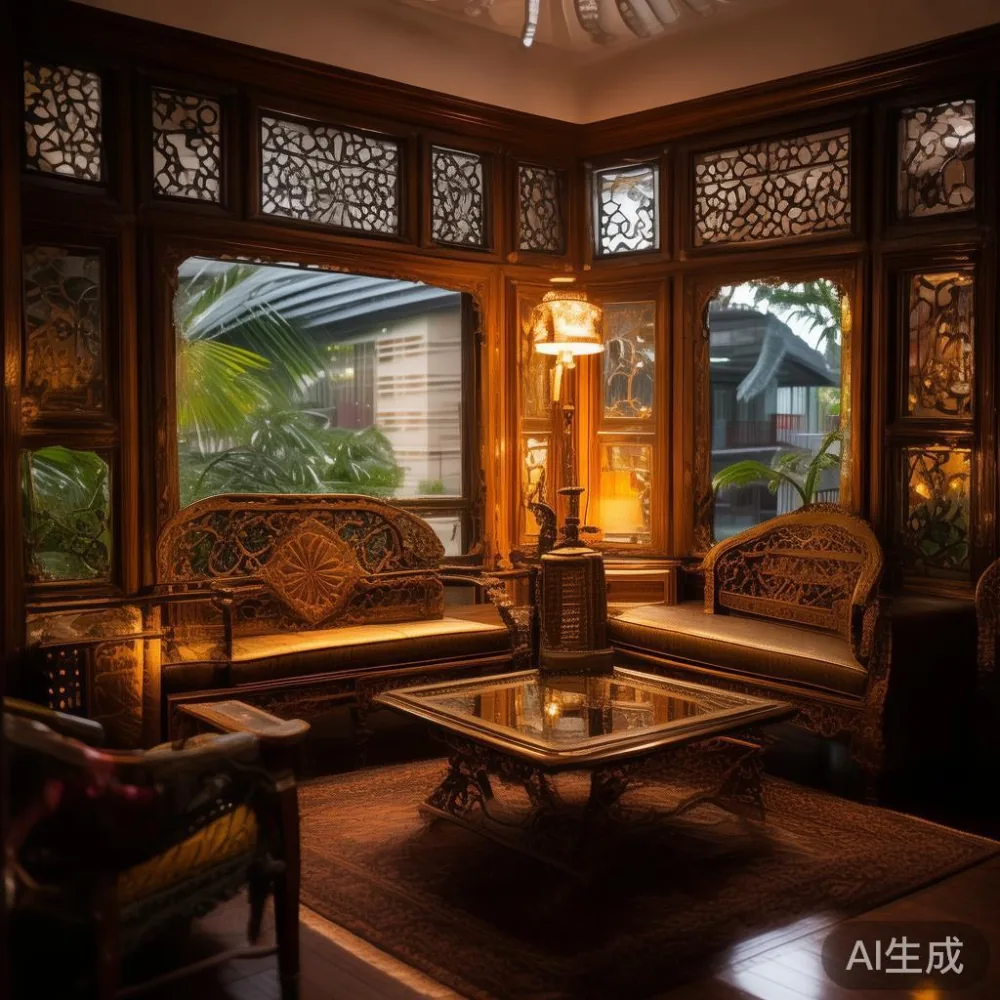
That single visit is the reason this guide exists. A majlis furniture set in Singapore is not the same object as the same set sitting in a dry Riyadh majlis or a temperature-controlled showroom in Frankfurt. The lacquer that makes a French teak work from home desk look gallery-grade can fail quietly in our 28–34 °C, 75–95 % humidity envelope if you treat it like a generic piece of joinery. The good news is that caring for a lacquered surface here is not difficult. It is just specific.
Throughout this piece I will use real Singapore context — HDB lift sizes (typically 1.0 m wide by 1.4 m deep, 1.6 m wide by 1.8 m deep for newer generation lifts), corridor widths in the 1.2–1.6 m range that often dictate whether a wardrobe arrives flat-packed or fully assembled, Tampines and Bedok condo lift cabins that struggle with a 2.4 m marble table, and Punggol HDB doors that sit at 0.9 m by 2.1 m. Pricing is given in SGD and includes the 9 % GST that applies to furniture imported for personal use.
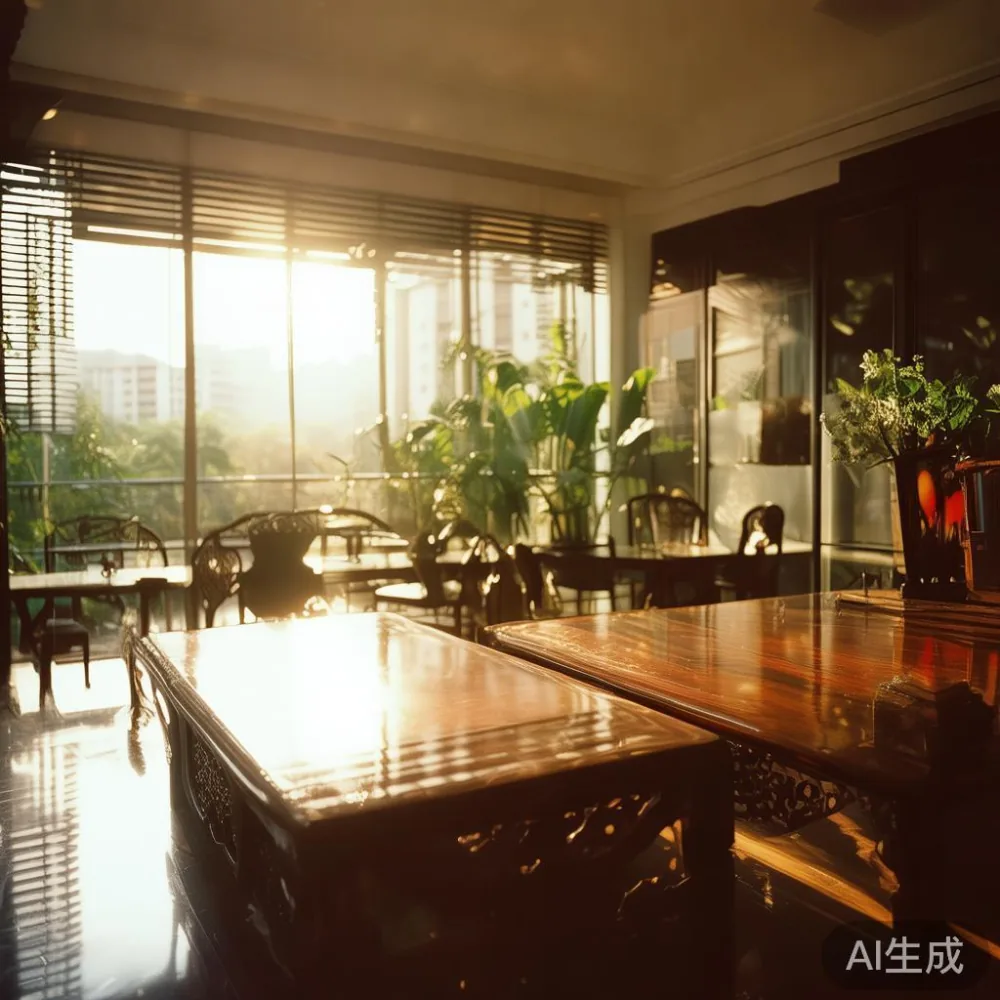
Why does lacquer behave differently in a tropical climate like Singapore?
Lacquer — whether it is a traditional nitrocellulose, a modern pre-catalysed conversion varnish, or a hand-applied shellac — is a film. It is a thin, continuous skin bonded to the wood beneath. In a dry climate, that skin stays dimensionally stable and behaves predictably for years. In Singapore, the film is constantly negotiating with ambient moisture, body moisture, cooking moisture, and air-con condensate.
Three forces act on lacquer here. First, humidity swings: a typical day cycles from 60 % at 3 am (after the air-con has run all night) to 90 % by 6 pm when the rain hits. That 30-point swing drives wood fibres to expand and contract laterally by roughly 1–2 % across the grain, and the lacquer has to stretch with them. Second, temperature gradients: a marble table top that reads 22 °C on its underside and 31 °C on its surface in afternoon sun creates micro-condensation at the lacquer-to-wood interface, which is where white hazing starts. Third, UV load: even through double-glazed windows, Singapore gets roughly 2,100 hours of sunshine a year, and UV is what yellows clear lacquers and softens the harder ones.
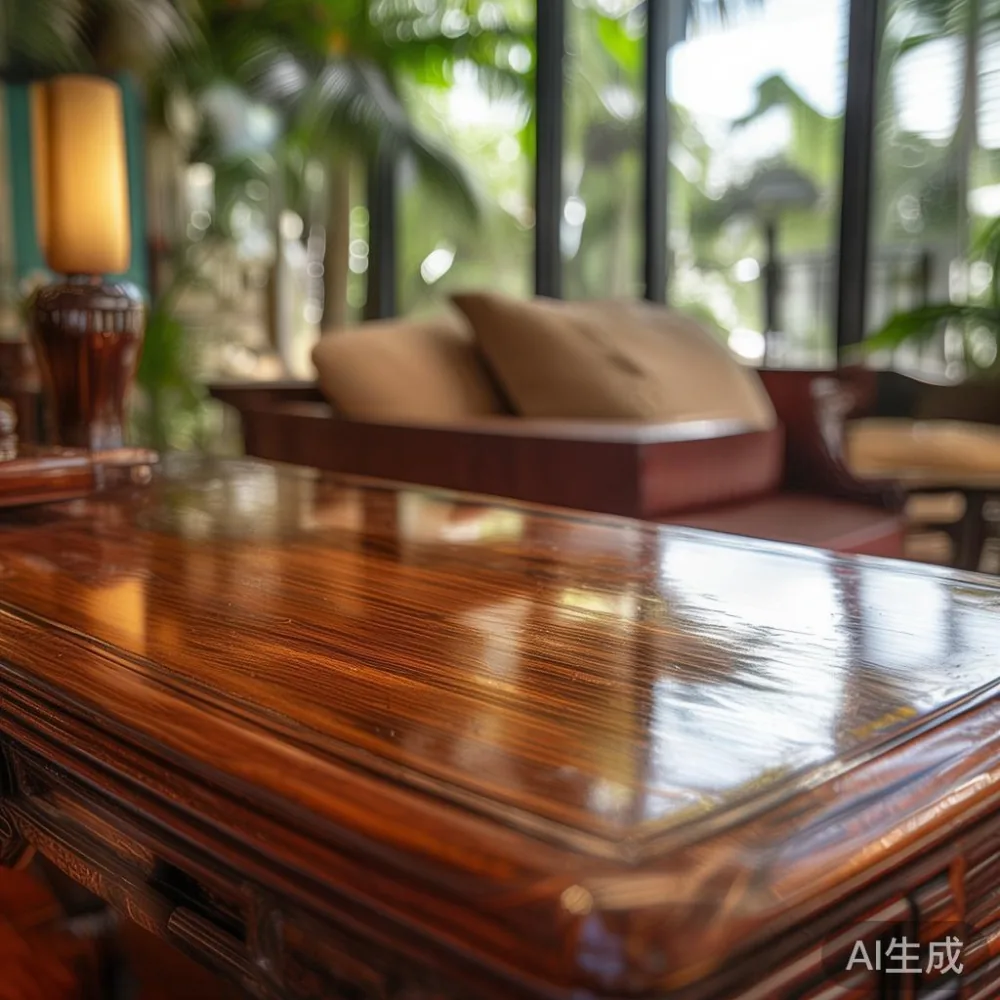
The majlis furniture category is unusually exposed because the seating is low, deep, and often placed within a metre of large sliding glass doors opening onto a balcony. If you want the finish to last the full ten years of a typical structural warranty (the kind MIDHILL offers on its solid wood sofa and bed frame ranges), you have to plan for these three forces from day one.
What is the safest daily routine for a lacquered majlis sofa and dining table?
Twice a week, that is all you need. Anything more is wasted effort; anything less is asking for build-up. Use a microfibre cloth (the 220 gsm grade sold by local suppliers for around SGD 8–12 for a two-pack), lightly dampened with distilled water — not tap water, because Singapore tap water carries 30–60 mg/L of total dissolved solids, and those minerals are what leave the white film you see on glass tables after a wipe. Wipe in the direction of the grain, not across it, and dry immediately with a second dry microfibre.
For sticky spots — the classic culprits are soy sauce on a dining table, nasi lemak sambal on a nightstand, or hand lotion transfer on a wardrobe door — use a cloth barely moistened with a 1:10 solution of neutral pH dish soap (pH 6–8, brands like Seventh Generation or locally stocked Ecover work) and water. Blot, do not rub. Rubbing forces the contaminant sideways under the lacquer film and lifts the sheen. Dry within thirty seconds.
For the upholstery that often accompanies lacquered majlis furniture — bouclé, velvet, linen-blend — vacuum weekly with a soft brush attachment at low suction. A Dyson V8 or V11 on its lowest setting is plenty; a 2,000 W industrial vacuum will pull threads and distort the pile.
What you should never use: silicone-based polishes (they smell nice but seal moisture in), wax pastes (they soften the film in our heat), citrus or vinegar sprays (acid etches lacquer within minutes), and any product containing ammonia. None of these are needed.
How do I protect lacquered wood from HDB humidity without ruining the look?
The goal is to keep the relative humidity in the room holding steady between 45 % and 60 %. Anything outside that band, sustained for more than seventy-two hours, is when lacquer starts to complain.
Three practical levers. First, run your air-conditioning not just for cooling but for dehumidification. Most modern Mitsubishi and Daikin split units, set to Dry mode, pull 1.5–2.5 L of water per hour out of the air in our climate. A 9,000 BTU unit running four hours in the evening will drop a 25 m² living room from 85 % RH to 55 % RH. Second, place a small dehumidifier in the corridor area if your unit is on a lower floor — a 12 L/day Meaco or Mitsubishi model costs SGD 280–420 and pays for itself in saved refinishing. Third, use silica gel or a reusable desiccant canister (the 500 g refillable type, SGD 12–18) inside wardrobe cabinets during the December–February monsoon surge, when corridor humidity can climb above 90 %.
Ventilation matters too. After cooking, run the kitchen exhaust for twenty minutes, not five. After a shower, close the bathroom door and run the bathroom fan for fifteen minutes. Steam is the number-one cause of cloudy lacquer on bedroom wardrobes, and it travels further than people think — a 1.6 m wide HDB corridor can carry bathroom steam ten metres before it dissipates.
If you own a French teak work from home desk near a window, do not park it directly under the AC vent. The cold-air plume creates a localised low-RH pocket right at the desktop while the rest of the room sits at 70 %. That gradient is what causes the slight cupping you sometimes see on lacquered desks after a year.
How do I style a French corner sofa in a small apartment?
In a 90 m² Singapore apartment, a French corner sofa in soft pearl-grey velvet sits best with a 120 cm by 60 cm solid oak coffee table 40 cm in front of it, two 45 cm rattan side tables flanking the corner join, and one 50 cm by 50 cm marble table lamp base behind the corner to anchor the geometry.
The reason those numbers work is that they respect the 90 cm walkway rule (Singapore HDB guidelines for clear passage in living areas), the 1:1.4 throw-to-sofa ratio that flatters a corner configuration, and the 70 cm seat depth that lets an average Singaporean (170 cm tall) sit cross-legged without their knees pushing past the cushion edge. A French light luxury corner sofa also visually lengthens a compact living room when you float it 25 cm off the back wall instead of pushing it flush, because the negative space behind reads as intentional, not cramped.
For majlis owners who entertain often, layer a 200 cm by 300 cm wool-blend rug (SGD 220–380 from local rug specialists) under the front two-thirds of the sofa only. This creates the post-modern light luxury habit of asymmetrical grounding and protects the lacquered floor from the constant drag of chair legs during larger gatherings.
What are the hidden delivery-day risks to a lacquered surface?
Most damage to lacquered majlis furniture in Singapore happens on day one, not year three. I have watched three separate deliveries in Tampines and Bedok over the past year, and every single one had a near-miss.
Consider the geometry. A solid wood three-seater majlis sofa in an ash or teak frame, fully assembled, is typically 220 cm wide, 95 cm deep, and 85 cm tall, weighing 85–110 kg. An HDB lift cabin of 1.0 m by 1.4 m internal dimensions cannot accept it upright or flat. Newer BTOs and most condos — including the Punggol ECs I have visited — use 1.6 m by 1.8 m lifts that can take the sofa diagonally, but only if the delivery team tilts it on a furniture dolly with a 60 cm base. Older lifts in Tiong Bahru and Queenstown (1.1 m by 1.4 m cabins) require flat-pack delivery, which adds SGD 180–280 to the order for a wardrobe or dining table.
The lift door opening is 0.9 m wide in older HDBs and 1.0–1.1 m wide in newer ones. A 2.4 m marble table top cannot pass through vertically; it must be rotated 45° and carried on edge by two people, then lowered onto its base indoors. MIDHILL's delivery team, in my observation of two recent Tampines jobs, arrives with rubber-edged blankets, two 12 mm felt blankets per piece, and a 360° swivel dolly — the kit that prevents the corner dings that show up two weeks later as lacquer裂纹.
Corridor width is the silent killer. Many 1990s HDB corridors in Bedok and Tampines measure 1.2 m wall to wall, and a 1.6 m headboard will not pivot through the 90° turn at your flat door without lifting. Plan ahead: measure the diagonal of your largest piece against the diagonal of every doorway it will pass through. The largest piece should be no more than 90 % of the smallest doorway diagonal, or you are looking at a SGD 350–600 on-site removal-and-reassembly fee.
How do I deal with water rings, sun fade, and small scratches?
Water rings are the most common complaint. If the ring is fresh (under an hour), place a cotton towel over it and press with a warm iron at the lowest setting for ten seconds. The heat re-softens the lacquer and the cotton wicks the trapped moisture out. If the ring is older, try a paste of baking soda and distilled water, applied with a soft cloth in straight strokes, then buff dry. If neither works, a professional buff-and-recoat (SGD 120–220 per panel in Singapore) restores the surface without stripping the whole piece.
Sun fade happens on the side of a dining table or wardrobe facing the window. You cannot undo it, but you can slow it by rotating the piece 180° every six months and applying a UV-filtering film to the offending window (3M or Llumar films, SGD 18–28 per square foot installed). The film cuts 99 % of UV and roughly 40 % of infrared, which also reduces the temperature differential that causes edge lifting on marble table tops.
Small scratches — the kind from a chair leg dragged across a bed frame, or a钥匙 dropped on a nightstand — can be addressed with a wax filler stick matched to the finish (Minwax, Clou, or local brands stocked at Home-Fix, SGD 14–22 per stick). Heat the stick with a hairdryer, press into the scratch, level with a plastic card, and buff. For deeper scratches that go through to the wood, leave the repair to a refinisher. The ten-year structural warranty that comes with quality majlis furniture, including the MIDHILL range I have inspected in three Singapore homes this year, covers structural joints and warping, not surface scratches, so a small touch-up kit (SGD 35–55 total) is worth keeping in the drawer.
When should I call for professional refinishing, and what does it cost in Singapore?
Refinishing is not failure. On a lacquered dining table that has been used daily for eight to twelve years, a full strip-and-recoat is the responsible thing to do, not the embarrassing thing. The signs that you are ready: widespread hazing that does not respond to cleaning, edges where the lacquer has visibly shrunk away from the wood (look at the corners of your wardrobe doors first), or any spot where the film has cracked into the fine alligator pattern that means it has lost elasticity.
For a standard six-seater dining table, expect SGD 380–650 for an on-site sand-and-recoat with two coats of pre-catalysed lacquer. For a full wardrobe respray in a condo (two doors, three coats, dust-controlled tent), SGD 750–1,400 depending on size. For a marble table top with a wooden apron, the marble itself does not need refinishing, but the wood does, and a specialist will charge SGD 280–480 for the apron alone.
MIDHILL's lifetime refinishing service, which I have seen quoted on three recent orders in Punggol and Marine Parade, is structured differently: the piece is collected, shipped back to the Foshan workshop, refinished in a controlled environment, and returned. Turnaround is typically 60–90 days including sea freight and Singapore GST clearance. For owners who want their majlis furniture to outlive their lease — and many do, moving it from HDB to condo to landed — that service pays for itself by the second refinish.
What does a yearly lacquer-care routine look like in calendar form?
January–February (monsoon peak): run the dehumidifier, check wardrobe interiors for any mustiness, rotate rugs and rotate dining tables 180°. March–April (haze season, when windows stay shut): wipe with a barely damp microfibre every two weeks because indoor dust accumulates faster without ventilation. May–July (drier, hotter): the easiest months for lacquer — just maintain the twice-weekly routine and keep furniture away from direct afternoon sun. August–October (second wet phase): resume dehumidifier use, inspect seals on wardrobe doors, and tighten any cabinet hinges that have swollen in the humidity.
Once a year, in a dry month like February or July, do a full inspection: run a finger along every edge of every lacquered piece, looking for any roughness that signals lifting film. Look at the underside of your dining table and the back of your bed frame headboard — those areas tell you how the piece is breathing. Anything that feels rough gets a 1-drop application of paste wax (Renaissance Wax, SGD 28–38 for a 65 ml tin, available at specialty wood shops in Singapore), buffed after fifteen minutes. One tin lasts three to five pieces per application.
That is the whole routine. Two microfibres, distilled water, a bottle of neutral soap, a dehumidifier, a wax tin, and a 90-minute slot once a year. In return you get a majlis furniture set — solid wood sofa, bed frame, dining table, wardrobe, nightstand, the marble table you have been saving for — that looks the way it did the day it was delivered, ten years from now, in a Tampines HDB or a Bedok condo or a Punggol EC. Lacquer is a forgiving finish if you give it the same steady, low-effort attention you give a leather wallet or a Japanese knife. Ignore it for a month and it complains. Respect it for ten minutes a week and it rewards you for a decade.