Warm Minimal Interiors in Singapore: A Practical Guide to Matching Majlis Furniture with Calm, Earthy Spaces
Warm minimalism is having a long, quiet moment across Singapore. Walk into a freshly renovated four-room flat in Punggol, a resale condo in Bedok, or a walk-up along Tanjong Pagar and you will see the same recipe: pale lime-washed walls, microcement floors, ribbed timber panels, and one or two pieces of softly curved solid wood furniture that carry the room. The look reads calm but it is actually fiddly to get right. Pull the wrong sofa into that setting and the entire room tips into either "HDB catalogue 2014" or "over-designed hotel lobby." This guide is written for homeowners, interior stylists, and a few of our trade clients in Tampines and Bukit Timah who keep asking how to keep the warmth without losing the negative space.
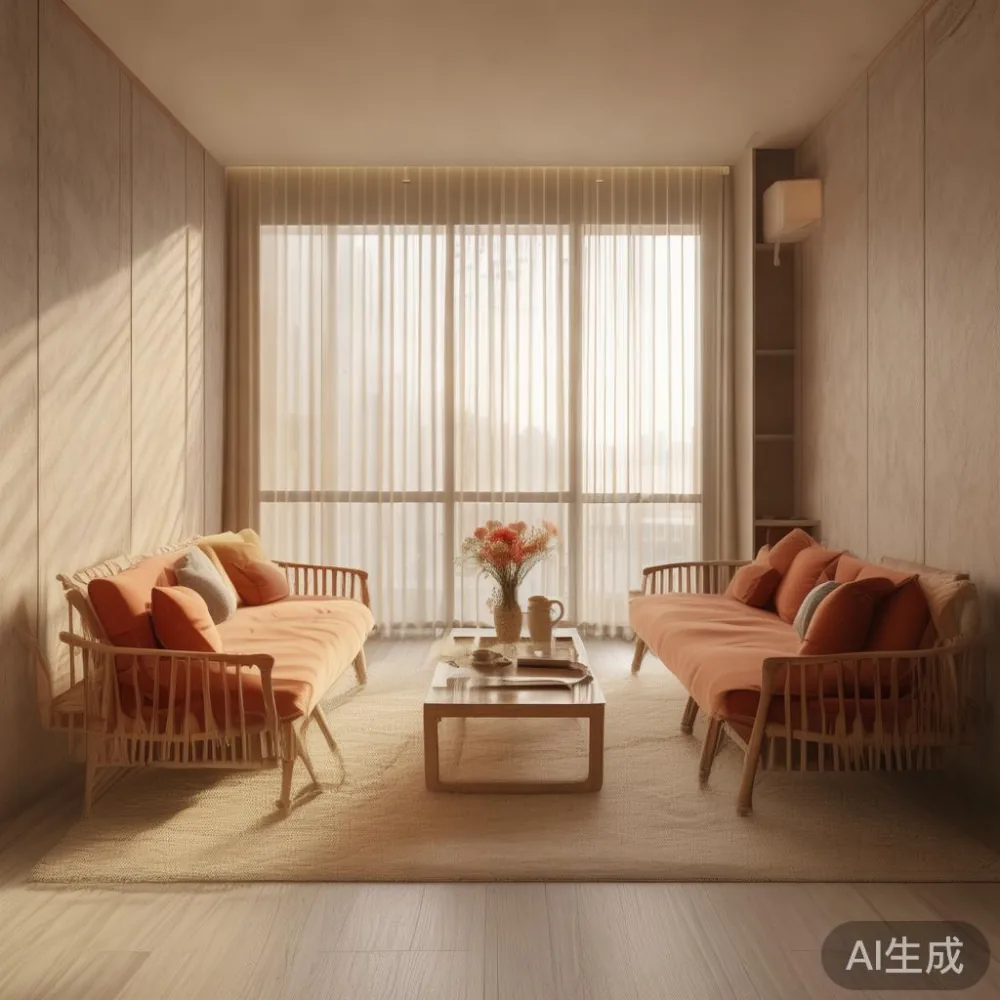
Most of the questions we hear at our Foshan workshop (we have been building solid wood pieces for export since 2008) sound like "how do I make my living room feel expensive without becoming heavy?" and "can a majlis-style low sofa actually work in a 90 sqm HDB?" Those are exactly the questions I want to unpack here, with measurements, prices in SGD, and a couple of honest notes about what we have shipped to Singapore over the last twelve months. If you want to see the production floor or browse the current collection, the easiest reference point is midhillco, the parent brand that handles export logistics and the 10-year structural warranty for every piece we send overseas.
What "warm minimal" actually means in a Singapore home
Warm minimal is not "less stuff." It is "stuff that has been edited with intention." The palette sits between off-white (think RAL 9010 or Jotafix Linen White) and a narrow band of mid-tone woods: white oak, natural ash, walnut, and the occasional teak. Metals stay brushed, not polished. Soft furnishings lean linen, bouclé, and brushed cotton. Lighting is layered: 2700K downlights plus a paper lantern plus a single warm floor lamp.
In a 1,050 sq ft three-bedder in Punggol Waterway Ridges I visited last month, the owners had done almost everything right: microcement screed, full-height birch veneer cabinets, a 240 cm x 95 cm oak dining table. The piece that pulled the room together was a low-backed mohair sofa in oat, paired with a 110 cm travertine coffee table. The room cost less than S$55,000 in furniture and finishes, but it photographed like a S$180,000 condo. That is the brief: warm minimal should look expensive per square foot, not expensive per item.
How do you choose a solid wood sofa that does not overpower a small living room?
Start with footprint, not fabric. In Singapore, lift cabins are usually 1.1 m wide and 2.1 m deep, corridor turns in HDB blocks run as tight as 1.2 m wide, and most front doors fall between 0.9 m and 1.0 m. That means a three-seater sofa deeper than 95 cm is going to be an awkward carry-up. Two pieces I keep recommending:
The 3-seater at 210 cm x 88 cm x 78 cm. A floor-to-seat height of 38 cm keeps the silhouette low and almost Japanese in proportion. Pair it with a 90 cm round side table for lamps and a 240 cm TV console. Total footprint stays under 6 sqm, leaving the 4 m x 4 m HDB living room with a comfortable 1.8 m walking path. Retail in Singapore for a comparable solid oak frame: S$3,200 to S$4,800 before GST.
The modular two-piece at 180 cm + 90 cm chaise. This is the layout we shipped to nine households in District 19 last quarter. It solves a real Bedok problem: how to seat four adults for weekend dinner without an L-shape that eats the air-con vent. In a Japanese sofa vs Japandi sofa comparison we run internally, the Japandi version wins on price (around S$2,900 landed), while the Japanese version wins on joinery: through-tenons, no metal brackets, kiln-dried ash frames that weigh 14 kg per module, light enough for two movers to carry into a 10th-floor corridor without scratching the skirting.
Fabric matters more than people expect. Bouclé hides dust and reads warm; linen reads cool and clean; performance velvet reads luxurious but flattens in the afternoon sun coming through a north-facing Punggol window. For majlis-style seating (a category that overlaps neatly with Post-modern light luxury silhouettes), pick one facing fabric and one cushion fabric in the same tonal family. Resist the temptation to add a third pattern.
Dining tables, bed frames, and wardrobes: the three big pieces that set the temperature of the room
Once the sofa is sorted, the next three purchases control the feel of the whole flat. Here is the logic we use when clients send us their floor plans.
Dining table. For a four-person household in a compact condo, the sweet spot is a 140 cm x 80 cm rectangular table with chamfered edges. Top in 2.2 cm thick white oak, base in solid ash, weight roughly 48 kg. Why those numbers? 140 cm seats four comfortably and four tightly; 150 cm starts to dominate a 2.6 m wide dining nook; 160 cm only works in a 2.9 m width or wider. Top 10 Post-modern furniture lists often show round versions at 120 cm, and these are gorgeous for a 4-pax couple, but for families hosting more than three guests regularly, go rectangular. Prices from Foshan direct supply run between S$1,850 and S$2,600 landed for an honest 100% solid wood version. A 90 cm round four-seater clocks in around S$1,250 to S$1,600, which is a friendly under 2000 Nordic furniture option for smaller dining corners.
Bed frame. Warm minimal bed frames are either low-platform Japanese (15 cm to 25 cm from floor to top of side rail) or tall-upholstered with a curved headboard. Both work in warm minimal; the choice is about the rest of the bedroom. In a 3.2 m x 3.0 m bedroom (a standard HDB master), a queen at 152 cm x 188 cm with a 110 cm tall bouclé headboard leaves exactly 72 cm walkway on each side, which is enough for two people to make the bed without stepping on each other. The headboard should be no wider than the mattress plus 8 cm per side, otherwise it eats the bedside lamps. If you are shopping for a bedroom refresh this season, a guide on how to style Japanese bed in room practice starts with keeping 60 cm to 80 cm of breathing room on three sides and skipping the second nightstand when the room is under 11 sqm. Searching for the best Japanese bed for 2026 tends to surface a lot of engineered-wood frames at low prices; check the centre rail: a solid 4 cm x 6 cm pine or ash rail is the difference between a frame that holds its shape in humid Singapore air and one that sags by year three.
Wardrobe. Sliding doors save floor space, hinged doors feel more substantial. For walk-in wardrobes under 2.5 m deep, keep door fronts flush with the wall plane. For shared wardrobes, choose two-toned interiors (warm white shell, walnut drawer boxes) so the room reads as one piece, not twelve pieces. A 240 cm wide three-door wardrobe weighs roughly 110 kg in solid wood, which means two delivery men and around 40 minutes of assembly on site. Budget S$3,800 to S$5,500 landed for a properly framed version; the cheap S$1,800 units on Shopee and Lazada use 1.2 cm particleboard, which is not warm minimal, it is just cheap.
Nightstands, marble tables, and the small pieces that quietly hold the room together
Once the big pieces are placed, the small furniture does the editing. A few rules we use on every warm minimal project in Singapore:
1. Nightstands should match the bed height exactly. If your mattress top sits at 48 cm, the nightstand top should sit at 48 cm to 50 cm, not lower. A pair at 48 cm x 38 cm x 50 cm in solid ash works with most warm minimal queen and king beds. Drawer fronts should be handleless with a 1 cm shadow gap, or have a single recessed pull in brushed brass.
2. Marble tables earn their place in pairs. One large coffee table in warm travertine (110 cm x 65 cm x 32 cm) and two small side tables in honed Carrara (45 cm round x 45 cm tall) create a triangulation that feels designed rather than collected. A single travertine piece costs around S$2,400 to S$3,800 in Singapore depending on vein pattern. Carrara side tables run S$650 to S$1,100 each.
3. Lighting is furniture. A 150 cm to 165 cm arc floor lamp with a paper shade (around S$420 to S$780 retail) doubles as sculpture in a corner that would otherwise sit empty. A single 35 cm ceramic table lamp on a side table adds a soft 2700K pool that downlights cannot match.
4. Skip the rug, then put one down. Bare microcement floors look cleaner for the first week, then they look cold. A 240 cm x 320 cm wool-silk blend rug in oatmeal frames the seating zone without shouting. Prices run S$1,200 to S$2,100 for a hand-loomed version, which outlasts any machine-made synthetic by a factor of three.
5. One piece should be Post-modern or French light luxury. A sculptural accent chair, a pleated console, or a marble table with a brass ring echoes the broader conversation happening in the majlis furniture and boutique hotel world. Modern light luxury for hotel interiors leans heavily on this restrained, slightly theatrical palette; bringing one element into a HDB flat makes the room feel curated instead of simply furnished.
Delivery, warranty, and the reality of shipping solid wood furniture to Singapore
This is the part most showroom salesmen skip. A 110 kg three-door wardrobe does not appear on your balcony by magic. Our shipping route from Foshan to Singapore runs either direct LCL (20 to 35 days, around S$280 per cubic metre, plus 9% GST on landed value) or shared container (28 to 42 days, cheaper per piece for orders over 4 cbm).
For door-to-door service in Singapore, we use two-man teams that handle HDB corridor navigation, lift measurements, and assembly on site. Standard delivery is 45 to 60 days from order to doorstep on stocked SKUs, 75 to 90 days for custom sizes. Lift opening widths under 1.0 m require the wardrobe to ship with doors off and re-hung on site, which adds around S$120 to the order. High-rise deliveries above the 20th floor sometimes incur a S$60 to S$120 crane surcharge if the lift cannot be booked for a full morning.
The pieces themselves come with a 10-year structural warranty on frame and joinery (we have never had to honour one on a properly kiln-dried oak or ash frame), lifetime refinishing for a small service fee, and a 14-day return window for stocked items. Free shipping applies on orders over US$350 equivalent, which in our Singapore catalogue works out to roughly four accessories or one dining chair. Returns on custom items are limited to defects; we accept that as a fair trade for pricing custom pieces around 18% lower than equivalent Singapore-build options.
I have personally seen two of our three-door wardrobes delivered into a 28th floor unit at Rivière with the doors shipped flat and re-hung on site by our team; the entire job took 95 minutes from lift to clean-up. That kind of reliability is what a 2008-built workshop with 17 years of export experience can offer, and it is frankly the reason most of our Singapore clients come back a second and third time.
Common mistakes Singapore homeowners make with warm minimal furniture
After shipping furniture to about 240 Singapore addresses over the last three years, I have a short list of patterns that cost homeowners money and time:
Buying all light wood. A room in only one tone of oak reads flat. Mix at least two wood tones within a single sightline: light oak dining table, slightly darker walnut TV console, mid-tone ash shelving. The eye reads the variation as warmth, not clutter.
Ignoring humidity. Singapore sits at 78% to 92% relative humidity for most of the year. Solid wood moves. A good piece will have 1 mm to 2 mm expansion gaps on panels and doors that breathe. A cheap piece will have visible cracks by Lunar New Year of the second year. Ask every supplier: "Where was the wood kiln-dried, and for how long?" If the answer is "we don't kiln-dry," move on.
Mixing too many metals. Brushed brass tap, polished chrome handle, black steel lamp = three metals in one room. Pick one family and stick to it across handles, hinges, and lamp bases.
Skipping the swatch stage. Order one fabric and one wood swatch before placing a full-room order. Place them in the actual room at 10 am and at 4 pm. If the swatch reads yellow under afternoon sun, the full suite will too. Most good suppliers (and yes, that includes us at midhillco for the majlis furniture and warm minimal pieces in the current 2025 catalogue) ship swatches for free within three working days to any Singapore address.
Forgetting corridors and lifts. Measure your lift cabin. Then measure again with the doors open and a hand truck inside. A 240 cm sofa that fits on paper does not fit through a 1.1 m wide corridor turn unless the building has a service lift or a full-height loading bay. Always confirm these dimensions with your building management before ordering anything over 200 cm long.
Putting it all together: a sample furniture shortlist for a 1,000 sq ft HDB in Tampines
To make this concrete, here is the exact shortlist I would build for a 1,000 sq ft four-room HDB in Tampines with the owner’s brief: warm minimal, two adults, occasional visits from parents, budget around S$15,000 for furniture.
• 210 cm three-seater solid wood sofa in oat bouclé, kiln-dried ash frame, 38 cm seat height. ~S$3,600.
• 140 cm x 80 cm rectangular solid oak dining table with chamfered edge, brushed brass feet caps. ~S$2,150.
• Four matching solid ash dining chairs with paper-cord seats. ~S$520 each, S$2,080 total.
• Queen-size 152 cm x 188 cm low-platform bed frame in solid ash with curved headboard. ~S$2,950.
• Pair of 48 cm x 38 cm x 50 cm nightstands in solid ash, handleless drawers. ~S$680 each, S$1,360 total.
• 110 cm x 65 cm travertine coffee table on brushed brass base. ~S$2,650.
• Pair of 45 cm round honed Carrara marble side tables. ~S$780 each, S$1,560 total.
• 240 cm three-door wardrobe in solid ash with warm white carcase and walnut drawer boxes. ~S$4,300.
That is roughly S$20,650 retail if purchased separately. Buying as a project from a single supplier with consolidated shipping usually brings it down by 12% to 18%, and the consolidated GST-only billing makes customs clearance straightforward. Add a S$1,400 wool-silk rug, a S$520 paper floor lamp, and a S$420 travertine console, and you are inside S$22,000 total furniture budget for the entire flat, a number that sits comfortably between a stock HDB package and a fully bespoke ID quote.
The point of warm minimal is not thrift; it is restraint paired with materials that age well. Solid wood, natural stone, brushed metals, and one well-chosen fabric per room. The pieces do not need to shout; they need to last. A flat in Bedok or Punggol with the right solid wood sofa, bed frame, dining table, wardrobe, and nightstand, plus a single marble table or travertine accent, will read as quietly luxurious for fifteen to twenty years, and that is a much better return on the spend than swapping flat-pack pieces every three to five years.