Majlis Furniture: Price Influencing Factors Explained
Solid wood furniture can cost SGD 800 for a dining table, SGD 1,600 for a bed frame, or SGD 4,500 for a large wardrobe, yet the product page may show little about why. The visible material is only one part of the price. Timber species, joinery, finish, hardware, dimensions, delivery conditions, and warranty support all affect the final figure.
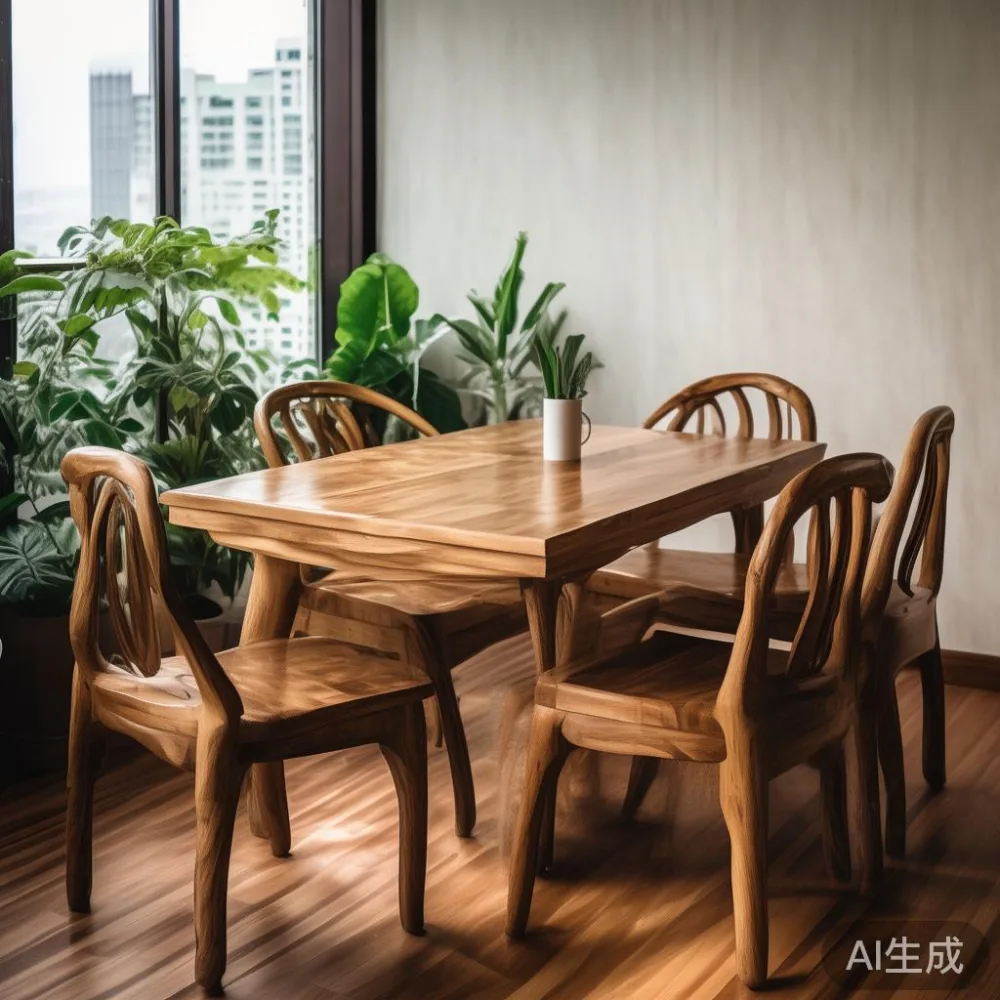
This matters across Singapore because HDB flats and condos impose practical constraints. A 210 cm lift opening, a 105 cm corridor, a 90 cm doorway, and a 3.2 m ceiling can eliminate a design that looks generous in a showroom. Homeowners in Tampines, Bedok, and Punggol also compare landed costs carefully because a quoted price before GST may not be the price at the door.
MIDHILL makes solid wood furniture for international and Singapore buyers, including majlis furniture, dining tables, beds, wardrobes, and storage pieces. Its position is not mass-market discounting. The relevant question is what money buys in the construction and service behind a piece, especially for customers seeking French light luxury, American light luxury, or post-modern light luxury.
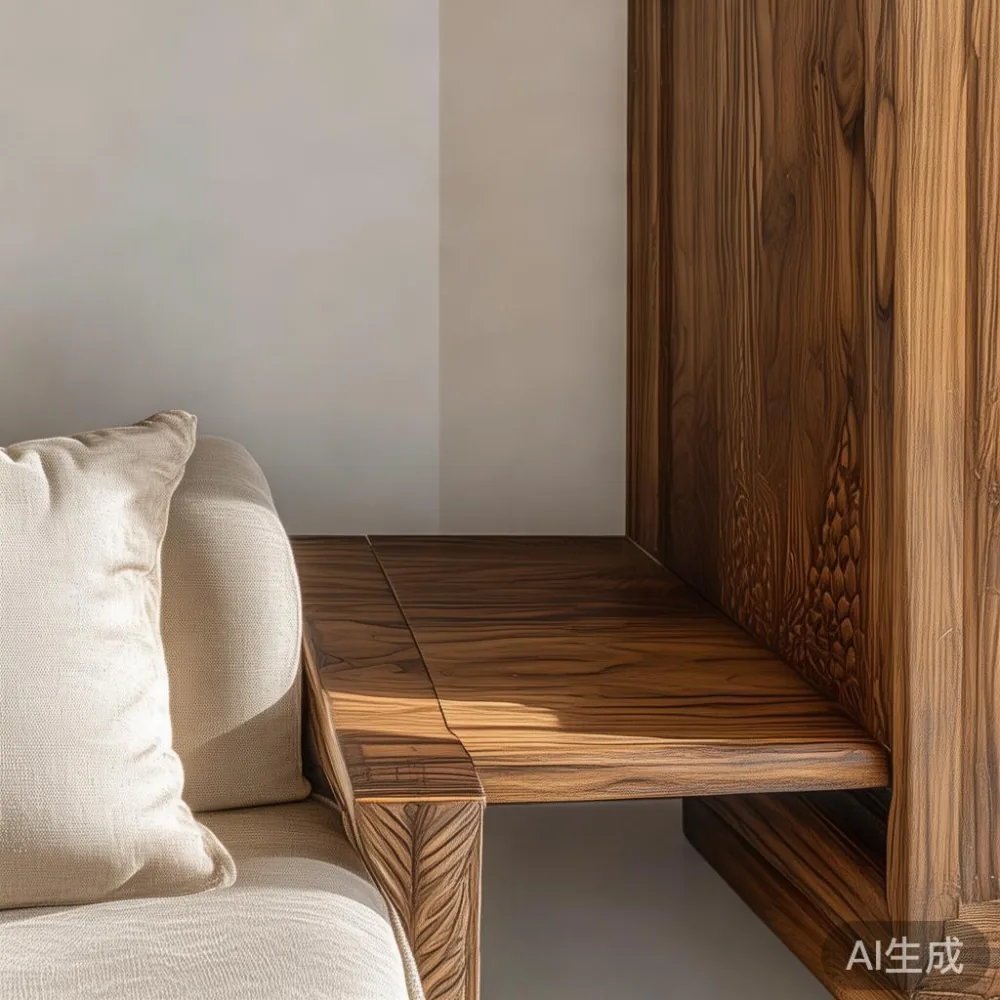
What determines the price of a solid wood furniture piece?
The first factor is the timber itself. Solid hardwood such as white oak, ash, walnut, and beech has different supply levels and working requirements. Grain selection also affects yield: a board with the preferred continuous grain may cover fewer furniture parts than a board with mixed cuts. That waste has a measurable cost, even when the finished surface hides it.
Thickness comes next. A 25 mm tabletop behaves differently from a 40 mm top under daily use. A 30 mm solid wood sofa frame, a 50 mm bed frame rail, and a 45 cm deep wardrobe carcass are not simply heavier versions of thinner components. They require more material, larger joints, and more precise machining.
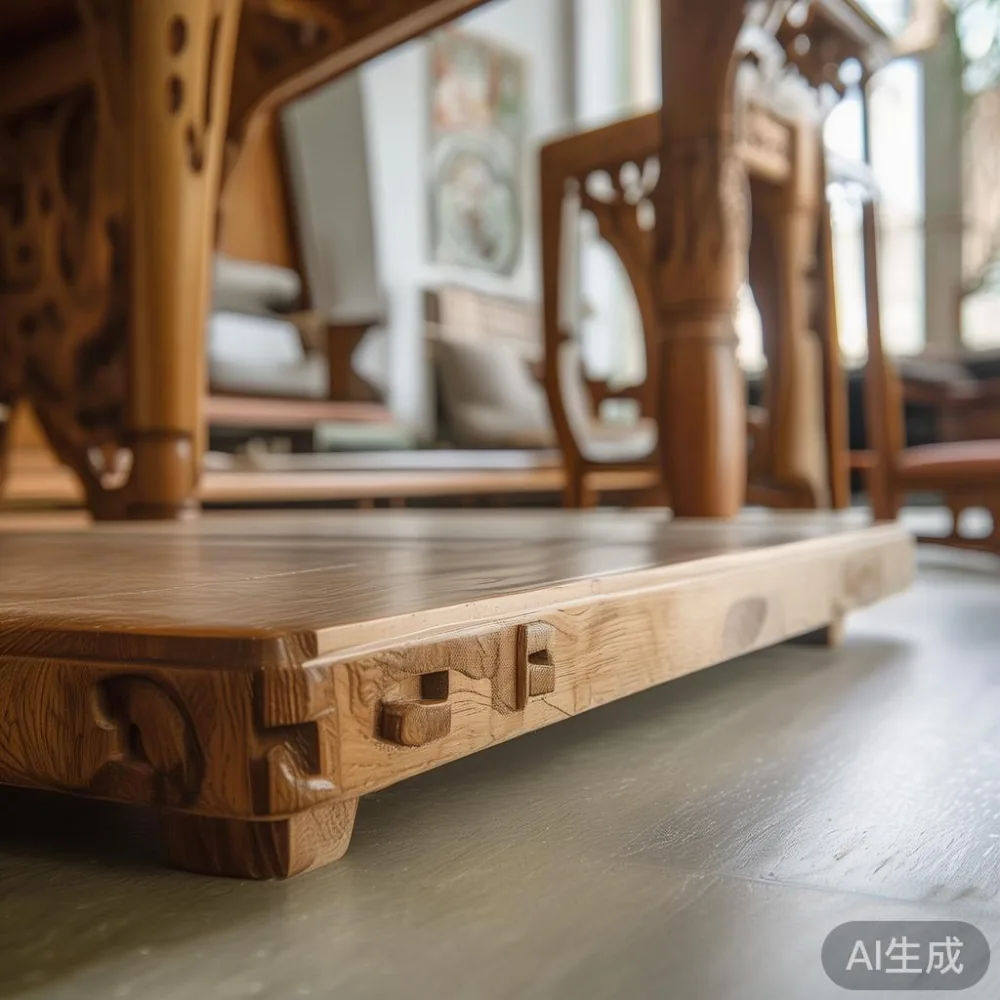
For example, a dining table measuring 200 cm by 100 cm with a 40 mm top uses roughly 0.08 cubic metres of timber before losses. At 45 mm, the same table requires about 0.09 cubic metres. Add legs, aprons, braces, and machining waste, and total timber consumption can exceed 0.12 cubic metres.
Joinery can be more expensive than the timber it connects. Mortise-and-tenon joints, dovetail drawer joints, dowelled bed rails, and bridle joints require setup, accurate cuts, and skilled assembly. Dowels, screws, and concealed metal fasteners have their own place, but a frame assembled with appropriate joinery can carry a heavier and less frequent load.
Weight gives buyers a rough comparison, not a quality verdict. A queen solid wood bed frame may weigh 55 kg, while a king frame with a thicker headboard may weigh 78 kg. A 180 cm dining table might weigh 64 kg. A 65 kg marble table needs a different support calculation because stone concentrates its load rather than distributing it like timber.
Is solid wood always more expensive than engineered wood?
Often, but not automatically. Engineered wood can be efficient because large sheets produce more parts with less waste. A 16 mm melamine board may suit a compact HDB wardrobe, while a 18 mm plywood bed base may meet a lighter budget. Neither should be described as solid hardwood merely because the surfaces look wood-like.
Solid timber becomes more costly where a broad continuous surface is required. Veneers can create a 244 cm by 122 cm decorative panel efficiently; making the same visible face in solid wood requires careful board selection. Veneered furniture can therefore be rational for wardrobes and cabinetry, while solid wood is commonly preferred for bed frames, dining tables, chairs, and long-wearing furniture such as a solid wood sofa.
Singapore buyers should compare the actual construction rather than accept “solid wood” as a complete specification. Useful questions include: Is the frame solid timber? Is the tabletop solid timber? Which surfaces are veneered? Is the back panel plywood? Are drawer bottoms solid, plywood, or fibreboard? What joinery is used? What is the unloaded weight?
For a bedroom, the answer to “how to style Japanese wardrobe in bedroom” starts with scale and function, not a shopping label. A Japanese-inspired wardrobe may use sliding panels to reduce the 90 cm door-swing requirement in a compact flat. A hinged wardrobe needs 110 cm of clearance in front of each door. That operational difference can justify a higher mechanism price while making the room more usable.
How do finish, hardware, and colour change the price?
A clear-coated surface and a stained surface are not equivalent operations. Some stains require several sanding and application cycles. A natural oil finish is less bulky but may need more care. American light luxury often favours warm oak, walnut, cream, and muted taupe, while French light luxury leans towards pale timber, elegant profiles, and restrained detailing. Post-modern light luxury may mix geometric forms with visible grain and carefully controlled contrast.
Hand-applied finishes cost more per unit than a standard factory coating because coverage is slower and inspection is closer. A 200 cm dining table with a hand-rubbed oil finish might add SGD 220 to SGD 520 before delivery. A painted lacquer system on a wardrobe could add SGD 300 to SGD 800, depending on the number of coats and surface preparation.
Hardware can move the total significantly. A basic wardrobe hinge may cost SGD 4 per unit, while a soft-close hinge with a branded mechanism may cost SGD 18. A standard drawer runner might be SGD 22; a full-extension runner can reach SGD 65. A bed frame with 12 solid wood slats and 3 support rails may include SGD 75 to SGD 180 in support components alone.
Legs and suspension deserve equal attention. A solid wood sofa may use a kiln-dried hardwood frame, webbing, foam, and a high-density fabric or removable cover. A 220 cm three-seat model can retail from SGD 1,900 to SGD 4,800 depending on those choices. A marble table may pair a 30 mm stone top with a reinforced solid wood or metal base, with prices commonly ranging from SGD 1,600 to SGD 5,200.
MIDHILL’s 10-year structural warranty provides more information than a vague promise because it defines the product category and period. Lifetime refinishing adds another layer of ownership support, although buyers should confirm what surfaces and eligible components are included. Service can reduce the perceived risk of a larger upfront price.
How much do size and shape add to a furniture quotation?
Size affects both material and labour. Compare a 140 cm dining table with a 240 cm version of the same design. The larger table needs a longer top, more legs or supports, and often reinforced aprons. It may also require two people and a longer assembly time. The price difference might be SGD 600 to SGD 1,300, not a simple percentage of the smaller model.
Curves cost more than straight components because templates, cutting, and edge work take additional machine time. A solid wood sofa with shaped arms can require more shaping than one with squared arms. A nightstand with 2 drawers may cost SGD 420, while a larger 3-drawer unit with a shaped front and brass pull may reach SGD 780.
Bed size changes the project more than many shoppers expect. A queen bed frame may be 160 cm wide and 210 cm long; a king may be 190 cm by 220 cm. The latter needs wider rails, a broader headboard, and more slat support. It may weigh 20 kg more and require a larger assembly area. For lift access, the packaged dimensions and turning radius matter more than the bed’s final width.
For customers comparing a light luxury bed vs Japandi bed, the useful distinction is construction and visual discipline. A light luxury bed may use thicker mouldings, upholstered surfaces, and layered joinery. A Japandi bed often emphasises low profiles, slatted headboards, pale timber, and uncluttered forms. Neither style alone determines quality; the timber, fasteners, slat spacing, centre support, and finish do.
Buyers often ask “is American bed worth it” when comparing an American-style solid wood bed frame with a lower-priced model. The answer depends on frame density, joinery, centre support, slat count, motion stability, and warranty. A 70 kg queen frame with 14 curved hardwood slats and 3 support rails may justify more than a 42 kg frame with 9 flat slats and 2 rails.
What are the hidden costs of delivery and installation in Singapore?
Delivery is part of the furniture price even when it appears as a separate line. Singapore furniture moving through HDB corridors and condo service areas requires measurements and planning. A sofa with a 224 cm packaged length may not turn through a 105 cm corridor or fit a 210 cm lift diagonally. A bed frame packed into two long boxes can fit vertically, while a wardrobe delivered as one rigid carton may not.
Typical delivery timing is 15 to 35 days for made-to-order furniture and 7 to 14 days for items held in stock, though production schedules and destination matter. In-condo delivery can involve booking a service elevator, loading bays, and lift reservations. Additional stair carry, assembly, or restricted access may add SGD 80 to SGD 350 or more.
GST must also be treated clearly. For a standard-rated Singapore purchase, GST is currently 9%. A table listed at SGD 2,500 before GST becomes SGD 2,725 before delivery, and then any access or assembly charge may also be taxable. Buyers should confirm whether the displayed price includes GST, rather than assume it from the total paid.
MIDHILL offers free shipping over US$350 for qualifying international orders, but a Singapore quotation should still be checked for local freight, lift fees, and installation. The ownership mathematics includes more than the catalogue figure: the useful life, maintenance needs, and chance of repair can outweigh an initially cheaper product. A solid wood dining table may remain in service for 20 years; a lower-cost one may need replacing after 7 years.
How should you compare two solid wood furniture quotations?
Compare like-for-like specifications. Put two quotations side by side and record timber species, dimensions, thickness, frame construction, joinery, finish, hardware, drawer movement, bed slats, wardrobe fittings, warranty, delivery, and return terms. If one quote uses rubberwood and another uses white oak, the SGD 400 difference may reflect the material rather than an inflated retailer margin.
Last month I visited my colleague’s Bedok flat while a 180 cm solid wood dining table was being delivered. The lift measured 210 cm high and 135 cm wide, while the corridor turned sharply near the flat entrance. The table was split into a 180 cm top carton, a leg carton, and a brace carton, allowing the installer to carry each component separately. The packaged pieces weighed 36 kg, 19 kg, and 11 kg. This did not guarantee easy access in every building, but it demonstrated why packaging design deserves attention.
A useful scoring method gives each category 10 points. Award full points for clearly specified timber, thickness, joinery, support components, hardware, finish, warranty, delivery terms, and return policy. Compare totals, then examine any quote that loses points on structural details. A cheaper bid can make sense when it fits the room and construction needs; a higher bid can make sense when its service package removes risk.
The phrase “best light luxury furniture” is not useful as a buying category because it can describe appearance without construction. Better questions are: Does the solid wood sofa remain stable after 5 years? Will the bed frame stay level with a centre rail? Can the wardrobe drawer close quietly? Will the dining table resist movement in a humid environment? Can the seller refinish the surface after 8 years?
How do you choose majlis furniture for a compact Singapore home?
Majlis furniture must balance presence with circulation. A 240 cm majlis set may dominate an HDB living room where the dining zone begins only 180 cm away. A modular arrangement with a 180 cm sofa, 2 armchairs, a 90 cm coffee table, and 2 side tables may provide better movement. Every seat also needs floor space for legs and a route to the nearest door.
Start with the room, then the furniture. Measure the usable length and width, doors, balcony access, and lift. Allow about 75 cm for main walking routes and 90 cm near dining chairs where people sit and stand. Check that a sofa arm can clear a corridor wall after installation, not merely that the sofa fits its final position.
For those considering how to choose Japandi sofa, focus on seat depth, frame material, cushion density, and how the piece will be maintained. A 90 cm-wide three-seat sofa may be practical in a condo living room, while a 220 cm model suits an open HDB layout. Japandi styling often works with low profiles and neutral textiles, but a low back can reduce comfort for taller users.
For those considering how to style light luxury sofa in apartment, coordinate scale rather than filling every wall. Pair a pale or warm solid wood frame with 2 patterned cushions, a 130 cm rug, and one metallic accent. Keep the palette to 3 main colours and allow 60 cm between the sofa and coffee table. This creates a composed setting without crowding the floor.
The broader price drivers remain consistent: timber, dimensions, construction, finish, mechanisms, access, and after-sales care. Solid wood is not automatically a premium in every application, yet it can offer long service when the species, joinery, moisture treatment, and protection are specified properly. For buyers assessing majlis furniture or a marble table, the strongest quotation is the one that makes every material and service component visible.