Majlis Furniture for Singapore Homes: A Practical Buyer’s Guide
Compare majlis furniture sizes, materials, prices, delivery and assembly options for HDB and condo homes across Singapore.
- What size should I choose for an HDB or Singapore condo majlis?
- Is solid wood majlis furniture suitable for Singapore’s humidity?
- How do I compare a solid wood majlis with a leather sofa?
- What should I expect from majlis furniture delivery and assembly in Singapore?
- Can I fit a majlis set into a small HDB flat without crowding it?
- How much should I budget for a durable majlis set in Singapore?
- What should I inspect before paying for majlis furniture?
- Where can I buy majlis furniture in Singapore and how should I compare districts?
What size should I choose for an HDB or Singapore condo majlis?
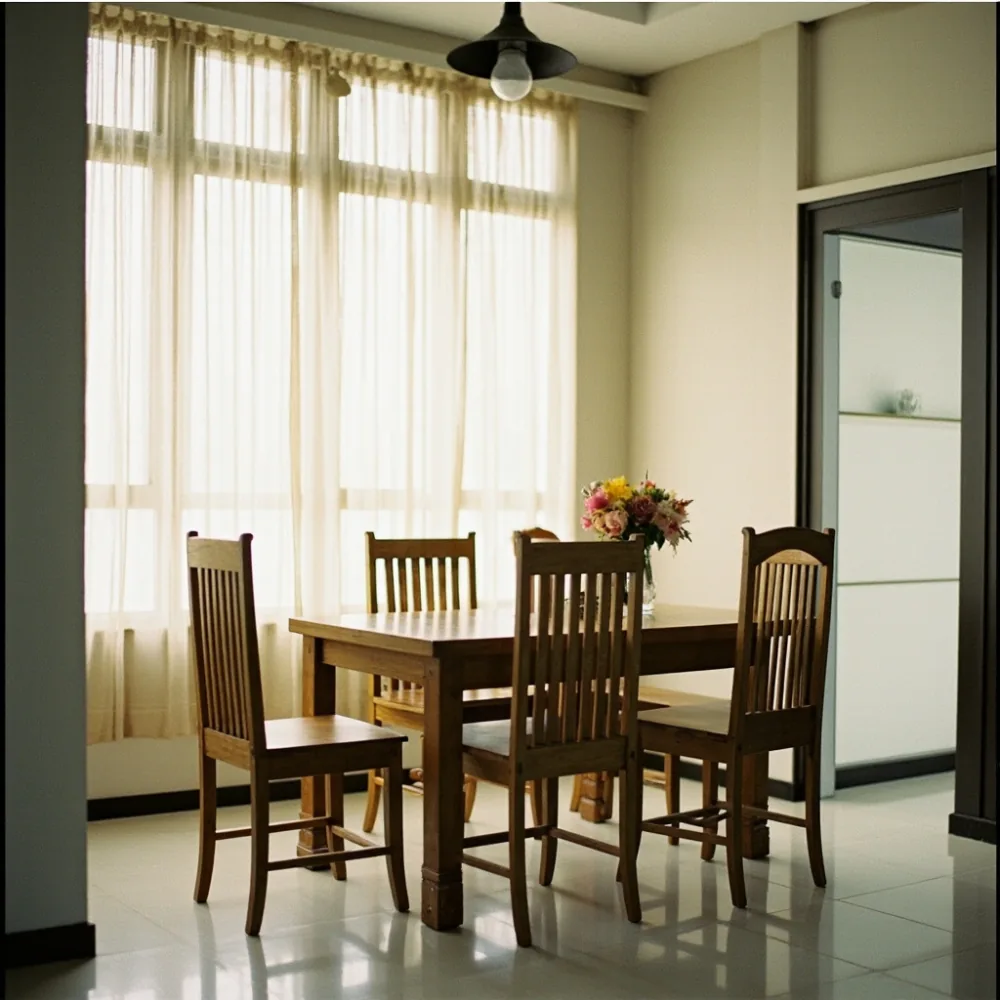
Measure the room before choosing a set
Match the set to common Singapore layouts
I start with the usable floor area, not the showroom photograph. In a typical three-room HDB flat, the living room may offer only 180–220 cm of clear wall length and around 90–140 cm of circulation space, depending on the kitchen, television console and dining zone. A condo can provide more freedom, but narrow access corridors and lift dimensions still determine whether a full set can enter.
- Compact majlis: roughly 140–170 cm wide, suitable for a narrow HDB living room or a small dining corner.
- Standard three-seat set: roughly 180–210 cm wide, often the practical choice for most Singapore homes.
- Large five-seat set: roughly 220–260 cm wide; best where the dining table can sit inside the living room without blocking a walkway.
Leave at least 80–90 cm behind the sofa for circulation and 90–110 cm between opposing seats if people will walk behind them. For a dining majlis, allow about 60 cm from the table edge to a wall or cabinet and at least 90 cm for chair pull-out and serving space. I also measure every doorway, including the unit entrance and bathroom turns, because a sofa that fits the lift may still be difficult to manoeuvre around a landing.
| Set type | Typical dimensions | Approx. weight | Indicative Singapore price | Best suited to |
|---|---|---|---|---|
| Compact two-seat | 140–160 × 80–90 × 85–95 cm | 45–60 kg | SGD 700–1,500 | Small HDB, study, compact dining nook |
| Three-seat set | 180–210 × 85–95 × 85–95 cm | 70–95 kg | SGD 1,400–3,000 | Three-room HDB or medium condo |
| Four-seat dining set | 160–190 × 85–100 × 75–78 cm | 60–85 kg | SGD 1,300–2,800 | Condo dining area or open-plan living room |
| Large five-seat set | 220–260 × 90–105 × 85–95 cm | 100–135 kg | SGD 2,400–5,000+ | Larger condo or combined living-dining area |
These are planning ranges rather than universal specifications. Confirm the final dimensions, seat height and table clearance with the seller before paying a deposit.
Is solid wood majlis furniture suitable for Singapore’s humidity?
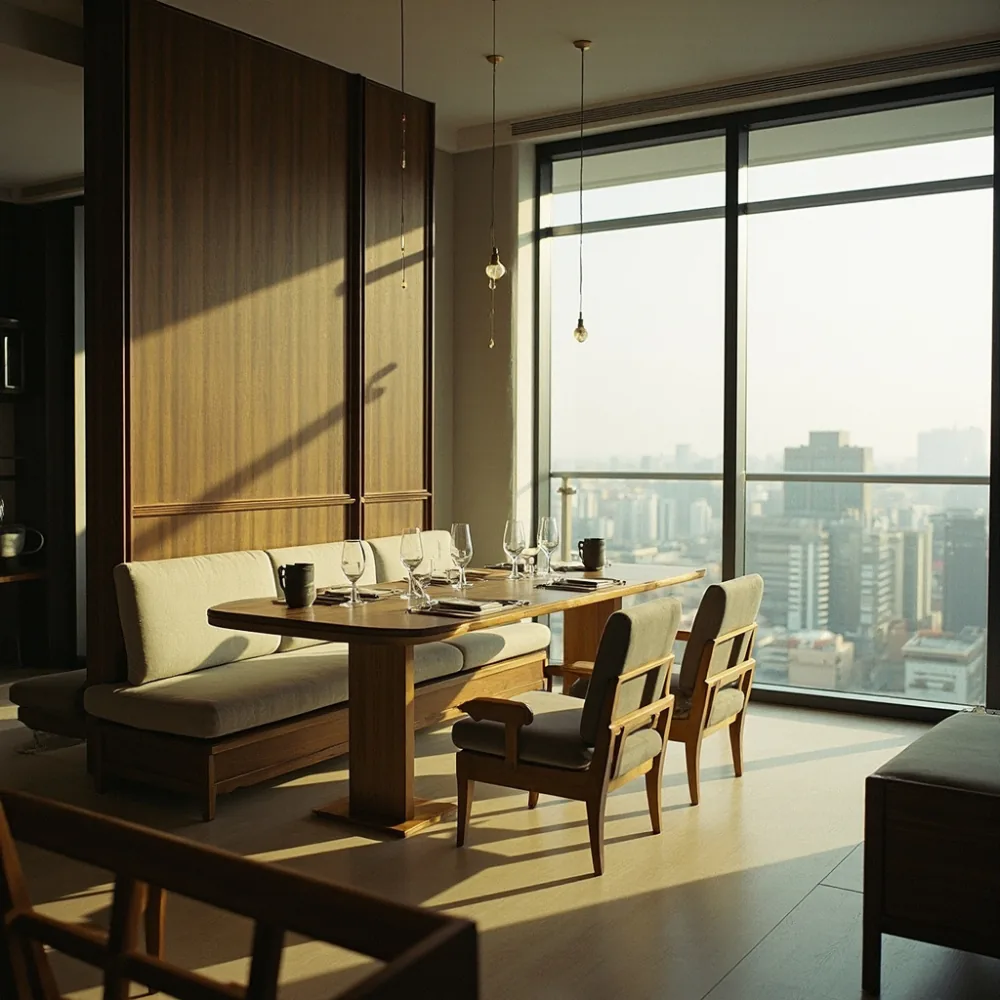
Why solid wood works well
How to prevent moisture problems
Solid wood furniture can work well in Singapore when the maker controls moisture content and the buyer manages humidity. Singapore’s year-round relative humidity often sits around 65–80%, with heavier exposure near windows, bathrooms and poorly ventilated corners. That can cause swelling, warping or mould if a poorly seasoned board is sealed before drying.
Ask whether the wood has been kiln-dried and acclimatised for tropical conditions. A practical target is roughly 8–12% moisture content for indoor furniture, though the supplier should explain their testing method rather than relying on a number alone. Look for solid-wood joints, stable joinery and a finish that can be maintained with simple products.
- Keep majlis furniture 30–60 cm away from air-conditioning vents and direct sunlight.
- Use blinds or sheer curtains on west-facing windows in districts such as Jurong East, Clementi or Tampines.
- Wipe spills promptly and avoid placing hot appliances directly on timber.
- Maintain indoor relative humidity around 50–65% where practical, especially during wet periods.
I would be cautious with MDF, particleboard or plywood that has swollen around its lower edge. Solid wood furniture is not automatically moisture-proof, but well-seasoned timber has a useful advantage: minor movement is usually easier to manage than delamination or peeling veneer. For kitchens or enclosed balconies, ventilation and material selection matter more than a vague claim that the furniture is “Singapore friendly.”
How do I compare a solid wood majlis with a leather sofa?
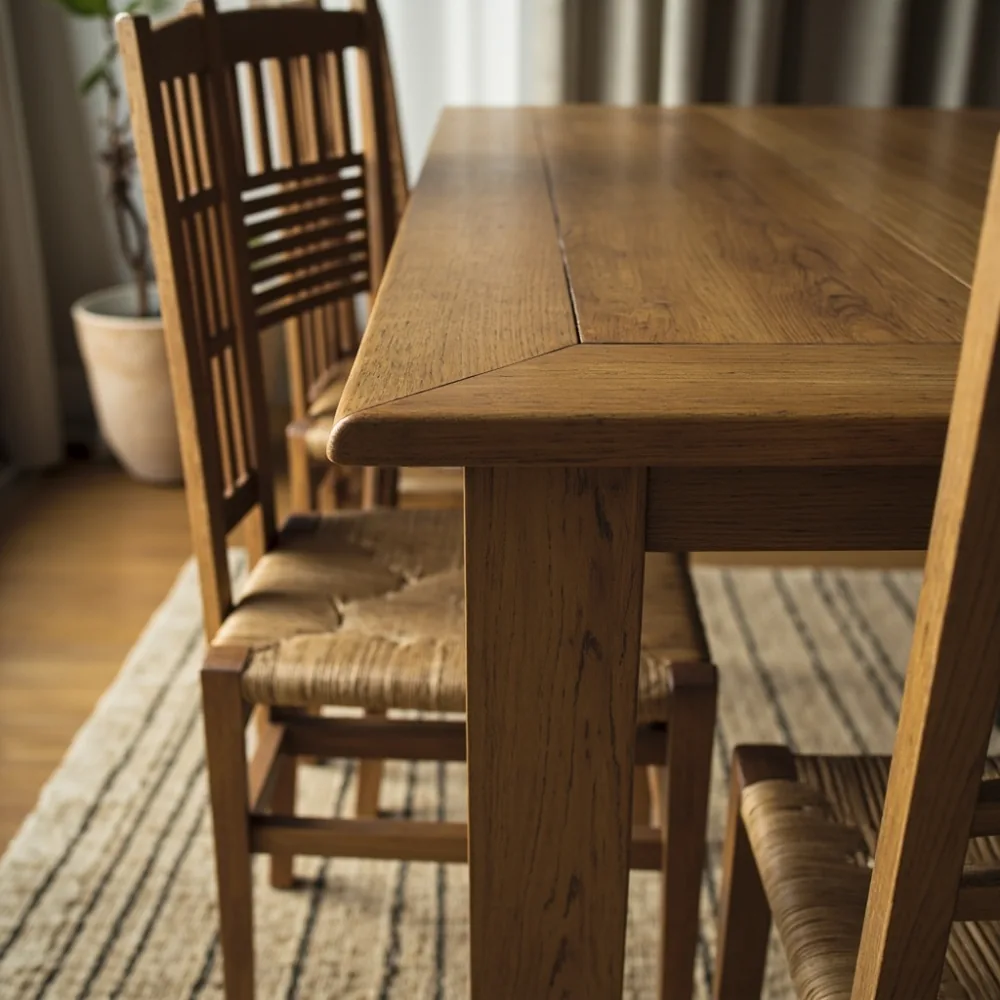
Choose the material for the room, not the trend
Compare maintenance, comfort and cost
I use the majlis for eating, working, reading and sometimes sleeping guests, so the material should suit the main activity. A solid-wood dining set handles crumbs and frequent wiping better than a fabric-upholstered set. A leather sofa feels comfortable for long evenings and wipes clean, but its surface can feel warm in Singapore unless the room is well ventilated. Fabric is cooler and often more forgiving of everyday family use.
| Material | Daily use | Humidity response | Maintenance | Typical 3-seat price |
|---|---|---|---|---|
| Solid wood with veneer or laminate top | Good for dining and work | Stable when properly seasoned | Wipe clean; refinishing may be needed every 1–3 years | SGD 1,200–3,500 |
| Full-grain leather | Good for lounging | Less absorbent than fabric; humidity still affects padding and frame | Condition every 6–12 months | SGD 2,500–7,000+ |
| Performance fabric | Strong for family dining | Resists moisture better than untreated cloth | Vacuum and spot-clean | SGD 1,500–4,000 |
| PU leather | Budget-friendly | Can peel in warm, humid conditions | Wipe clean; replacement may be needed after 3–7 years | SGD 900–2,500 |
Check the seat frame, not just the upholstery. I prefer solid-wood or metal structural members, corner bracing, and cushions with enough density to avoid collapsing within two or three years. For a leather sofa, ask for the leather type, coating, cushion density and frame warranty. A photograph cannot show how the seat feels, so test it in person if possible.
What should I expect from majlis furniture delivery and assembly in Singapore?
Check access before confirming delivery
Understand the installation timeline
Singapore delivery sounds simple until a sofa stops at the HDB lift entrance. The lift door and cabin dimensions, corridor turns, staircase width and unit-floor level all matter. Standard HDB furniture-delivery procedures may include a pre-inspection by the appointed contractor, while condo management can impose its own booking windows, protective padding or service-charge rules.
- Give the supplier the block, floor, unit and lift measurements, plus clear photographs.
- Confirm whether stair carry, hoisting or a second delivery attempt is included in the quoted price.
- Ask whether the delivery team assembles the majlis and removes packaging.
- Reserve a parking loading bay or service lift through building management where required.
For an in-stock compact set, delivery may take about 5–10 working days after payment. Made-to-order solid wood furniture commonly takes 6–10 weeks, while a fully custom dining set can require 8–12 weeks. Peak moving periods, Chinese New Year and major renovation holidays can add another 1–3 weeks, so I would avoid ordering against a fixed family event without a buffer.
Delivery for a standard three-seat majlis commonly falls between SGD 80 and SGD 250 within Singapore. Stair carry, hoisting or delivery outside the service area may add SGD 50–300. Assembly might add another SGD 50–150, depending on the design. Confirm these figures in writing because some listings use free delivery above a particular order value.
Can I fit a majlis set into a small HDB flat without crowding it?
Use vertical storage and movable pieces
Choose compact dimensions deliberately
Yes, but I would treat a majlis as a zoning tool rather than fill every wall. In a compact HDB living room, a two-seat majlis with a narrow table can create a defined dining area without making the space feel like a furniture showroom. Small space furniture should have straight edges, low visual bulk and enough clearance for movement.
- Choose a table no longer than 140–160 cm if chairs must be pulled back from a nearby wall.
- Use one bench with stackable stools for occasional larger gatherings, provided the bench can be stored elsewhere.
- Keep the dining table at 72–76 cm high and the seat surface around 43–46 cm for comfortable everyday use.
- Place slim storage below or beside the set rather than adding a separate display cabinet.
I like a two-person dining set of about 130 × 75 cm in a small flat. It can seat two comfortably and squeeze in a third for a short meal. A 150 × 80 cm table gives more elbow room and suits couples or a family of three. The total footprint is less important than the clearance around it: a beautiful table becomes frustrating if the refrigerator door or balcony door cannot open.
In a 450–550 sq ft HDB flat, a compact set plus a slim console may work if the console is only 25–30 cm deep. In a larger 700–950 sq ft condo, a three- or four-seat set gives more comfort, especially if the dining area is separated from the living room.
How much should I budget for a durable majlis set in Singapore?
Compare the full purchase cost
Pay more for the parts that fail
A usable mid-range majlis usually costs about SGD 1,400–3,000 for three seats, with dining sets in a similar range. Refined solid wood furniture, better upholstery or a large five-seat configuration can reach SGD 4,000–8,000. Bargain sets below SGD 800 may be fine for occasional use, but I would examine the joints, finish and frame more closely.
I would compare the frame, joints, surface finish and seat construction before focusing on decorative carving. Durable furniture often uses hardwood rails and mortise-and-tenon or dowelled joints, though well-made engineered components can also perform well. A solid top does not prove that the whole set is solid wood, so ask which components are timber, plywood, MDF or metal.
- Lower budget, SGD 700–1,500: compact sets with simpler frames and coated finishes.
- Balanced range, SGD 1,500–3,500: better joinery, sturdier legs and more reliable finishes.
- Higher range, SGD 4,000–8,000+: select hardwood, detailed construction, premium leather or extensive custom work.
Custom furniture usually adds roughly 20–50% to the base price and takes longer to produce. Midhill, a Foshan solid-wood furniture maker established in 2008, offers a 10-year structural warranty on qualifying products. That is a meaningful point to compare with other suppliers, although I would still check what the warranty covers, how claims are handled and whether replacement parts are supplied in Singapore.
What should I inspect before paying for majlis furniture?
Check dimensions and construction
Test stability and finish
Before payment, I compare the product specification against the room plan and ask for photos of the exact frame, underside and joints. Many buyers notice wobbly chairs only after delivery, so it is better to ask how the legs are fixed and how the table supports are attached.
- Confirm the assembled dimensions, including the table’s full footprint and chair clearance.
- Look for gaps, loose joints, splintered edges and uneven table tops.
- Tap the wood lightly and inspect unfinished areas for softness or concealed damage.
- Check that every chair sits level and does not rock.
- Review the finish for pinholes, bubbles, scratches or strong chemical odour.
For solid wood, I also ask whether movement is expected in the panels and how seasonal care should be handled. For leather seating, inspect the seams, piping and underside of cushions. A perfect showroom sample cannot guarantee the delivered item, so a written inspection and remedy policy is important.
I would use a 30–50% deposit only when the order terms and production timeline are clear. Before the final balance is due, ask for production or packing photographs. This is especially helpful for custom furniture and for buyers furnishing a new BTO flat weeks before key collection.
Where can I buy majlis furniture in Singapore and how should I compare districts?
Shop by service rather than district alone
Compare online and physical showrooms
Most Singapore purchases happen through online retailers, local showrooms or a combination of both. Districts such as Bencoolen, Lavender, Joo Chiat and the furniture-building areas around Jalan Besar and Geylang provide convenient access to physical suppliers, while suburban malls and online stores broaden the selection. I do not treat the district as proof of quality; the product specification and after-sales service matter more.
Online buying is useful for filtering dimensions, reading customer feedback and comparing prices quickly. I still prefer seeing a display item when possible, particularly for a leather sofa, because firmness, colour and back height are difficult to judge from images. Local showrooms can provide immediate stock for HDB homes, while import specialists may offer broader solid wood furniture with longer lead times.
Compare sellers using the same checklist: actual dimensions, frame and joint construction, finish, warranty, delivery inclusions, assembly charges and return policy. Confirm whether showroom pricing excludes GST, delivery or installation. Singapore-registered businesses should provide a valid tax invoice, and corporate or bulk buyers should request the appropriate documentation.
Delivery availability can also influence the best place to buy. A centrally located showroom may have easier access to multiple HDB blocks, while an online supplier may offer lower pricing but require a scheduled delivery slot. In my experience, the strongest purchase is not necessarily the cheapest one; it is the set whose specifications, timing and support fit the flat.
Frequently asked questions
How long does it take to deliver a majlis set in Singapore?
An in-stock set is often delivered within 5–10 working days after payment. Made-to-order furniture usually takes 6–10 weeks, while fully custom work can require 8–12 weeks. Building access, seasonal demand and confirmation of finishes can add time, so confirm a written delivery window before paying the balance.
Is solid wood furniture better than MDF for a Singapore majlis?
Well-seasoned solid wood generally offers better long-term stability and repairability, but it must be protected from prolonged moisture and heat. MDF can be suitable for painted or laminated pieces when its edges are properly sealed. Check moisture seasoning, joinery and finish quality instead of assuming one material is always superior.
How much space should I leave around a dining majlis?
Allow at least 90 cm between the table edge and a wall, cabinet or opposing chair for movement. For service routes, keep about 90–110 cm behind seated diners where people must pass. Compact HDB dining areas may work with a 130–160 cm table, provided chairs can be pulled out without blocking doors.
Can a majlis set fit into a small HDB living room?
A compact two-seat majlis or a 130–160 cm dining table can fit many small HDB living rooms. Measure the clear wall length, door swings and walkway before ordering, and keep circulation space around 80–90 cm. Slim storage and stackable seating can provide flexibility without overcrowding the room.
What should be included in a majlis furniture warranty?
A useful warranty should state the covered components, duration, exclusions and claim process. Structural coverage should address frame or joint failures, while finishes, accidental damage and general wear may be excluded. Confirm whether replacement parts or repair labour are included and whether the supplier can service an imported product in Singapore.
Questions about sizing, fabric or delivery?
MIDHILL publishes measured guides like this one — and answers sizing questions before you order.
See the collection