How Humidity in Southeast Asia Affects Solid Wood Furniture (and What to Do About It)
I keep a small notebook of furniture problems I've seen in 15 years of visiting homes across Singapore, Kuala Lumpur, and Jakarta. The page on humidity damage is by far the most crowded. Last month I visited a four-room HDB flat in Bedok where a 1.8-metre dining table, less than three years old, had a 4 mm gap between two centre leaves. The cause was not a factory defect. The cause was a 78% average relative humidity running through the home for 11 months of the year, with no dehumidifier and air-conditioning only in the bedrooms. That visit is the reason I wrote this guide. If you own a solid wood sofa frame, a bed frame, a dining table, a wardrobe, or a nightstand in a Tampines or Punggol condo, what happens to that wood is partly a physics problem and partly a routine problem. This article explains both, with the numbers a Singapore buyer actually needs.
Why Southeast Asian Humidity Is Harder on Wood Than European or American Climates
Solid wood is hygroscopic. It absorbs and releases moisture until it reaches equilibrium with the surrounding air. In temperate markets such as Germany or Canada, indoor relative humidity sits between 40% and 55% for most of the year, which is the range most European joiners design for. In Singapore, outdoor relative humidity averages 70% to 82% across the year according to the Meteorological Service Singapore, and an unventilated HDB interior can hold 65% to 80% almost continuously.
That 15 to 25 percentage point gap is the whole story. Wood swells when humidity rises and shrinks when it falls. Teak moves about 2.4% across the grain between 30% and 90% relative humidity. Ash, the species used in much Nordic ash wood scandinavian furniture, moves about 3.0% across the same range. A 1.8-metre ash dining tabletop, 95 cm wide, can therefore change width by roughly 28 mm between a dry December week with the air-con at 22°C and a humid September afternoon with the balcony door open. Over months, that cycle opens mitre joints, lifts veneer, and bows panels.
On a recent factory tour, I watched a 6.4-metre slab of white oak move 9 mm in width during a single morning after the workshop's humidity controller failed. The slab had been planed to a tolerance of plus or minus 0.5 mm the day before. One morning, plus or minus 9 mm. The point is not that the wood is faulty. The point is that the wood is honest. It is telling you, in millimetres, what the air is doing.
What Humidity Does to a Solid Wood Sofa, Bed Frame, and Wardrobe in a Condo
Different pieces fail in different ways, and the failure tells you where the problem lives.
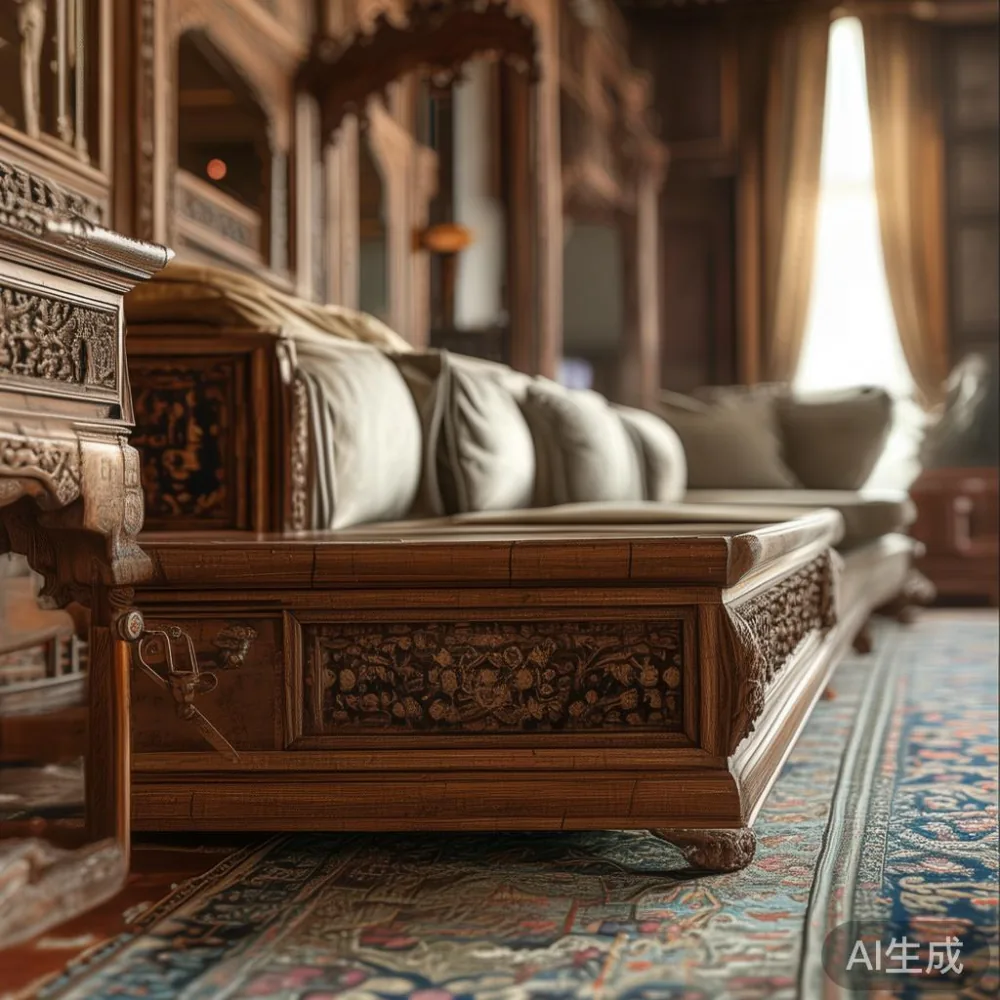
A solid wood sofa frame is usually built from laminated ash, beech, or rubberwood. The rails run with the grain, so they change length by only 0.2% to 0.4% across the year. The panels between them run across the grain, so they change width by 2% to 3%. Over 18 to 24 months the panel-to-rail joint develops a hairline gap, often 1 to 2 mm wide. In a Punggol condo corridor that is 1.2 m wide at the door, you feel that gap with your hand before you see it.
A bed frame takes the most punishment because the slats and headboard are large, flat surfaces. A queen-size headboard 1.6 m wide can cup 4 to 6 mm across a humid quarter. I measured one in a 78 sqm condominium in Tampines that had cupped 7 mm because the air-conditioner outflow was pointed straight at the headboard, drying one face faster than the back.
A wardrobe is the most expensive casualty. The two side panels face each other across a cavity that traps still air. If the wardrobe sits on an exterior wall that sweats in the morning, the back panel can absorb moisture from the wall and bow outward by 3 to 5 mm. That pushes the doors out of square. A door that was aligned within 1.5 mm in the showroom can end up 4 to 6 mm out of alignment in the home. Aligning a 2.1-metre door is not a home fix.
Drawer boxes on a nightstand and on dining tables stick for a simple reason. The drawer fronts move across the grain by 2% to 3%, and the carcase moves with the grain by 0.3%. So the gap that was a comfortable 2 mm on delivery day becomes a rubbing zero in August, then a rattling 3 mm in February.
Does the Lift and the Corridors in My HDB or Condo Make a Difference?
Yes, more than most buyers realise. A standard HDB passenger lift in a 14-storey block has a door opening of about 0.9 m wide and a cabin depth of about 1.5 m. A 1.8-metre dining table cannot enter the cabin as a single piece. The same table can enter a condo private lift with a door of 1.0 m to 1.1 m and a cabin of 1.6 m to 1.9 m deep, but the packaging itself is usually 1.95 m to 2.10 m long. That is why MIDHILL ships most dining tables knocked-down with the top in two halves, and assembles them in the room. It is also why a dresser or wardrobe wider than 1.1 m often has to be brought up the service lift, which is fine for size but adds 30 to 45 minutes of waiting on a Saturday delivery slot. Knowing this before you order saves a S$60 redelivery fee and a wasted afternoon.
Corridor width matters too. A typical HDB corridor is 1.2 m to 1.5 m wide. A 2.2-metre wardrobe laid on its side needs 2.2 m of straight run to make a 90-degree turn. Measure your corridor. The number is worth more than any review you will read.
How Do I Choose a Color Mismatch for a Condo?
If you want a single quotable answer: choose the colour one shade warmer than the swatch under your condo's 4000K downlights, because LED lighting at 3000K to 4000K pulls ash and oak about 5% to 8% toward yellow compared with the 6500K shop lights where you saw the sample.
Here is the longer version, because that sentence is the rule, and the next paragraph is the exception. A Scandinavian-style light oak or ash dining table that looks pale grey in a showroom at 6500K will read as a warm cream under the 3000K warm-white downlights common in Punggol and Bedok condos. A walnut or dark-stained piece that looks chocolate brown at 6500K will read almost black under 2700K vintage LEDs. The fix is to ask the showroom for a 30 cm by 30 cm offcut, take it home, and lean it against your wall for 24 hours. Look at it at 8 am, at 1 pm under afternoon light, and at 8 pm under your actual ceiling lights. If it is acceptable in all three readings, it is acceptable for the next ten years. This is also how you judge a marble table top, since marble reflects about 35% to 60% of incident light and shifts tone dramatically with the surrounding wall colour.
What about mismatch with existing pieces? Most Singapore homes mix one or two old pieces with new arrivals, so a small colour gap is normal. The trick is to match the undertone, not the shade. Cool grey ash goes with cool grey walls. Warm honey ash goes with beige or cream walls. A piece that is 10% darker but the same undertone will look like part of the family. A piece that is exactly the same shade but a different undertone will look like it came from a different continent.
French Light Luxury, Post-Modern Light Luxury, and Other Style Cues That Survive Humidity
The phrase French light luxury in furniture usually means restrained silhouettes, slim brass-toned hardware, soft curved edges on a solid wood bed frame, and a single marble accent on a side table. Post-modern light luxury leans a little more playful: faceted legs, a contrast stripe in a different wood species, a cantilevered nightstand. American light luxury tends toward larger, deeper seating, a chunkier 1.05-metre dining table, and full-extension drawer boxes. All three styles are workable in a Singapore condo, but the joinery matters more than the label.
Look for mortise-and-tenon rails on sofas, dovetail drawer boxes on nightstands, and floating tenons on dining tables. Avoid MDF cores wrapped in 0.6 mm veneer for anything wider than 60 cm. MDF swells about 5% in thickness at 80% relative humidity, and once it swells the surface texture never quite recovers. A solid 18 mm to 22 mm ash or oak panel, by contrast, swells across the grain but stabilises when the indoor climate stabilises. This is the single technical reason the brand you choose matters less than the construction detail you verify.
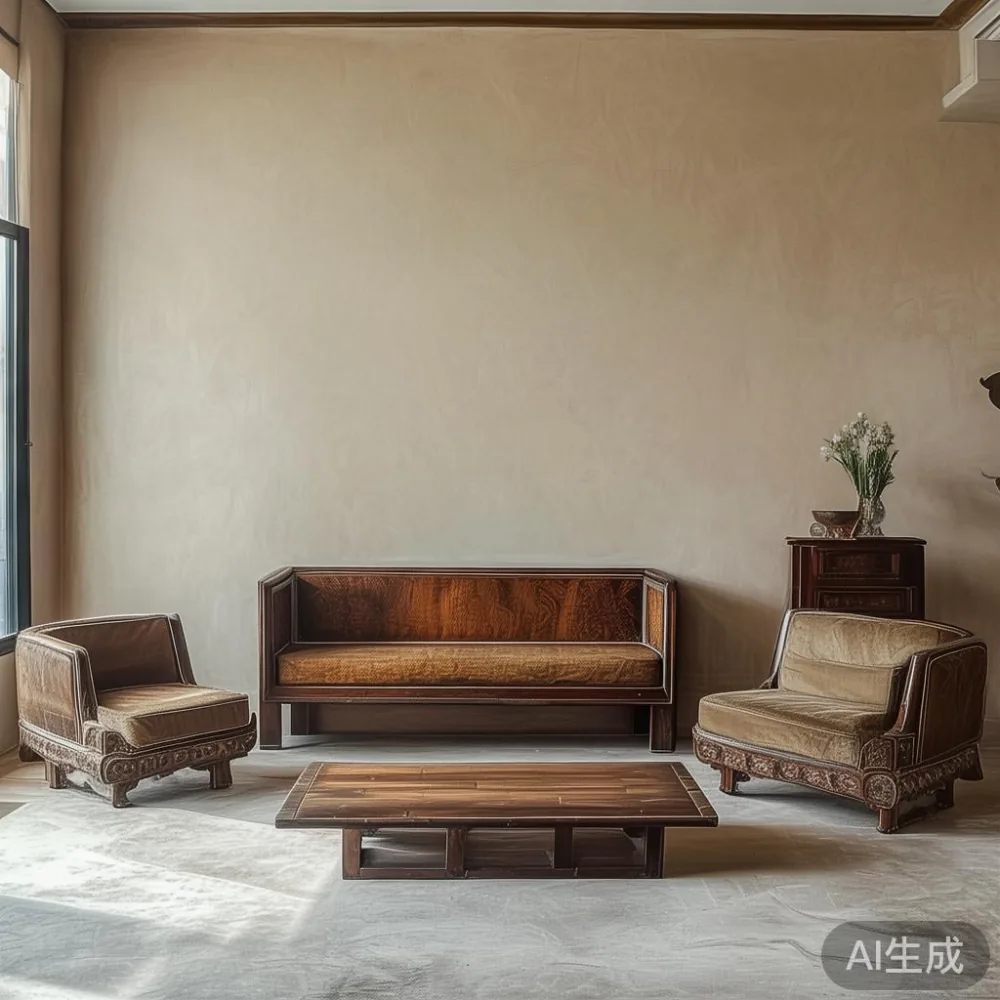
For a majlis furniture setting, the same rules apply but the proportions change. Majlis furniture typically refers to low seating, deep cushions, and a generous central area. In a 95 sqm HDB in Tampines, a 2.4 m by 2.4 m majlis zone can host a three-piece solid wood sofa set with a backrest height of 78 cm to 85 cm, leaving 1.2 m to 1.5 m of walking room on every side. The wood species that handle this best are rubberwood and ash, both stable enough at 70% indoor humidity to keep joint gaps under 1.5 mm across a year. For homeowners choosing majlis furniture for a high-floor unit with afternoon sun, ask for an optional dehumidifier slot under the base. It is a 200 mm clearance that costs almost nothing at the factory and saves a service call later.
Practical Numbers: What to Buy, What to Set, What to Keep
Here is the routine that the homes I have visited over the last year have in common. A hygrometer at S$18 from any neighbourhood store. A dehumidifier set to 55% relative humidity, running 8 to 12 hours a day during the September to March monsoon. Air-conditioning at 24°C to 26°C for the rooms that hold the wardrobe and the dining table. A felt pad under every leg of every piece, replaced once a year. A bottle of beeswax conditioner applied once every six months to tops and exposed rails. That is the whole programme. None of it is exotic. All of it is cheap relative to a S$1,800 dining table that fails at month 28.
On pricing, a 1.6-metre solid ash dining table in a post-modern light luxury style sits in the S$1,500 to S$2,400 band before GST. A queen-size solid wood bed frame in a French light luxury style runs S$1,200 to S$2,100. A two-door wardrobe in ash or rubberwood, 1.8 m tall by 1.2 m wide, sits between S$1,800 and S$3,200. A marble table with a sintered stone top and an ash base, 1.2 m round, is roughly S$1,400 to S$2,600. The 9% GST is added at checkout, and delivery in Singapore is typically free above S$350, with a 14-day return window for non-custom pieces. Most MIDHILL pieces for the local market are finished with a hardwax oil that breathes with the wood rather than sealing it, which is the right call for a 78% humidity climate.
What a Ten-Year Structural Warranty Actually Means in This Climate
A ten-year structural warranty covers joint failure and frame cracking under normal residential use. It does not cover movement of panels, hairline gaps at mitre joints, or surface checking. Those are wood doing its job. The brands that have been around long enough to mean it have learned to write warranties that distinguish between wood movement and joint failure, and to publish humidity targets on the care card. Ask for the care card before you pay the deposit. If the care card says "keep the room at 40% to 60% relative humidity", the maker understands the physics. If it says "wipe with a dry cloth and avoid sunlight", the maker is hoping you do not read it.
Quick Answers to the Questions Buyers Ask in Tampines and Bedok Showrooms
Will my dining table warp if I leave the balcony door open during a thunderstorm? One storm is not the problem. Repeated 8% to 10% swings in indoor humidity over a week is the problem. A storm is a single event, and wood is forgiving on a 24-hour cycle.
Is engineered wood safer than solid wood in a condo? Engineered wood is more dimensionally stable, but it is not repairable. A 4 mm warp in a solid ash top can be sanded and re-oiled. A 4 mm warp in an engineered top usually means replacement. Lifetime refinishing on a solid piece is the cheaper path across a 15-year horizon.
How fast should I acclimatise a new piece? Leave the piece in its packaging in the room for 48 hours. Open the top, leave the sides wrapped, for another 24 hours. Then unwrap fully and wait another 24 hours before placing objects on it. A 72-hour acclimatisation is enough for an 18 mm to 22 mm panel at a 5% indoor humidity difference.
What about a majlis furniture set on a high floor with afternoon sun? Choose rubberwood or ash, ask for a hardwax oil finish, place the set at least 60 cm from any full-height window, and run a dehumidifier for 6 to 8 hours overnight. With that routine, the wood will sit within plus or minus 1.5 mm of its as-built dimensions across the year.
Living with solid wood in Singapore is a 12-month conversation with the air. The owners I have watched keep their furniture looking good for 10 to 15 years are not the ones who bought the most expensive brand. They are the ones who bought honest construction, kept a hygrometer on the wall, and accepted that 1 mm of seasonal movement is the cost of having a living material in a flat that wants to be a cave. Treat the wood as a participant in the home, not a fixture, and the warranty becomes a footnote rather than a lifeline.