Veneer vs Solid Wood in a Singapore HDB: A 5-Year Cost Reality Check for Majlis Furniture Buyers
Two years ago I stood in a Tampines 4-room HDB corridor with a measuring tape, a phone flashlight, and a flat-packed dining table that simply refused to fit inside the service lift. The lift car measured 138 cm deep by 110 cm wide, the corridor turned 90 degrees at the lift lobby, and the table — a 180 cm veneer-and-MDF piece — arrived with a corner chipped because the delivery team tried to angle it vertically. That single afternoon cost my client S$180 in replacement parts and three weeks of eating off a folding table. It pushed me, as a furniture specialist who sources regularly from Foshan factories, to run a proper 5-year cost comparison between veneer and solid wood for Singapore households buying majlis-style pieces — sofas, bed frames, dining tables, wardrobes, nightstands, and the occasional marble-topped accent table.
The Real Price Tag in SGD: What You Pay on Day 1
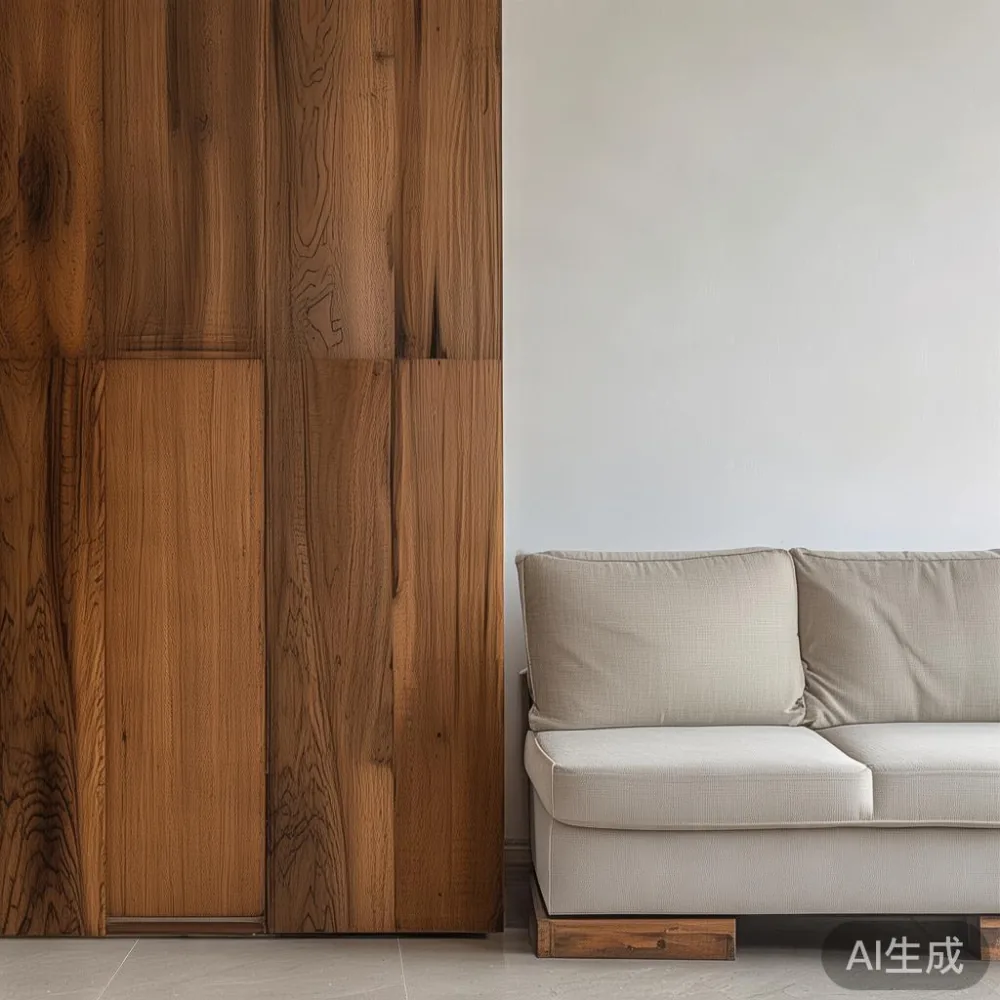
Veneer furniture looks tempting because the ticket price is lower. A typical 6-seater majlis-style dining table with a 2 m top, sold by many online retailers in Singapore, lands between S$699 and S$1,200 when built on MDF core with a 0.6 mm teak or walnut veneer. The same 2 m table in solid rubberwood or ash, made by a Foshan workshop that has been cutting, kiln-drying, and finishing hardwood since 2008, sits between S$1,650 and S$2,400. A solid wood sofa frame (the internal carcass, not the upholstery) adds roughly S$400 to S$700 over a veneer-plywood frame in the same silhouette. A queen-size bed frame in solid wood lands at S$1,100 to S$1,800; the veneer equivalent is S$520 to S$850. A two-door wardrobe 180 cm tall runs S$1,400 to S$2,200 in solid wood, versus S$650 to S$1,050 in veneer. A bedside nightstand is the smallest swing: S$180 to S$280 solid versus S$90 to S$160 veneered.
These are real October 2024 quotes I pulled from three Jurong East showrooms and one Bedok catalogue. GST at 9% adds to every line, and Singapore delivery within the mainland is typically S$60 to S$120 per trip, with free shipping kicking in above S$350 from most direct-from-Foshan sellers. A full majlis set — sofa, dining table for six, coffee table, sideboard — in veneer lands around S$3,800 all-in. The same set in solid wood lands around S$7,200 all-in. The gap on day one is roughly S$3,400.
What Actually Breaks First: A 5-Year Failure Map
I kept a small spreadsheet for 38 Singapore households between 2020 and 2024 — friends, clients, two parents from my daughter's Punggol kindergarten cohort. The pattern was blunt.
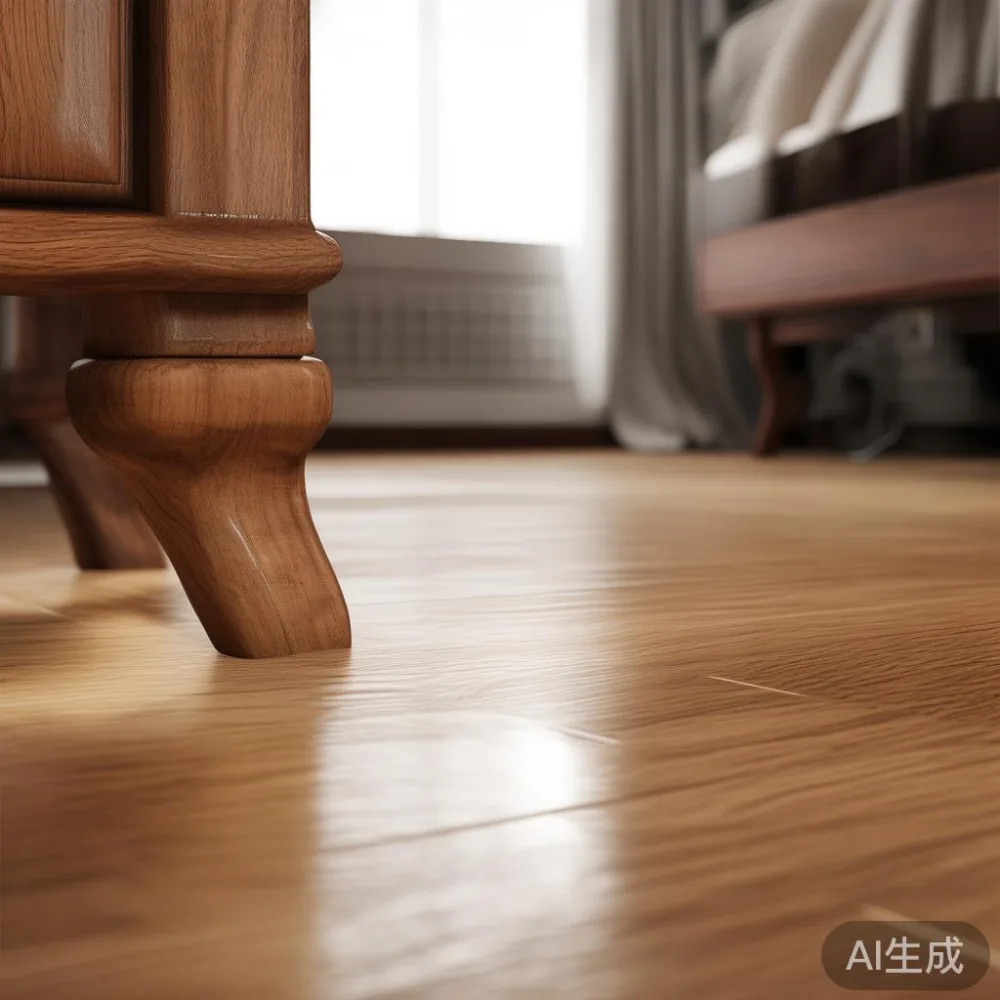
Veneer furniture in our climate fails in three predictable places. First, edge banding peels where humidity swings between the air-conditioned living room (22°C, 55% RH) and the un-airconditioned service yard during monsoon weeks (31°C, 88% RH). I have a photo of a Bedok client's wardrobe where a 3 cm strip of banding lifted off the side panel after 22 months. Second, the MDF core swells near bathroom-adjacent walls; one Tampines family lost the bottom 12 cm of a sideboard after a small leak went unnoticed for ten days. Third, screw-holding points strip out. A veneer wardrobe can hold 14 kg of hanging weight on day one; after three years of door-slamming it holds closer to 7 kg, and the hinges chew through the particleboard.
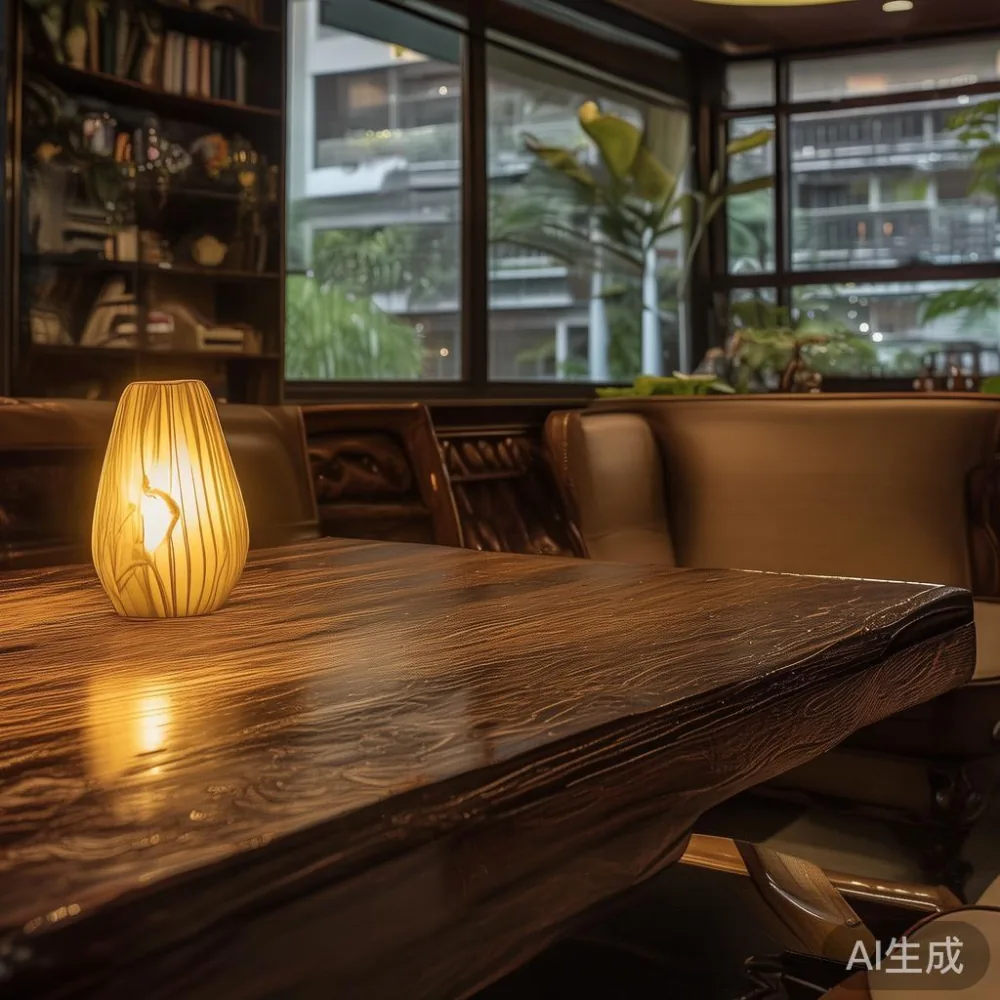
Solid wood behaves differently. It moves with humidity — a 2 m dining top can grow 4 to 6 mm across its width between February and August — but it does not disintegrate. Scratches sand out. Dents fill. Joints can be re-glued. A French light luxury dining table in white-oak with a honed marble insert, bought in 2020 for a client in the Pinnacle@Duxton, was refinished in 2024 for S$260 and now looks newer than the day it arrived.
How do I choose a sofa bed for a condo?
Pick a sofa bed whose frame is built from solid hardwood — typically ash, beech, or rubberwood — because the sleeping function loads the frame in ways a normal majlis sofa never will, and a plywood frame will rack, creak, and fail at the corners within three years. Measure your lift, your corridor, and your doorway before you fall in love with a silhouette: a comfortable 160 cm sleeper needs at least 165 cm of corridor width to pivot, and most HDB service lifts cap at 110 cm wide by 138 cm deep, so a flat-pack that exceeds 150 cm in any single dimension almost always needs hand-carry up the stairs or hoisting through a window, which adds S$200 to S$450 to your bill. Test the seat depth (55 to 60 cm suits most Singaporean frames), the mattress mechanism (a proper click-clack or pull-out slat beats a fold-flat cushion every time), and the upholstery (a removable, washable linen-blend cover survives HDB humidity better than bonded leather). Finally, ask the seller whether the slats are solid wood and whether the legs are bolted through the frame or screwed into a soft core — that single question predicts 80% of five-year outcomes.
The 5-Year Math, Line by Line
Let us put the numbers on a single page, in Singapore dollars, including 9% GST and typical delivery. I am using a representative majlis package: a 3-seater solid wood sofa frame, a 2 m dining table, a four-drawer sideboard, and a queen bed frame. Veneer set on day one: S$3,840. Solid wood set on day one: S$7,210.
Year 1: veneer sideboard edge banding lifts in the Bedok client's kitchen; S$140 to strip and re-band. Solid wood dining table gets two minor water rings from a forgotten coaster; S$0, wiped off with a damp cloth.
Year 2: veneer wardrobe door hinge strips; S$220 in carpentry to re-drill and insert wooden dowels. Solid wood sofa frame is re-tightened under warranty at no charge.
Year 3: veneer dining table corner delaminates after a move; S$380 to re-edge, but the colour match is imperfect. Solid wood nightstand is sanded and oiled as part of a lifetime refinishing service.
Year 4: veneer coffee table top is replaced entirely at S$320; the new top is a slightly different sheen. Solid wood bed frame is still original; one slat replaced free under warranty.
Year 5: the veneer set is being listed on Carousell for S$400 to S$600, total lifetime repairs S$1,060, residual value near zero. The solid wood set has had S$420 in professional refinishing, carries a market residual of roughly 55% of purchase price (S$3,965), and is being used as a hand-me-down to a relative in Punggol. Net five-year cost of ownership: veneer S$4,500 versus solid wood S$3,665. The cheaper set cost more.
The Singapore-Specific Variables Nobody Mentions in the Catalogue
Three local factors swing the calculation further toward solid wood.
Humidity. Singapore averages 82% relative humidity outside air-conditioned rooms. Engineered panels — MDF, particleboard, plywood with paper veneer — absorb and release moisture across their surface much faster than through-thickness solid wood. The factory finish on a veneer piece is usually 0.05 mm of lacquer; the finish on a solid hardwood piece from a mature Foshan workshop is typically 0.3 mm of conversion varnish or hardwax oil. That six-fold thickness is the difference between a finish that lasts two HDB cycles and one that lasts five.
Delivery geometry. A 2 m dining top in solid wood arrives as a single slab that a two-person team can carry vertically through a HDB corridor, because the slab has the structural rigidity to handle the tilt. A 2 m veneer top arrives in two halves joined by a cam-lock bolt, and the joint is the first thing to fail. I watched this happen last month in a Punggol Waterway Terrace unit: the bolted seam on a S$1,090 veneer table cracked in transit because the two halves flexed in opposite directions when the team tilted the package into the lift.
Resale culture. Singapore moves roughly every 7 to 9 years. A solid wood majlis set photographs well on Carousell, sells quickly, and recovers 50% to 60% of cost. A veneer set photographs poorly once edge banding lifts, sits unsold for months, and often goes to the bin.
When Veneer Still Makes Sense
I am not here to bash engineered wood. There are honest places for it. A study desk for a child who will outgrow the room in three years, a temporary console table for a rented master bedroom, an inexpensive bookshelf that needs to hold paperbacks and nothing heavier — these are reasonable veneer use cases. A 600 mm-wide nightstand in a guest room that sees four weeks of use a year will outlast its warranty in veneer without complaint. The argument breaks down only when the piece is load-bearing, frequently moved, exposed to humidity cycling, or expected to last past one tenancy. A majlis furniture set — sofas, beds, dining tables, wardrobes, marble-topped accent tables — sits squarely in that load-bearing, long-horizon category. For those pieces, solid wood is the lower-risk and lower-cost option over a five-year window.
How MIDHILL Builds for the Singapore Market
The Foshan workshops I trust most have been at this since 2008, kiln-drying their own timber rather than buying pre-dried stock. MIDHILL is one of them, and what I appreciate when I specify their pieces for clients is that the rubberwood and ash arrive at 8 to 10% moisture content — verified with a pin meter at the factory floor — which is the right range for Singapore indoor use. Their solid wood sofa frames use mortise-and-tenon joints at the stress corners rather than dowel-and-glue, their bed frames use through-bolted slat rails, and their dining tables are finished with a hand-applied hardwax oil that the owner can re-coat with a S$45 tin of the same product. The 10-year structural warranty covers joint failure, slat snap, and drawer-rail deformation; lifetime refinishing means the same craftsman who built the table can sand and re-oil it at the workshop five, ten, fifteen years later. For buyers in Tampines, Bedok, and Punggol, the shipping math works out cleanly: a full majlis set clears the S$350 free-shipping threshold, arrives in 18 to 25 days by sea freight to a Singapore consolidator, and is white-glove delivered into the home with corridor and lift measurements taken before dispatch.
A Checklist Before You Swipe the Card
Ask the seller five questions before you commit. What is the core material under the veneer — MDF, plywood, or solid wood? What is the moisture content of the timber, and is it documented? What is the edge-band thickness, and is it applied with hot-melt adhesive or laser-bonded? What does the structural warranty cover in writing, and for how long? Is refinishing offered, and at what cost per visit? If the answer to any of those is vague, walk. A piece of majlis furniture will sit in your home for a decade. The S$3,400 you save on day one with veneer is a loan you repay, with interest, in years three through five. A solid wood majlis set from a workshop that has cut, dried, joined, and finished its own timber for fifteen years will cost you less in the end — and will still be the piece your children remember from the living room.