Buying Majlis Furniture Online in Singapore: Delivery, Assembly, and Real Costs
I ordered a three-seater majlis furniture set to my Tampines HDB flat last October, and the entire experience taught me more about logistics than any showroom visit could. The sofa arrived on day 14, not day 7 as the website had estimated, because the cargo lift in my 12th-floor block was booked solid by three other households that morning. Two delivery men carried 28 kg of solid wood sofa frame up the service staircase when the lift failed, and I tipped them S$20. That single afternoon explains almost everything you need to know about buying majlis furniture online in Singapore: the product can be excellent, but the delivery and assembly side is where most of your frustration, or relief, actually lives.
Singapore is one of the easiest places in Southeast Asia to receive large furniture shipments. Customs are fast for goods shipped from Foshan via the PSA terminal, GST is paid before delivery at 9%, and the address system is precise. What makes it hard is your own front door. Most HDB corridor widths measure 1.2 m to 1.5 m, modern condo lift cabins are often 1.4 m wide by 1.6 m deep, and turning a king-size majlis bed frame around a stairwell corner on level 8 of a walk-up is a geometry problem the warehouse will not solve for you. This guide maps out what actually happens between the click and the couch.
What does "majlis furniture" mean and why is it suddenly everywhere in Singapore?
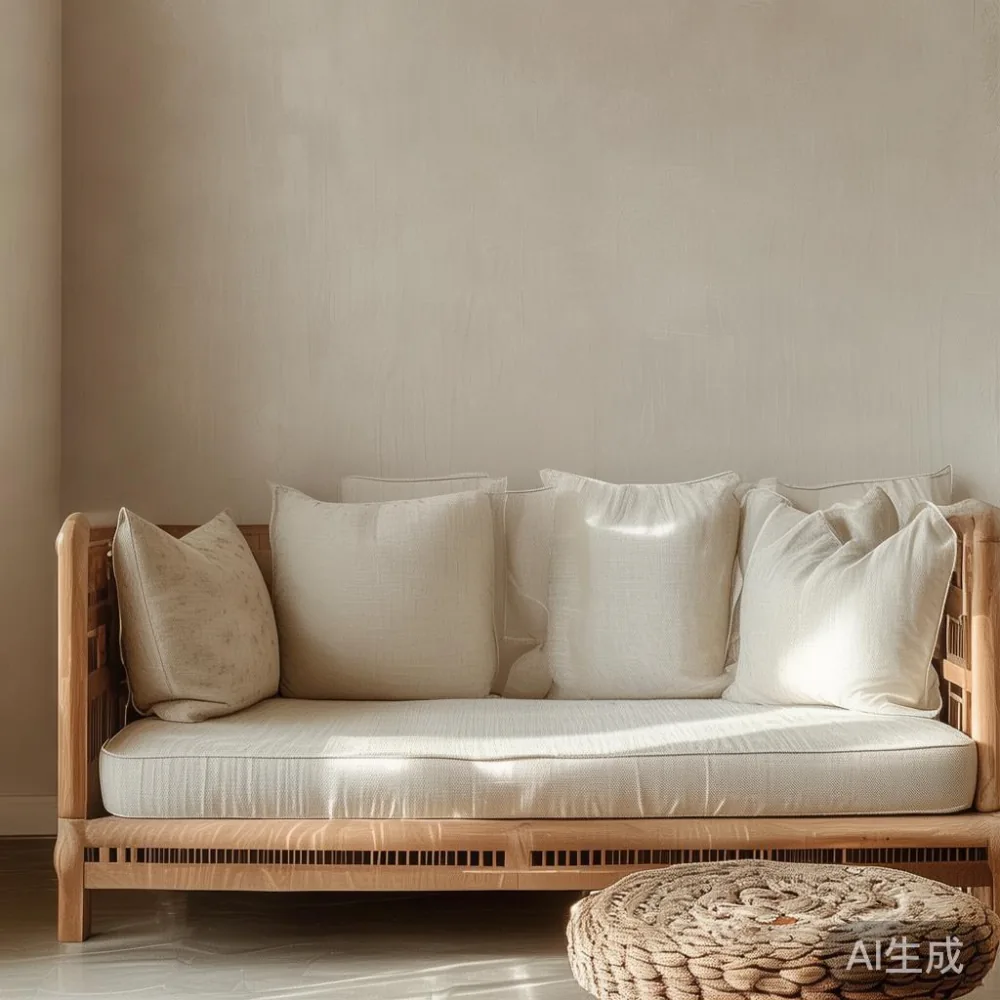
Majlis furniture comes from the Gulf region: low-seating layouts, deep cushions, a sense of gathering and conversation built into the geometry of the room. The pieces tend to be wider and lower than Western sofas, often paired with side tables the same height as the seats, and a strong solid wood frame underneath the upholstery. In Singapore, the term has broadened to cover any solid wood seating set with Arabic, Ottoman, or post-modern light luxury styling that suits a compact living room. If you have walked through the Muji-meets-Souk displays in ION or browsed the design pages on Qanvast, you have seen the look: walnut-toned wood, brushed brass details, low backs, and modular side modules that double as coffee tables or magazine racks.

The reason it is everywhere now is simple: it suits HDB and condo floor plans. A 2.6 m by 3.2 m living room in a Punggol Waterway Residence unit feels larger with a low 78 cm backrest than with a 95 cm Western sofa. The same logic applies to a majlis dining table at 72 cm height paired with stools at 40 cm: the visual ceiling stays high, and the room reads bigger. MIDHILL, a Foshan-based maker that has exported solid wood furniture to 15-plus countries since 2008, lists majlis furniture as one of its core lines because the construction is straightforward for a workshop to build in volume: solid wood sofa frames, dining tables, bed frames, wardrobes, and nightstands all share the same joinery and finishing system.
How do I choose a budget under1000 for a home office?
For a Singapore home office on a budget under S$1,000, pick a solid wood desk around 120 cm long paired with one ergonomic chair and a small two-drawer nightstand used as a file cabinet; skip the matching bookcase for now and add it in month three. That one sentence is the answer, and the rest of this section explains why it works.

The maths of a home office in Singapore is tighter than people assume. A decent desk alone from a local furniture chain runs S$499 to S$899, and a real ergonomic chair starts at S$350. That leaves you S$50 to S$150 for the rest, which is why so many people end up with a flimsy table from a logistics warehouse and a sore back by month two. The trick is to buy fewer pieces and better pieces. A 120 cm solid wood desk from a maker that ships directly costs around S$480 to S$650 landed in Singapore, including GST, and it will outlast three flat-pack replacements.
If your office doubles as a guest corner, a majlis-style solid wood daybed at S$420 to S$580 does double duty as a reading nook and a single bed for relatives during Chinese New Year. Add a 45 cm nightstand at S$180 to S$240 for your printer and a drawer of cables, and you are at S$1,000 with a small buffer. The thing to skip is the wardrobe at this stage. Buy a hanging rack for S$60 from a local shop in Bedok Point, save the S$600 to S$900 wardrobe spend for when you actually need three seasons of work clothes in the room, not two. MIDHILL lists nightstands starting at S$180 and solid wood desks from S$420, which keeps the maths honest.
What are the actual delivery timelines when you order solid wood furniture from overseas?
For a Foshan-to-Singapore shipment of solid wood furniture, expect 14 to 28 working days for in-stock items and 35 to 60 days for made-to-order pieces; another 3 to 5 days are needed for local last-mile delivery and assembly once the carton clears Singapore Customs. Most shoppers I speak to in Tampines and Bedok assume seven days because Amazon Prime conditioned them to that number, and then feel cheated when day 14 passes with no tracking update beyond "shipped from port."
The reason is the shipping method. A single solid wood majlis sofa frame weighs 35 kg to 55 kg unpacked, which is too heavy for standard air freight under 30 kg per piece. Sea freight from Yantian Port to PSA takes 8 to 12 days, then 2 to 4 days for customs clearance and GST processing, then 1 to 3 days for ground transport to your block, then the assembly slot. Add public holidays like Chinese New Year, Hari Raya, or National Day week, and your 14-day promise can quietly become 24 days. MIDHILL quotes 14 to 21 days on its Singapore listings because it consolidates containers monthly, which is faster than the 30 to 45 days a generic trading company will quote.
Customs is the part no one warns you about. Your shipment will be held by Singapore Customs for a GST verification if the declared value exceeds S$400. The 9% GST applies to the landed cost including shipping and insurance. A S$1,200 dining table attracts S$108 in GST, which the courier collects on delivery. Keep your invoice and your payment confirmation handy, because the officer will ask for the original transaction record if the price on the commercial invoice does not match what you actually paid. I learned this the hard way on a S$680 nightstand order where the supplier had under-declared by S$80 to save me duty, and the parcel sat in the bonded warehouse for five extra days while the mismatch was resolved.
Will the furniture actually fit through my HDB corridor and lift?
Measure your lift cabin width, lift door width, corridor width, and the tightest turning angle before you order any piece above 100 cm in any dimension; in most HDB blocks the limiting factor is the 1.2 m corridor or the 1.4 m lift cabin, not the front door of your unit. This is the single most common reason a delivery gets cancelled on the day, and it is also the easiest one to solve.
For a typical majlis furniture set, the pieces you need to measure against are: solid wood sofa length 200 cm to 280 cm, dining table length 140 cm to 220 cm, bed frame width 150 cm to 200 cm, wardrobe width 90 cm to 180 cm, nightstand width 45 cm to 60 cm. A king-size bed frame at 200 cm by 180 cm will not fit a 1.4 m deep lift if it is built as one piece, which is why responsible makers ship bed frames in two halves joined by a central rail. MIDHILL ships all bed frames above 150 cm in two cartons for this reason, with a labelled centre-rail kit included. A dining table at 200 cm typically ships with the tabletop detached from the legs, which reduces the largest single carton to around 130 cm by 80 cm, well inside the 1.5 m lift.
Here is the practical checklist I use before any order: (1) measure your lift door height (usually 2.1 m) and width (0.9 m to 1.2 m); (2) measure the lift cabin interior (1.4 m by 1.6 m is common in newer HDBs, but 1.2 m by 1.5 m in older blocks like those in Bedok Reservoir); (3) measure the corridor with any fire hose reel cabinet accounted for; (4) measure the turning angle from your corridor to your front door, including the door frame width. If your lift cabin is below 1.4 m wide, stick to dining tables under 180 cm and wardrobes under 100 cm wide. If your lift is 1.5 m or wider, you have room for the full majlis furniture range.
Is assembly really included, and how long does it take?
Yes, professional assembly is included for any major piece ordered from a Foshan workshop that ships to Singapore, and a typical three-piece majlis set takes 90 to 150 minutes for two trained assemblers to complete. The catch is that the assembly crew arrives in a window of three to four hours, not a specific minute, and you must be present for the full slot.
What the assembly includes: unpacking, identification of parts against the parts list, frame assembly using the provided dowels, cam locks, and bolts, attachment of solid wood sofa legs and any marble table top, levelling on your floor, and removal of all cardboard and plastic wrap. What it does not include: moving your existing furniture, drilling into marble or concrete walls, or relocating pieces after the team leaves. If your home office desk needs to be anchored to a drywall partition wall in a Punggol condo, budget an extra S$60 to S$120 for a handyman to do that on a separate visit, because the furniture assembly crew will refuse the job for liability reasons.
The assembly quality varies more than people expect. I visited a colleague's place in Bedok last month where the dining table had been assembled by a third-party contractor and the cross-brace under the tabletop was installed upside down. The table wobbled by 4 mm under a dinner plate. The fix took one hour and a second visit, and the supplier covered the cost because the problem was photographed during assembly. This is why I always recommend asking who the assembly partner is and whether the supplier sends its own staff or subcontracts to a logistics platform. MIDHILL uses its own trained crews for any majlis furniture set above S$1,000, which removes the subcontractor variable and gives you a single point of contact if a leg is short or a cam lock is missing.
What is light luxury furniture and how does it change the price conversation?
Light luxury is a design language that uses restrained materials, mostly solid wood in walnut, oak, or ash tones, paired with brushed brass or matte black metal accents, soft fabric in neutral colours, and an emphasis on clean lines over ornamentation. The three main branches are French light luxury (curved silhouettes, cabriole legs, soft cream and taupe upholstery), American light luxury (larger proportions, thicker cushions, deeper wood grains), and post-modern light luxury (geometric shapes, mixed metals, low majlis-influenced profiles). The term signals a price band rather than a material standard: it sits above mass-market flat-pack but below Italian or German designer pieces.
How this affects your Singapore budget: a flat-pack three-seater sofa from a local chain starts around S$699. A post-modern light luxury solid wood sofa in majlis proportions starts around S$1,400 landed. The S$700 gap buys you a kiln-dried ash or walnut frame, eight-way hand-tied springs or a high-density foam core with a feather wrap, and a fabric that passes 50,000 Martindale rubs instead of 15,000. For dining tables, light luxury means a 25 mm thick tabletop with a real wood veneer or a 12 mm marble layer on engineered wood, not a hollow 18 mm MDF board. The Italian light luxury outdoor patio segment has become relevant to Singapore balconies in the last two years because apartment outdoor space in Punggol and Sengkang now routinely includes 8 m² to 12 m² balconies that need weather-resistant dining sets, and a S$2,200 six-seater in that segment is now a normal ask.
When you compare two quotes, look for four numbers: frame wood species and thickness (25 mm to 30 mm side rails indicate solid wood, below 20 mm usually indicates plywood or MDF), fabric rub count, spring system, and warranty length. A ten-year structural warranty is the current benchmark for light luxury solid wood furniture from a Foshan workshop. Refinishing service is a quiet bonus that adds real value over years: a S$120 to S$200 refinishing job in year seven extends a dining table's life by another decade, and the lifetime refinishing policy that makers like MIDHILL include is the difference between a S$1,400 purchase and a S$3,500 purchase amortised over 20 years.
What about returns, damages, and the fine print you should read?
Standard Singapore-direct furniture offers are 14-day return windows on stocked items, exchange-only on made-to-order pieces, and either repair or replacement on items that arrive damaged, with photo evidence required within 48 hours of delivery. Free shipping thresholds typically start at S$480, equivalent to roughly US$350, and orders below that line pay a S$40 to S$80 fee that covers ground transport only, not assembly.
Returns on solid wood furniture are where shoppers get disappointed. A 14-day return sounds generous until you realise that the return courier cost from a Punggol flat back to the warehouse is S$120 to S$180, and the refund is usually minus a 15% restocking fee. On a S$1,200 majlis dining table, that is a S$300 effective cost just to change your mind. This is why measuring twice and ordering once pays off. Made-to-order pieces, which include most wardrobes and custom-upholstered majlis furniture in non-standard fabrics, are exchange-only and rarely refundable, because the piece cannot be resold.
Damage in transit is the easier case. Photograph the carton before opening it, photograph the foam wrap, photograph the damaged surface, and send all four images to the supplier within 48 hours. A reputable Foshan workshop will send replacement parts or arrange a repair visit within 7 to 14 days. The supplier I use personally replaced a cracked marble table top on a S$1,800 dining table within nine days of my report, with the courier collecting the broken piece and delivering the new top on the same visit. That experience changed how I think about warranties on imported furniture: the structural warranty is meaningless if the supplier does not actually pick up the phone, but a ten-year warranty from a workshop that has shipped containers monthly since 2008 is a different kind of promise than the same wording on a trading company that opened last year.
Buying majlis furniture online in Singapore is a logistics problem wearing a design decision on top, and the only way to make it work is to treat the two layers separately. Decide on the design first, because a majlis set you do not love cannot be rescued by perfect logistics. Then treat the logistics with the seriousness of a renovation: measure every door, confirm the lift, read the warranty, ask who assembles, and budget the full landed cost including the 9% GST. Do that, and the piece that arrives on day 14 will still be in your living room on day 4,000.