How to Match Majlis Furniture to a Warm Minimal Interior
A warm minimal interior is not an empty room. It is a carefully measured balance of light, texture, proportion, and comfort. Pale walls and restrained decoration create the foundation, while timber, stone, linen, and warm metal prevent the space from feeling clinical. For Singapore homes—especially HDB flats and condos in Tampines, Bedok, and Punggol—the right furniture must also work around lift doors, narrow corridors, compact living rooms, and tropical humidity.

Majlis furniture is particularly useful here because the term covers pieces designed for sitting, gathering, resting, and displaying in one considered composition. A solid wood sofa can become the visual anchor of a living area, a dining table can make an open-plan kitchen feel complete, and a bed frame can turn a modest bedroom into a calm retreat. The aim is not to fill every wall; it is to make each chosen piece feel deliberate.
MIDHILL, a Foshan solid wood furniture maker established in 2008, builds around this practical balance. Its pieces reflect French light luxury, American light luxury, and post-modern light luxury: clean silhouettes, usable comfort, natural materials, and restrained detailing. The company exports to more than 15 countries and offers a 10-year structural warranty, lifetime refinishing, free shipping above US$350, and 14-day returns. Those details matter when a sofa or bed frame must fit both your home and your expectations over many years.
How warm should “warm minimal” actually feel?
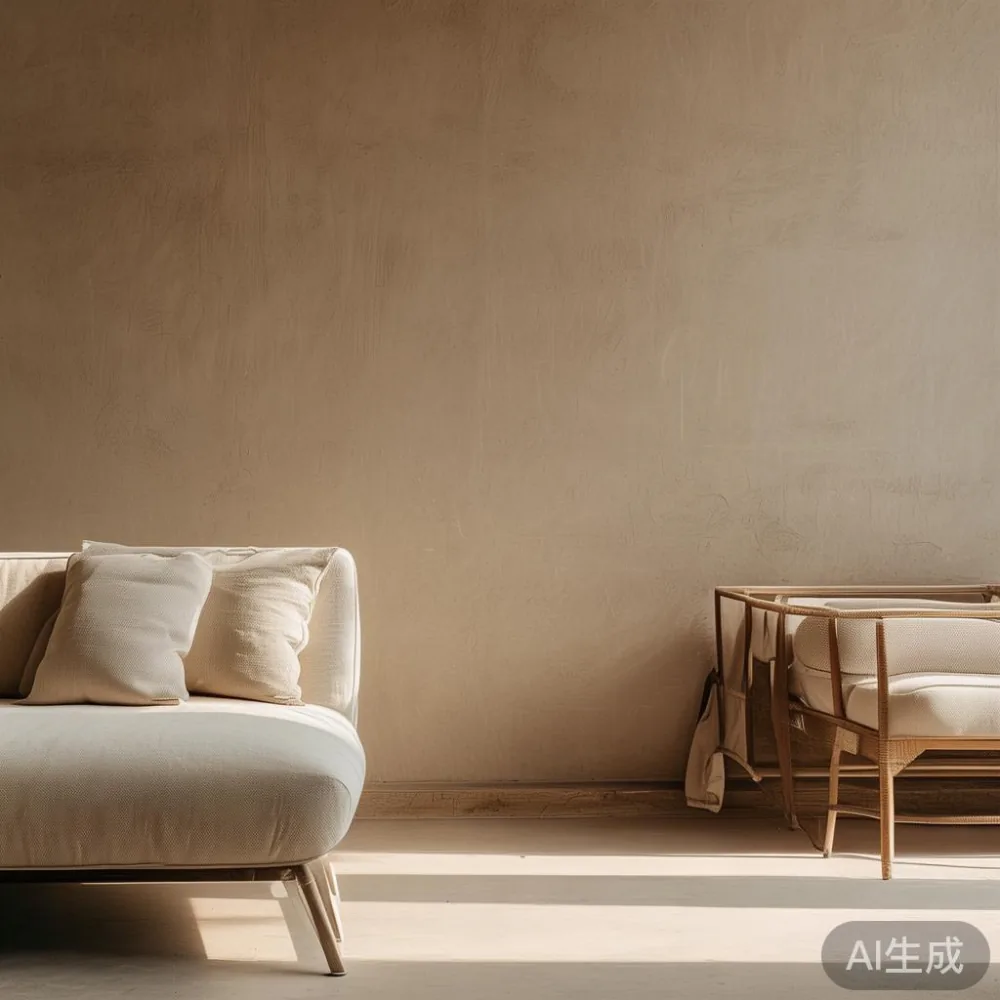
Warm minimalism should still invite people to sit down. The common mistake is to combine too many pale, smooth objects until the room loses depth. Warmth can come from one tactile anchor—such as an oak dining table with visible grain—against a background of warm white walls, beige curtains, and simple floor mats.
Start with three measurements rather than a mood board alone. Measure the longest usable wall, the width of every doorway, and the clear space needed for circulation. In an HDB living room, a sofa 210–230 cm wide can feel generous against a 300 cm wall while preserving a 75–90 cm path to the balcony. In a condo with a wider lounge, a 240–280 cm sofa may suit the proportions without overwhelming the balcony doors.
Color should be kept to a narrow range: warm white, sand, oat, light taupe, caramel, soft walnut, and muted black. Repeat one shade on at least three objects so the eye reads the room as connected. For example, pair a linen seat in oatmeal with a stone-coloured marble table, warm oak shelving, and dark brown dining chairs.
Concrete numbers help prevent overfurnishing. A compact dining area needs at least 90 cm behind each chair for movement. Bedside clearance of 55–65 cm is practical beside a bed frame, while a walkway of 75 cm should remain between the bed and a wardrobe. These dimensions are small enough for Singapore layouts and large enough to prevent the room from becoming a showroom.
What scale of majlis furniture fits a Singapore home?
Scale should follow the room’s volume and the distance between major objects. A low solid wood sofa creates a relaxed majlis atmosphere, but it should not float too far from the coffee table. Allow 35–45 cm between the front edge of the sofa and a table edge; 40–50 cm is comfortable for reaching a cup or a remote.
For a 280–330 cm living room wall, look for a solid wood sofa between 190 and 230 cm wide. Add a dining table only if there is a separate 110 × 70 cm or 120 × 75 cm zone, with no fewer than 90 cm between table and wall. In a compact dining area, a round table of 100–120 cm diameter can serve four people because there is no chair corner to obstruct.
Weight is another useful guide. A solid oak dining table of 150 × 80 cm may weigh roughly 55–75 kg, depending on its construction. That makes it stable, but it also means you should plan the route from the lift to the dining space. HDB lift doors are commonly around 80–90 cm wide, and corridor turns can be tighter than the size of the furniture at home. A table carried vertically on its side may be manageable at 80 cm wide, yet a 90 cm top may not pass. Check the lift lobby, floor corners, and your own staircase before ordering.
This is where modular majlis furniture has an advantage. Narrow bench seating, a 100–120 cm dining table, and a 40–50 cm nightstand can create a coherent setting without requiring every piece to be oversized. Keep the visual weight near the floor and the ceiling open.
Which solid wood sofa works with a warm minimal living room?
A warm minimal living room needs one seating piece with a clear shape and enough comfort for daily use. Search references such as the best Minimalist sofa for 2026 when comparing slim arms, shallow profiles, and seat depth, but do not select by appearance alone. A good sofa should allow the average adult to sit with both feet supported and the back supported between 38 and 45 cm above the floor.
For most Tampines and Punggol HDB homes, a 190–220 cm solid wood sofa with a 55–60 cm seat depth is practical. For a larger Bedok condo lounge, a 230–260 cm model can become the centre of the majlis. The frame should be solid wood, the seat should not feel unnecessarily deep, and the arm height should make the sofa easy to rise from—around 58–65 cm is useful for older users.
I tested this approach last month in a colleague’s three-room HDB flat. The unit had a 285 cm living-room wall and only 78 cm of clear space between the sofa zone and balcony slider. A 218 cm solid wood sofa in a warm oak finish, paired with a 90 × 55 cm stone-effect marble table, left an 83 cm passage. The visual result felt spacious, yet the wood grain gave the pale room enough warmth. That combination is worth remembering: one narrow table can perform the role of a substantial centrepiece without narrowing circulation.
Styling should remain simple. Use 2 or 3 cushions rather than 7, keep throws within the same neutral family, and add one rug of at least 160 × 230 cm beneath the front legs of a larger sofa. Avoid very cool grey upholstery against orange-toned timber; it can create a harsh contrast. Warm beige, camel, and muted olive produce a more relaxed post-modern light luxury effect.
How do you choose a bed frame for a quiet bedroom?
A bedroom is the most private part of a home, but its proportions still determine which bed frame can be delivered and installed. Measure the lift door, hallway, bedroom door, and turning radius before choosing a model wider than 150 cm. A queen bed at 150 × 200 cm may fit a straight HDB corridor, while a king at 180 × 200 cm requires a wider route and may be difficult to rotate into place.
The phrase Japanese bed vs Japandi bed often appears in product searches, but the distinction is simple. A Japanese-style platform bed emphasizes a low profile and visual calm; Japandi introduces Nordic proportions with Japanese-inspired restraint. Both can suit warm minimalism if the wood finish is light to mid-tone and the bedding is not too severe.
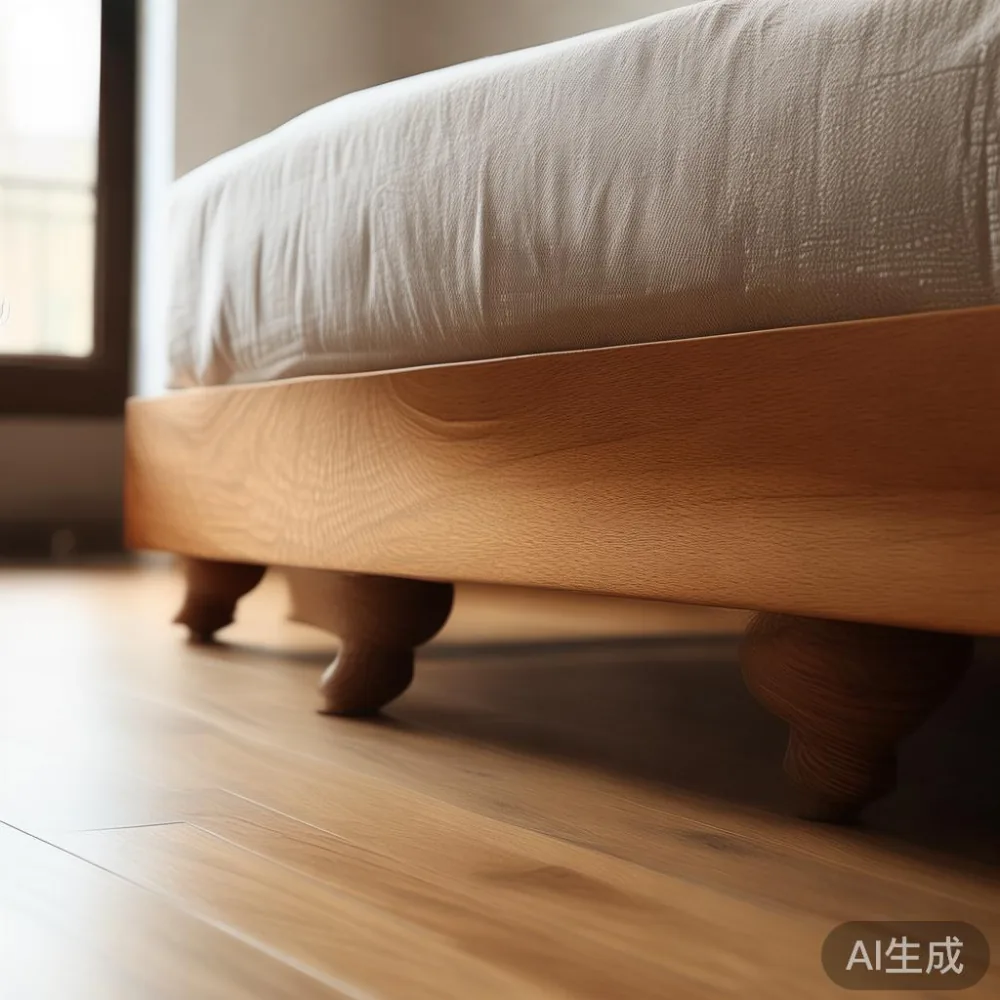
For a compact Singapore bedroom, consider a low oak or ash bed frame with a 25–30 cm platform height. Keep at least 55 cm beside one side of the bed and 60 cm on the other where possible. A 45–50 cm wide nightstand is enough for a lamp, phone, and glass, provided its drawer can open without hitting the wall.
If you prefer a more decorative headboard, a search for how to style European light luxury bed in room can be useful. Tufting, curved edges, and channel detailing should occupy one focal point, not appear on every item. Keep bedding in ivory, stone, or light taupe, then introduce warmth through a timber bench or warm bedside light. A MIDHILL light luxury bed is a useful phrase to evaluate solid construction, restrained European detailing, and dimensions that suit an HDB bedroom rather than a much larger suburban house.
Buyers comparing the best European bed for 2026 should check frame clearance, centre support, noise control, and the mattress-to-frame fit. A centre rail may be necessary for a queen or king bed used by two people, while a slatted base can ventilate better in humid conditions. Aim for a mattress height of 22–28 cm so the finished bed remains easy to enter.
Will a dining table make the space feel warmer?
Yes, if the table has visible material character. In a warm minimal home, a dining table often works better than excessive decoration because it introduces texture through grain, edges, and the daily ritual of shared meals. A solid wood table in light oak, ash, or warm walnut creates a natural centre point.
For four diners, choose at least 120 × 75 cm; 140 × 80 cm gives more elbow room. A round 120 cm table can suit a 280–330 cm dining zone because chairs remain within a square of about 170 cm. Leave 90 cm from the table edge to walls and 105–120 cm where a chair is pulled back and someone must pass behind it.
Open-plan kitchens need more care. Allow 95–110 cm between a dining table and a kitchen island when people move through with plates. If that is impossible, use a 100–120 cm round table or a narrow 130 × 70 cm rectangular model. In HDB kitchens, sliding or pocket doors may reduce the usable opening, so measure the actual clear width rather than the door label.
Finish the table with one practical object and one decorative object. A low ceramic bowl and a small vase are enough. Avoid a tall centrepiece that blocks conversation. For lighting, a pendant hanging 65–80 cm above the tabletop creates warmth without taking visual space. A 2700–3000K colour temperature suits oak and walnut better than a stark cool white.
The French light luxury approach would pair the table with upholstered chairs, tapered legs, and softened details. The American light luxury approach is more relaxed, using broader profiles and a deep, inviting seat. Post-modern light luxury sits between them with clean geometry and one contrasting material. Choose one direction and carry it through the dining chairs, sideboard, and lighting.
How should a wardrobe and nightstand relate to the bed frame?
A built-in wardrobe may be the most space-efficient option in an HDB bedroom, but its doors, depth, and handles affect the room’s balance. A standard hinged wardrobe can project 55–65 cm from the wall. Sliding doors need less operating space, although the panels overlap and can restrict internal access. Leave enough room to open a drawer or door without compressing the walking route.
Where a freestanding wardrobe is preferred, keep its material consistent with the bed frame but vary the proportion. An olive, warm grey, or natural-oak wardrobe of 150–180 cm width can be softened with a round mirror and a narrow bench. Avoid placing a visually heavy wardrobe opposite a dark, tall bed frame in a small room; balance the mass with pale walls or lighter curtains.
A nightstand does not need to match perfectly. Its job is functional alignment: the top should align approximately with the mattress, commonly within 5 cm, and the lamp should sit near shoulder or reading height. A 40 cm wide model suits a narrow room, while 45–55 cm offers space for a book and a small tray. Rounded corners can improve movement around a tight bed, particularly beside a wardrobe.
Wardrobe interiors deserve the same restraint. Reserve one shelf for folded linens, one hanging section for everyday clothes, and one drawer for smaller items. Limit shelf spacing to 30–38 cm where possible. This reduces visual clutter and makes a 45 cm deep wardrobe more useful without adding cabinets elsewhere.
Can a marble table and sideboard add luxury without clutter?
Stone can provide the cool counterpoint that keeps solid wood from feeling overly rustic. A marble table with a warm white or light beige base works well in a minimal living room, especially when paired with oak or ash. Veining should remain legible but not dramatic; high-contrast black-and-white marble can overpower a compact HDB lounge.
A round marble table of 70–90 cm diameter is often more useful than a rectangular one in a tight majlis arrangement. Its rounded edge improves circulation, and it can hold a cup, book, and small vase. Maintain 35–45 cm between the marble table and sofa. If the main solid wood sofa is visually substantial, choose a quieter side table rather than a second large centrepiece.
For dining storage, an Italian light luxury sideboard can bring a refined finish through proportions, slim handles, and clean doors. Choose a width of 120–160 cm for a dining area, with a depth of 38–45 cm. It should not compete with the dining table for attention. In warm minimalism, a matte cream, smoked oak, or muted taupe finish is usually easier to integrate than glossy lacquer.
Keep the top mostly clear: place a 25–35 cm lamp at one end and one bowl at the other. Leave 25 cm between the sideboard and the dining chairs where possible. If a lift or corridor is narrow, verify whether the sideboard can enter as flat-pack components and whether the installer needs access to the full width.
What about delivery, GST, and long-term care?
Local context should be part of the design decision. Singapore GST is currently 9%, so displayed prices should be checked to confirm whether tax and delivery are included. MIDHILL offers free shipping above US$350, which is useful for larger furniture orders, but international transit and final-mile access still need confirmation. Standard production and delivery can take roughly 25–45 days for selected made-to-order pieces; the supplier should provide a clearer range for your specific configuration.
Before checkout, record the delivery route: vehicle width, lift capacity, lift door measurement, corridor width, and the number of turns. A sofa might fit the lift but need to be turned in a corridor less than 100 cm wide. A dining table top of 80 cm may fit a standard lift door, while a 90 cm top may not. Ask for the packaged dimensions and weight rather than relying on the product dimensions alone.
Solid wood changes slightly with humidity, so Singapore’s climate deserves attention. Keep pieces away from permanent dampness and direct air-conditioning outlets, and use coasters on marble and wooden surfaces. Periodic care every 6–12 months can include gentle cleaning and checking of joints. MIDHILL’s 10-year structural warranty and lifetime refinishing provide long-term support, while the 14-day return window allows you to assess fit, comfort, and finish in the actual room.
Warm minimalism succeeds when scale, material, and use agree with one another. Begin with the largest piece, usually the solid wood sofa, dining table, or bed frame, and work outwards in cm rather than inches. Keep one colour relationship, one tactile material, and one clear focal point. Majlis furniture can then make a Singapore home feel generous and hospitable without making it visually crowded—quiet in form, warm in texture, and practical from lift to living room.