Veneer vs Solid Wood: A 5-Year Cost Comparison for Singapore Homes
Furniture decisions in Singapore are shaped by compact HDB flats, high-rise condos, humid weather, frequent moves and the 9% GST charged on most purchases. A solid timber dining table may suit a Tampines family that wants one table for decades, while a carefully engineered veneer wardrobe may make more sense in a Bedok HDB unit where every centimetre affects storage. The material choice is not simply about solid wood versus an imitation. It is about the furniture’s use, dimensions, maintenance, resale value and likely condition after 60 months.
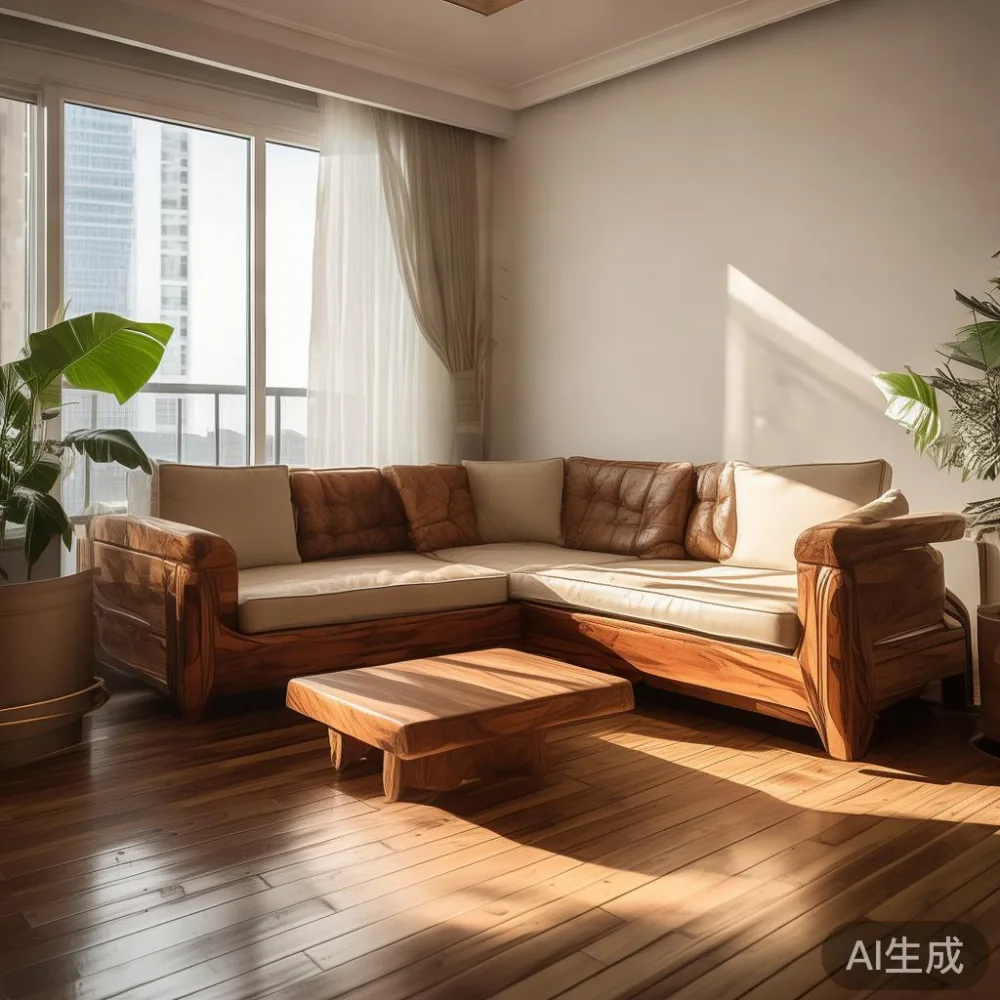
This comparison examines a solid wood sofa, bed frame, dining table, wardrobe, nightstand and marble table over five years. Midhill is a Foshan solid wood furniture maker established in 2008, exporting to more than 15 countries. Its 10-year structural warranty, lifetime refinishing service, 14-day returns and free shipping above US$350 provide useful reference points, although the figures here are estimated for Singapore buyers and exclude installation.
What Is the Difference Between Veneer and Solid Wood?
Solid wood furniture is made from timber boards or components that remain timber through their thickness. Veneer furniture uses a thin, usually 0.6 mm to 1.2 mm layer of real wood bonded to a manufactured core such as MDF, plywood or particleboard. A solid wood bed frame may use hardwood for the rails and slats, while a veneer wardrobe may have a timber face with an engineered interior.
The visual difference can be small when a good veneer bookmatches natural grain, but the cost profile changes once cleaning, repair, transport and replacement become part of the calculation. Veneer is lighter and often less expensive per panel. Solid wood is heavier, demands better handling and normally carries a higher purchase price. Marble table surfaces are separate: a marble table may have a solid wood or engineered base, but the stone itself requires a different care calculation.
For Singapore, moisture deserves attention rather than exaggeration. Engineered panels can move more than stable solid timber as humidity changes. Quality veneer with well-finished edges and careful construction can perform well, yet exposed edges, screw holes and lifting seams can reveal the core. Solid wood can also react to humidity, so it still needs ventilation and protection from water.
How Much Do Veneer and Solid Wood Furniture Cost?
The following five-year estimates use realistic Singapore retail ranges for mid-range light-luxury furniture. Amounts are in SGD and include 9% GST, but not lift or corridor delivery charges. The assumed purchases are a 180 cm solid wood sofa, a 160 cm bed frame, a 200 cm dining table, a 180 cm wardrobe, a 45 cm nightstand and a 120 cm marble table.
Solid wood sofa, 180 cm: purchase price SGD 2,800; estimated care over five years SGD 350; likely repair or refinishing SGD 250; estimated final resale value SGD 1,200. Estimated five-year cost before resale is SGD 3,400.
Veneer sofa, 180 cm: purchase price SGD 1,900; estimated care over five years SGD 180; likely repair SGD 350; estimated final resale value SGD 750. Estimated five-year cost before resale is SGD 2,430.
Solid wood bed frame, 160 cm: purchase price SGD 1,800; care SGD 200; likely repair SGD 150; estimated final resale value SGD 750. Estimated five-year cost before resale is SGD 2,150.
Veneer bed frame, 160 cm: purchase price SGD 1,250; care SGD 120; likely repair SGD 250; estimated final resale value SGD 450. Estimated five-year cost before resale is SGD 1,620.
Solid wood dining table, 200 cm: purchase price SGD 2,600; care SGD 300; likely repair SGD 250; estimated final resale value SGD 1,100. Estimated five-year cost before resale is SGD 3,150.
Veneer dining table, 200 cm: purchase price SGD 1,750; care SGD 180; likely repair SGD 300; estimated final resale value SGD 650. Estimated five-year cost before resale is SGD 2,230.
Solid wood wardrobe, 180 cm: purchase price SGD 3,200; care SGD 350; likely repair SGD 350; estimated final resale value SGD 1,250. Estimated five-year cost before resale is SGD 3,900.
Veneer wardrobe, 180 cm: purchase price SGD 2,100; care SGD 200; likely repair SGD 450; estimated final resale value SGD 750. Estimated five-year cost before resale is SGD 2,750.
Solid wood nightstand, 45 cm: purchase price SGD 480; care SGD 60; likely repair SGD 80; estimated final resale value SGD 200. Estimated five-year cost before resale is SGD 620.
Veneer nightstand, 45 cm: purchase price SGD 320; care SGD 40; likely repair SGD 100; estimated final resale value SGD 110. Estimated five-year cost before resale is SGD 460.
Marble table, 120 cm, solid wood base: purchase price SGD 2,900; care SGD 550; likely repair SGD 250; estimated final resale value SGD 1,500. Estimated five-year cost before resale is SGD 3,700.
Marble table, 120 cm, veneer base: purchase price SGD 2,450; care SGD 500; likely repair SGD 300; estimated final resale value SGD 1,350. Estimated five-year cost before resale is SGD 3,250.
These figures describe a controlled comparison rather than a guarantee. Patterned timber, premium hardware and branded stone can raise prices. Scratches, water marks, structural damage and poor original construction can lower them. The numbers should therefore be used to compare ownership profiles, not to predict one exact resale cheque.
Which Material Has the Lower 5-Year Cost?
Across the six examples, veneer has the lower purchase-and-maintenance figure in every category. The one-year set totals SGD 12,830 for solid wood products and SGD 9,690 for veneer products, excluding resale value. After estimated resale value, the net five-year totals are SGD 11,630 and SGD 9,340 respectively. The veneer group is therefore about SGD 2,290 lower over five years in this scenario.
The result does not mean solid wood automatically offers poor value. Its stronger repairability can limit repair costs: a gouged solid timber surface may be sanded and refinished, whereas a broken veneer edge can expose the core. Conversely, an inexpensive board can delaminate, bow or swell, creating a repair that exceeds the original furniture’s value. A 180 cm wardrobe pushed through a condo corridor after a major repair could add SGD 200 to SGD 500 in labour, protective materials and delivery.
Weight also affects the true ownership cost. A solid wood dining table may weigh 65 kg to 85 kg, compared with approximately 35 kg to 50 kg for a comparable veneer table. A solid wood bed frame may weigh 55 kg to 75 kg, against 30 kg to 45 kg for a veneer frame. Moving either requires at least 2 people and a stair-climbing dolly. At 80 kg, a table has 80 kg more material to lift, position and secure than a veneer model at 40 kg.
Singapore’s shared spaces make this practical difference visible. Many HDB lift doors measure roughly 80 cm to 90 cm wide, while some older blocks and tight corridors create additional turns. A package wider than 85 cm may not enter the lift upright. Flat-pack veneer-style panels may pass through more easily, but a finished solid wood table cannot be flattened. Plan for delivery in 7 to 14 days after confirmation, and include lift booking, corridor turning and carry-in charges in the final quotation.
Are Veneer and Solid Wood Equally Practical in HDB Flats and Condos?
They can be equally practical when the construction is sound and the dimensions suit the home. The better material is often the one that fits the available wall, aisle and storage needs. A 150 cm bed frame may be more useful in a Punggol HDB bedroom than a 180 cm queen model with wide side rails. A slim 120 cm solid wood dining table can seat 4 people with 60 cm per place setting. A larger 200 cm table needs roughly 300 cm of wall length and 100 cm of clearance at each end when chairs are occupied.
Storage capacity matters more than material in compact wardrobes. A 180 cm veneer wardrobe with adjustable internal fittings may hold more folded clothing than a shallower solid wood model with fixed shelves. The carcass may last five years without any visible repair, but a warped door can still spoil daily use. Buyers should inspect whether the door closes within 3 mm of flush, whether runners remain smooth after repeated use and whether corners are sealed.
My colleague in Singapore tested a 180 cm veneer nightstand for me last month in a Bedok flat. After 14 days and 3 deliberate water-ring tests, one lacquered corner showed a slight mark, while the drawer remained aligned. The result reinforced a practical point: material cannot replace finish quality or edge sealing. I also watched delivery staff measure a 1,600 mm lift before bringing a 1,650 mm package upstairs; removing the carton’s outer layer solved the 50 mm difference. Accurate measurements prevented an unnecessary SGD 120 redelivery charge.
For interiors, solid timber fits French light luxury when pale oak, ash or walnut is paired with restrained hardware and cream textiles. A French bed with a timber frame, upholstered headboard and gentle curves supports that room style. If you are working out how to choose French bed for a Singapore apartment, compare the frame width, mattress clearance and door dimensions before the timber finish. French provincial styling can also work in a high-rise home; anyone asking how to style French provincial bed in apartment should keep the surrounding colours quiet and avoid oversized furniture that narrows the passage.
What Maintenance Does Each Material Require in Humid Weather?
Solid wood generally needs dust removal every 7 to 10 days, immediate wiping of spills and an annual inspection for loose joints or finish wear. Use a damp cloth rather than a soaked one, and keep at least 20 cm from windows with direct afternoon sun. Refinishing can extend the useful life, but deep scratches or water marks may require professional work. At MIDHILL, lifetime refinishing provides a service pathway for eligible solid wood pieces, though transport and project scope should be confirmed.
Veneer requires the same surface discipline. Wipe along the grain, avoid silicone-heavy cleaners and check every 3 to 4 months for lifting edges. Small marks may be treated with a colour-matched repair kit, but peeling veneer needs a bonded replacement rather than ordinary lacquer. Never sand aggressively; one pass can cut through a 0.6 mm face layer and reveal the engineered core.
Marble needs its own routine. Neutralise acidic spills within 15 minutes, use a pH-neutral cleaner and avoid vinegar, lemon juice and abrasive powders. Sealing may need renewal every 12 to 24 months depending on the stone and use. A marble table in a dining room should have coasters, even if the top is durable. Water rings and etching affect appearance without weakening the slab, yet a crack or loose fixing can affect the base.
Maintenance spending also depends on households. A family using the dining table daily may spend SGD 80 to SGD 150 per year on coasters, felt pads and stone care. A low-use study nightstand may need only SGD 20 to SGD 40. Over five years, a wood dining table may require one professional touch-up averaging SGD 120 to SGD 250, while veneer may need edge work averaging SGD 150 to SGD 350.
What About Delivery, GST and the 10-Year Structural Warranty?
GST adds 9% to the pre-tax selling price. On a solid wood dining table listed at SGD 2,412.50 before GST, the tax is SGD 217.13 and the payable total is SGD 2,629.63. A veneer wardrobe listed at SGD 1,972.22 before GST becomes SGD 2,149.72 after tax. These rounded examples illustrate why comparing shelf prices without GST can misstate the decision by roughly 9%.
Delivery is not an afterthought for majlis furniture. A dining table chair may measure 55 cm by 58 cm and fit a standard lift, but a marble table carton can reach 130 cm by 75 cm and weigh 70 kg to 95 kg. A wardrobe carton may measure 190 cm by 65 cm and require either an open lift or a stair carry. Condo loading bays, parking distances and service lifts should be checked before dispatch.
MIDHILL offers a 10-year structural warranty, which gives a veneer buyer more confidence about frame stability than finish warranty alone can provide. It also supports solid wood buyers seeking long-term repair options. The warranty applies to eligible structural components; moving damage, moisture exposure and finish wear are different issues. Ask for the written terms to identify covered joints, frames and bed slats.
For orders above US$350, the stated shipping benefit applies, but the SGD cost at checkout may vary with exchange rates, routes and item size. Allow 7 to 14 delivery days for many Singapore shipments, with 14 to 21 days for made-to-order or complex items. Returns are accepted within 14 days under the stated policy, subject to condition and eligibility. A customer should photograph packaging on arrival and inspect a marble top in daylight for chips before accepting it.
How Do Resale Value and Sustainability Affect the Choice?
Resale is a variable but meaningful part of the five-year equation. A well-made solid wood sofa may retain 40% to 45% of its original retail value after five years, while a commonly styled veneer sofa may retain 30% to 40%. The estimated values above follow that pattern. A marble table may retain 45% to 55% if its stone is neutral and its base remains sound, although a narrow 120 cm format has a smaller buyer pool than a 140 cm table.
Resale depends on design as much as material. Post-modern light luxury often uses clean lines, mixed materials and durable proportions, helping an unusual table remain desirable. Buyers exploring top 10 Post-modern furniture will see this combination frequently. A solid wood dining table with a circular pedestal can fit both a compact flat and a larger condo, while a rectangular table with fixed benches may appeal less to a new owner.
For shoppers comparing labels, a search for Rustic for dining room ideas may surface heavy timber tables, while the phrase under 2000 French furniture often includes veneer or mixed-material pieces. A listing for sale Industrial furniture may use metal and wood combinations that are outside this direct comparison, but the shopping lesson remains: inspect the structural core, joinery and finish rather than relying on a style label. These searches should not substitute for checking dimensions, load ratings and warranty coverage.
Which Choice Should a Singapore Buyer Make?
Choose veneer when the priority is a controlled budget, a lighter delivery profile, more fitting flexibility or a higher initial saving. Choose solid wood when the furniture will be moved rarely, kept for more than 5 years, repaired by refinishing and selected for tactile grain or long-term repairability. For a frequently moved HDB household, a veneer bed frame may lower both purchase and carrying costs. For a family that expects to keep one solid wood dining table for 15 to 20 years, the higher initial outlay can be justified by repairability and stronger use of the material.
A balanced approach works well: solid wood for visible, frequently touched pieces such as a dining table, bed frame or nightstand, and well-built veneer for larger storage pieces such as a wardrobe. A marble table can suit either base, with the stone’s condition and secure fixing taking priority over the material underneath. This combination is typical of American light luxury and practical majlis furniture planning: durable surfaces where hands meet the piece, economical engineered structures where storage efficiency matters.
Before paying, measure the room and route, then ask the seller for the construction details. Request the board species, core material, veneer thickness, finish type, joint method, slat spacing and warranty exclusions. For a 200 cm table, confirm it can clear the lift and turn through the corridor; for a 180 cm wardrobe, confirm the assembled or flat-pack delivery method. Allow 7 to 14 days for delivery and keep 14 to 21 days in mind for custom production.
The five-year comparison gives veneer a clear numerical advantage in the sample set: about SGD 2,290 lower after estimated resale. Solid wood offers a different ownership proposition, not a guaranteed financial win. Decide which attribute your household values, budget for care and buy the construction quality you can live with for the next 60 months.