Majlis Furniture: Price Factors in Solid Wood Choices
Solid wood furniture can cost SGD 680 for a dining table and SGD 4,800 for a nearly identical-looking bed frame. The difference is rarely explained by a showroom label. It is driven by timber species, board construction, joinery, finish, hardware, dimensions, and the amount of labour required to make, pack, and deliver each piece into a Singapore home.
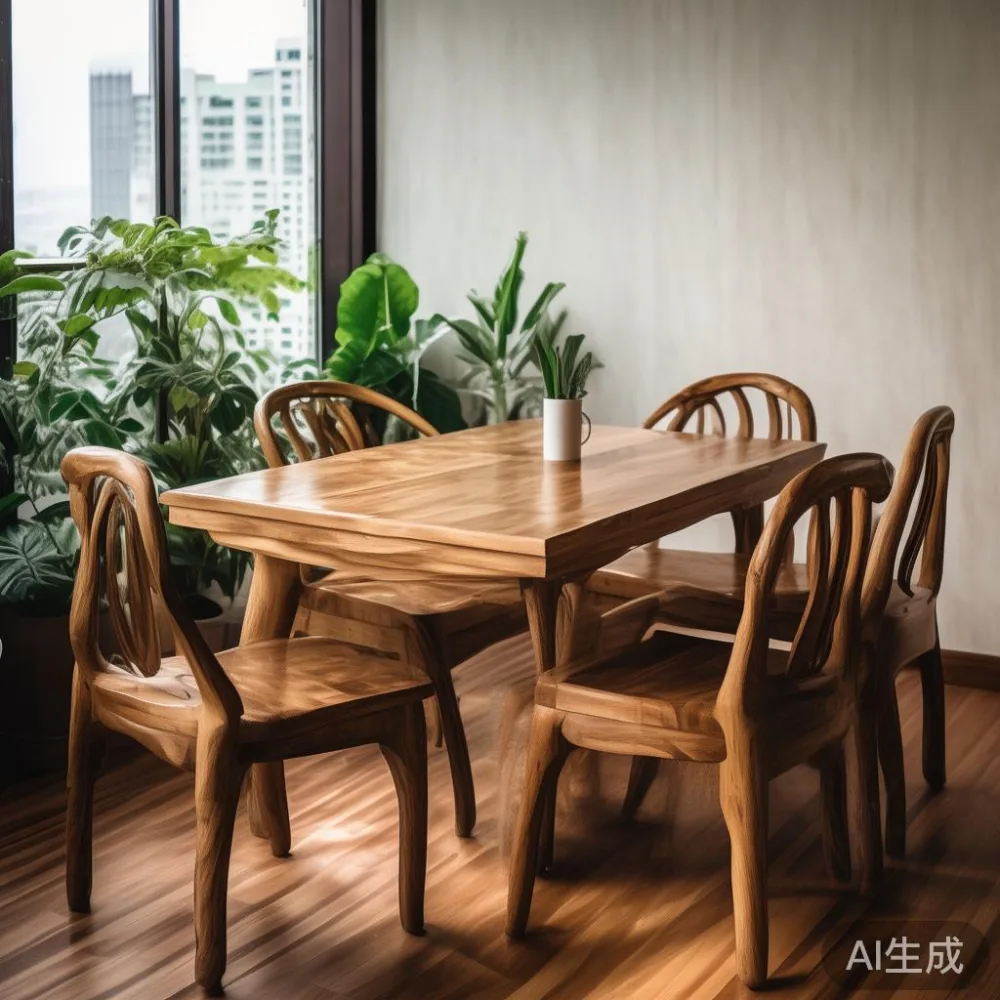
For Singapore households furnishing an HDB flat in Tampines, a Punggol condo, or a Bedok unit, usable dimensions matter as much as appearance. A 220 cm dining table may be comfortable in a spacious dining room but awkward beside a 90 cm corridor. A wardrobe deeper than 60 cm can project into a bedroom passage. Price comparisons therefore need to include centimetres, kilograms, delivery days, GST, and real installation constraints—not merely photographs.
Majlis furniture occupies a useful middle position between mass-market flat-pack furniture and highly ornate traditional furniture. It can suit a modern majlis, a compact dining area, or a bedroom with restrained solid wood details. At MIDHILL, the aim is to make those differences legible: customers should understand which features affect durability and which mainly affect appearance.
What makes one solid wood dining table cost more than another?
The first driver is the timber itself. Solid wood does not represent one uniform material. Oak, ash, beech, walnut, teak, rubberwood, and mixed hardwoods have different densities, grain patterns, movement, and workability. A 180 cm table made from kiln-dried oak may use boards selected for a continuous grain. A model using smaller pieces from several boards may need more cutting, glue-up, and filling, even if the finished colour appears similar.
Board dimensions also affect cost and stability. A wide tabletop made from a 25-28 cm board can be visually calmer and less prone to warping than narrow strips assembled across the same 180 cm length. That extra material and careful selection add expense, but the outcome can be significant for a household that uses the dining table daily.
Wood grading is another factor. “Select grade” or “Grade A” should have a documented meaning. For a dining table, the buyer should be able to ask about sapwood, knots, repairs, moisture content, and board thickness. A table priced at SGD 1,280 with 20 mm tops may be entirely reasonable; a SGD 980 table with unusually thin tops or large filled defects deserves closer inspection.
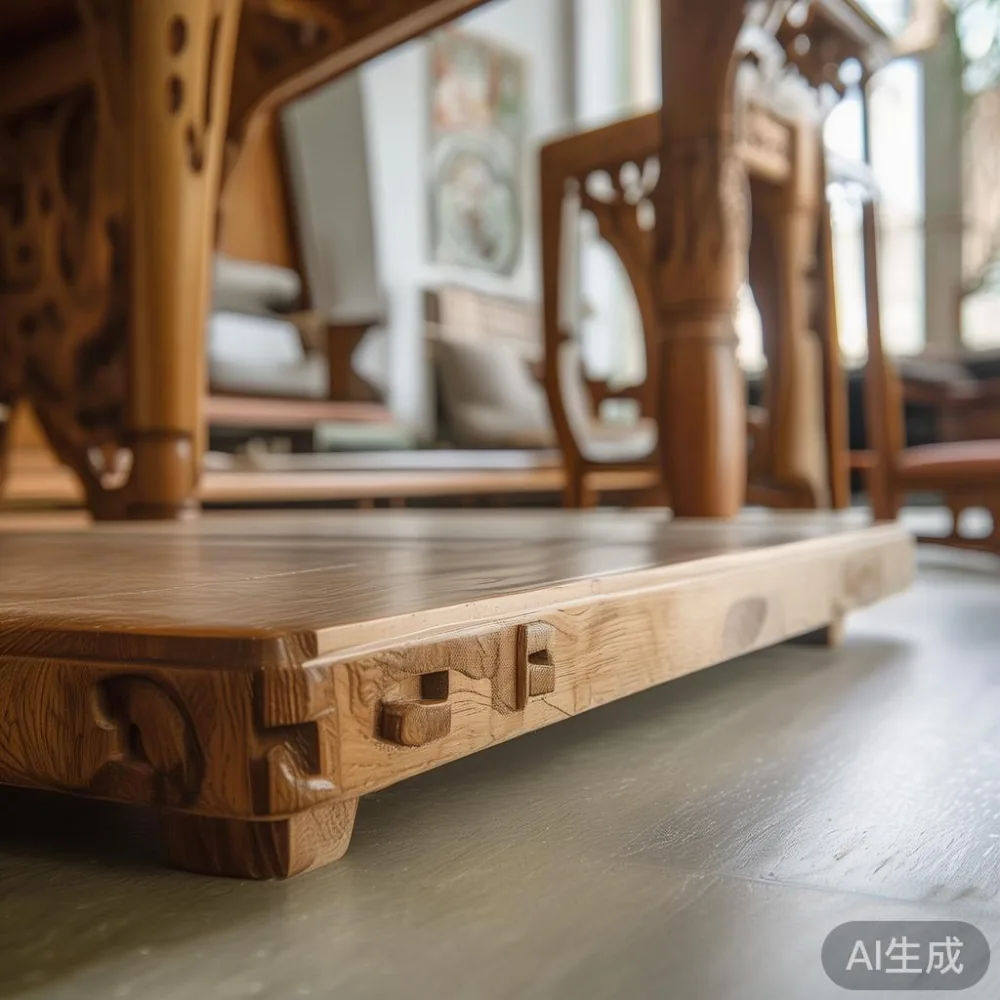
Joinery separates ordinary construction from furniture intended for decades of use. Mortise-and-tenon joints, dowels, bridle joints, and reinforced corner blocks resist movement better than relying mainly on short screws or brackets. For a 160-200 cm dining table, the apron, leg placement, and support system should be considered together. An oversized design needs more structure underneath, while a narrow table can often use a simpler frame.
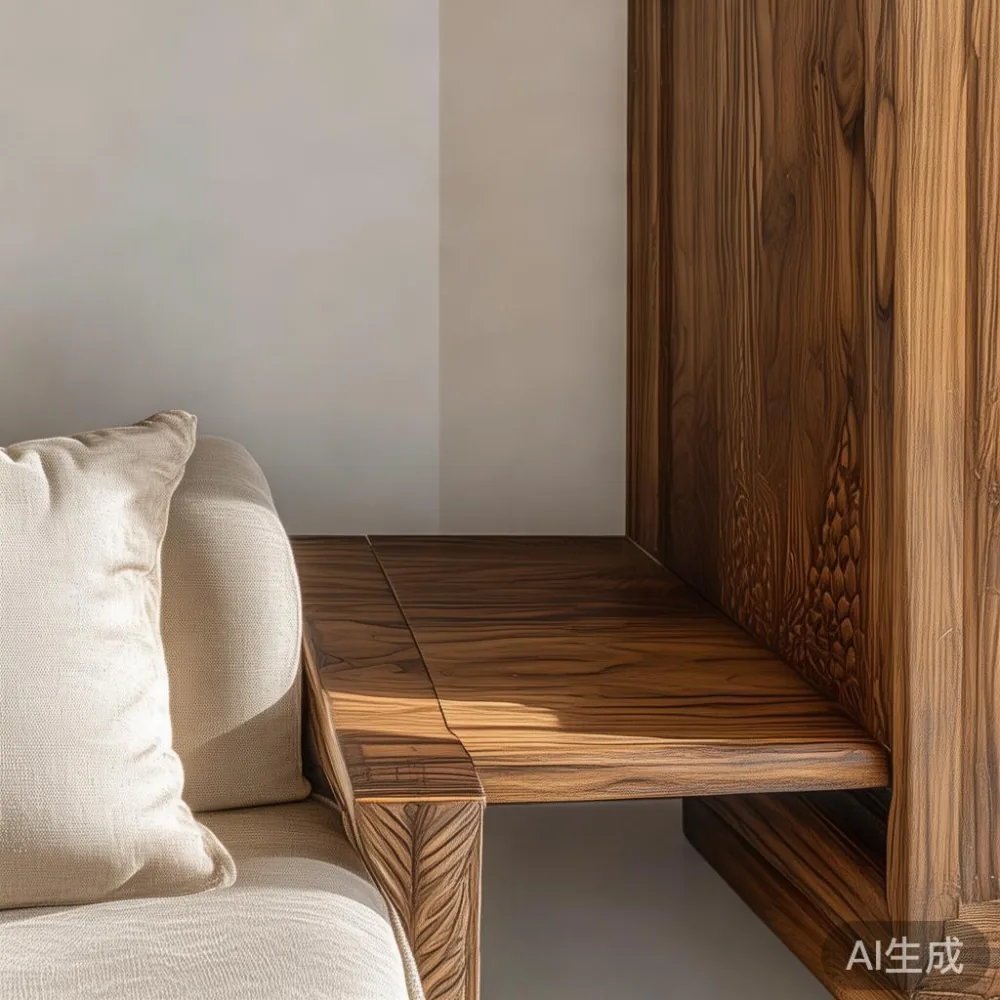
The total amount of solid wood matters too. A solid wood bed frame and solid wood sofa may both appear substantial, but their material allocation is different. Curved sofa arms require larger sections that can be cut economically; tapered chair legs can use narrower offcuts. Dense carving requires skilled labour and rejects more timber. A marble table introduces another material with its own price band, thickness, weight, edge treatment, and packing requirements.
Is light luxury wardrobe worth it for Singapore homes?
That question cannot be answered by a universal price. A light luxury wardrobe can be worthwhile when it solves a real storage problem, uses durable moving parts, fits the available wall, and still provides a finish that suits the home. In an HDB bedroom, a 150 cm wardrobe with 58 cm depth and sliding doors may be more practical than a 180 cm hinged model that blocks a window or walkway.
For Singapore conditions, the internal construction deserves more attention than decorative mouldings. Look for solid timber or well-engineered wood panels where frequent movement is expected, drawers with dovetail or dowelled corners, and hanging rails fixed with suitable reinforcement. Metal runners may be quieter than basic ball-bearing slides. Adjustable shelf supports should be fixed into usable material rather than thin decorative panels.
French light luxury often uses pale oak, cream tones, slim profiles, curved edges, and restrained metal details. American light luxury tends toward deeper colours, larger proportions, padded or tailored surfaces, and substantial visual mass. Post-modern light luxury can combine clean lines with selective curves, fluted panels, or mixed materials. These are design directions, not quality grades.
For a compact HDB room, light luxury for small living room projects should begin with scale. A wardrobe of 45 cm depth can suit a shallow recess, while a standard 60 cm unit may need a walkway adjustment. Doors must be checked against nearby walls: a 45 cm hinged door needs approximately 45 cm of clearance when open, while a 2-panel sliding system uses less swing space but loses some internal access.
A useful Singapore comparison is to calculate both price and capacity. A wardrobe at SGD 1,680 with 3 hanging sections, 5 shelves, 2 drawers, and soft-close sliding doors offers a different proposition from an SGD 1,280 unit with 2 hanging sections and 4 fixed shelves. The more expensive model is not automatically preferable; it is preferable only if its components and dimensions match the room.
How do finishes, hardware, and labour change the price?
Finish can alter a furniture price by SGD 80 to more than SGD 600 per major item. Paint may conceal the timber’s natural variation and reduce preparation time. Stain highlights grain and colour. A clear lacquer or hardwax oil protects the surface differently and may require additional sanding between coats. Open-pore oak can feel more tactile but is more sensitive to spills than a heavily filled surface.
Light luxury is frequently associated with matching grain, rounded corners, and a smooth touch. Those details cost labour. A conventional square edge can be machined quickly; a 6 mm radius needs tooling, careful sanding, and more finishing passes. Matching grain across a broad headboard or long dining top takes selection and layout time. In American light luxury, oversized slabs and deep profiles can multiply both timber and packaging costs.
Hardware is another measurable component. A nightstand with a soft-close drawer, solid timber knobs, and restrained drawer runners will cost more than one with steel screws and a basic slide. A bed frame may include a centre support, low deck, or reinforced headboard. A sofa may use a kiln-dried solid wood frame, webbing, foam, fibre wrap, and high-density cushioning rather than a light frame with thin padding. Each choice affects comfort and longevity, but it should be compared category by category rather than treated as a general luxury surcharge.
Labour must also include quality control. One month ago, I visited a furniture workshop to compare a simple dining table with a more decorative French provincial model. The simpler 180 cm table had a clean frame and predictable assembly. The provincial version needed more sanding around carved details and close inspection to ensure no deep tool marks remained in the visible panels. The useful lesson was that ornament increased finishing time, while hidden joinery determined whether the structure would remain stable.
That same inspection should happen before dispatch. Check corners for movement, drawer alignment, panel gaps, and finish consistency. For a solid wood sofa, sit on it for at least 5 minutes, test the cushions, and inspect the frame connection. For a bed frame, lie on the centre span and press near the joints. These simple tests can reveal more than a product photograph.
What are the hidden costs of delivery to an HDB flat or condo?
Delivery is frequently separated from the furniture price, yet it can materially change the total. In Singapore, a normal furniture lift may measure about 90-110 cm wide and 140-200 cm deep, depending on the building. A dining table at 180 x 90 cm cannot necessarily enter a lift diagonally. It may need to be turned, protected, and manoeuvred through a common corridor or service route.
Measure before ordering. A useful checklist includes the lift door, lift interior, landing, corridor, staircase turn, bedroom doorway, and final position. HDB corridors can be tight, especially around older lift shafts and recessed entries. A 56 cm round dining table may pass where a 60 cm rectangular top does not. A 42 cm nightstand can move through a 45 cm opening with little clearance, while a 48 cm wardrobe may not.
Old furniture removal can add another cost. Carrying out a disassembled wardrobe can take 60-90 minutes; moving a queen-size bed frame with a solid timber headboard can take 2 people about 45-75 minutes if access is clear. Narrow corridors make the job slower. Ask whether delivery includes carrying, unpacking, assembly, placement, packaging removal, and the old item. A quoted service should state all 5 items.
At MIDHILL, international orders to Singapore are supported with delivery estimates, a 10-year structural warranty, lifetime refinishing, free shipping above US$350, and a 14-day return window. Those terms help reduce uncertainty, but the buyer should still confirm the local delivery quotation, GST treatment, and any lift or access surcharge in SGD before payment.
Lead time also matters. Custom sizing can require 6-10 weeks, while ready pieces may ship within 14-30 days depending on stock and production scheduling. For a new condo handover, allow at least 14 days between arrival and installation if custom pieces are involved. A rushed 3-day delivery for a made-to-measure dining table can carry premium pricing simply because the workshop schedule has been compressed.
Which design styles suit compact Singapore living rooms?
Scale, circulation, and light should lead the decision. A large sectional can overwhelm a 12 x 15 ft living room even if it looks generous in a showroom. Measure the sofa at 220-260 cm for a 3-seat model, and leave roughly 75-90 cm for a main circulation route where possible. Coffee-table clearance of 40-45 cm is comfortable; less than 30 cm can feel congested.
French provincial for small living room projects can work when decorative detail is controlled. Carved edges, turned legs, and pale upholstery create a recognisable style, but large scroll arms and deep skirts may reduce usable space. Choose a 180-200 cm sofa with a compact profile, firm seat depth of about 50-55 cm, and legs that visually lighten the base. Avoid placing it directly against a main passage.
The question of French sofa vs Nordic sofa comes down to visual weight and construction rather than nationality alone. A French sofa may use curved arms, exposed timber, upholstered detailing, and a warmer silhouette. A Nordic sofa commonly uses simpler lines, lighter colours, and slimmer arms. A French model can suit a 3.2 x 3.6 m room if its depth stays near 90-95 cm and the colour palette remains light. The same footprint in deep walnut may feel much heavier.
Mid-century modern for small living room schemes can be especially space-conscious because tapered legs reveal floor area and compact forms maintain sightlines. A 160-180 cm sofa, 100-120 cm coffee table, and slim side table often create balance. The risk is buying oversized pieces merely because the style is popular. Keep the longest sofa dimension at least 15-20 cm below the available wall width.
For majlis furniture, a low solid wood sofa with a 200-220 cm width and 85-90 cm depth can work in a modern HDB living room, while a 140-160 cm dining table can suit a separate dining area or combined living-dining zone. The key is to match the piece to daily use, not force a style onto a room that cannot support it.
How should buyers compare two quotations fairly?
Start with a specification sheet. It should state the material, dimensions, board thickness, finish, joinery, hardware, weight capacity where applicable, warranty, delivery time, and total delivered price. “Solid wood” alone is too broad, as is “European style.” A meaningful dining table quotation might state “180 x 90 cm, 22 mm kiln-dried oak top, solid oak apron and legs, mortise-and-tenon corners, water-based lacquer, assembled or flat-packed.”
Next, compare the physical product. A model may look heavier because it uses 30 mm timber where another uses 18 mm, but added thickness is not automatically better if the weight creates installation problems. A 65 kg solid wood dining table is manageable for 2 people with a trolley; an 85 kg table may require more clearance and a stronger lift rating. A marble table may weigh 90-140 kg and need 3 people, specialised packing, and a careful route check.
Cost should be assessed per year of expected use, without reducing furniture to a single number. A SGD 1,380 dining table used twice daily over 12 years may offer better value than an SGD 820 table that must be replaced after 4 years. For a bed frame, compare the centre rail, support legs, slat spacing, headboard fixings, and warranty exclusions. For a wardrobe, compare usable internal dimensions, not just exterior width. For a nightstand, check drawer travel and whether the rear can accommodate a socket without a gap.
Ask for real customer references or reviews that mention delivery and assembly. A 10-year structural warranty is useful only if the terms define the covered frame, expected use, and claim procedure. Lifetime refinishing is also more valuable when the refinishing scope and eligibility are clear. Keep quotations, care instructions, and warranty documents for the life of the furniture.
What is a realistic solid wood price range in Singapore?
For indicative planning, a compact solid wood nightstand may begin around SGD 280-480. A 150-180 cm solid wood bed frame may range from SGD 980 to SGD 2,600 depending on timber, detailing, and construction. A dining table for 4-6 people may sit between SGD 880 and SGD 2,800. A solid wood sofa may range from SGD 1,680 to SGD 4,500, while larger or more tailored models can exceed SGD 5,000. A wardrobe generally falls around SGD 980-SGD 3,200, with wide, mirrored, fitted, or highly finished units costing more.
These ranges are not shopping lists; they show where money is allocated. A low price is possible when standard timber, standard sizes, simpler finishes, and flatter packing are used. A high price may reflect longer boards, better joinery, carved work, thicker components, premium hardware, or extensive finishing. Marble tables occupy a separate band because the stone, edge profile, base, reinforcement, weight, and transport all affect cost.
For HDB flats in Tampines or Bedok and newer Punggol condos, the most economical specification is often the one that arrives intact, fits the lift, and requires little modification. Spending SGD 120 more on a slimmer dining table may prevent SGD 250 in alterations or removal charges. Spending SGD 200 more on reinforced drawer hardware may be sensible for a wardrobe used every day. Spending SGD 1,000 on a decorative bed frame, however, may not improve the room if its 190 cm width cannot clear the bedroom door.
The real driver of solid wood furniture price is a combination of material and execution. Timber selection explains the base; dimensions, joinery, finish, hardware, and labour explain the difference between comparable-looking pieces. Delivery conditions explain why two prices can differ even when the products are similar.
Buyers who compare centimetres, kilograms, construction details, warranty coverage, and delivered cost in SGD can make a more accurate decision. That approach preserves the character of majlis furniture without confusing decorative presence with structural performance—and helps a solid wood sofa, bed frame, dining table, wardrobe, nightstand, or marble table fit the home as carefully as it fits the budget.